
Progressive RockMetalJazzAlternative

Writers:
Josep Maria Llovera
Gabriel Martín
David Sàez
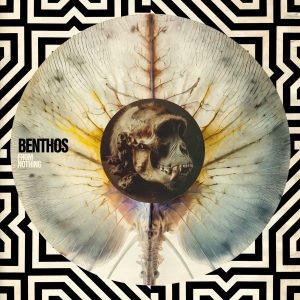
Second album from Italian band Benthos, where they explore positive and negative aspects of humanity’s footprint, or fingerprints. Their musicality is somewhat like Haken playing Frank Zappa, leaning more heavily into jazz fusion and djent experimentation. There are interesting moments throughout, but perhaps its long runtime makes it a bit hard to digest. Modern progressive, Milanese-style.
Black Country, New Road “Forever Howlong”
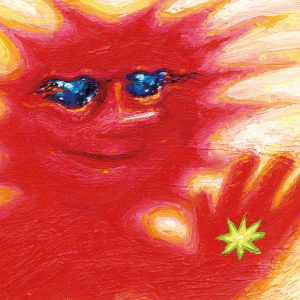
Third album from this London outfit, where we find fairly baroque, elegant pop with rather rich instrumentation. Drawing on the most classic tradition of bands like The Beatles or The Beach Boys, passing through experimental-pop influences like Kate Bush, and settling scores with indie-rock bands like Arcade Fire, we get a fairly dense musical sediment that lets us enjoy this production.
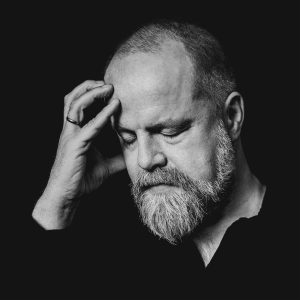
The guitarist of Norwegian band Airbag shows us a darker side with “Fimbulvinter”, where the guitar parts still stand out, true to form for this devoted disciple of David Gilmour. The single “She” served as the preview, but it doesn’t bring as much brilliance as tracks truly worth highlighting, like “Panic Attack”, the title track “Filbumvinter”, and the melancholic “Fear of Abandoned”. It doesn’t reach the sensitivity of “Everything for Everyone” (2022), but the darker guitar phrasing and lyrics give it a power it didn’t have before.
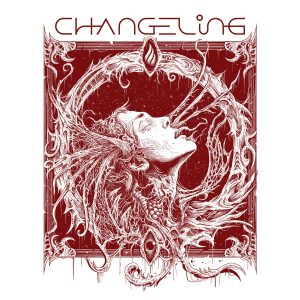
First record from Tom Geldschläge, former Obscura guitarist, under the name Changeling (until now his solo work fell under the Fointainhead project). Notable for playing progressive death metal on a fretless guitar, which gives it a very distinctive jazzy touch. It surprises with its diversity within such a defined style. From the heavy technical-death-style digitalisations that define the opening tracks, to more doom-flavoured moments with ethnic passages on the title track (which also gives the project its name), the jazzy touches on “Abyss”, or, if you prefer more prog-leaning parts, starting from “Cathexis Interlude” it’s sure to grab you. “Abdication” has an elegantly electronic backbone that shines and contrasts harmonically with the more shadowy passages. Closing the record we have “Anathema”, which, at nearly 17 minutes long, unfurls a display of textures and colours that could serve as a summary of everything else. An epic track that alone justifies a record with impeccable production.
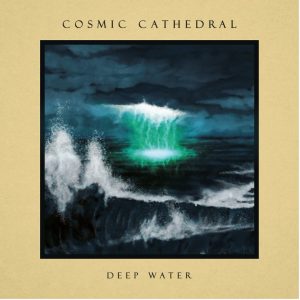
If the opening of this new project from prolific Neal Morse doesn’t remind you of seventies-era Pegasus, you’re not enough of a totumaire. If when he starts singing you don’t feel like you’re hearing Spock’s Beard, Transatlantic or any of his solo work, you haven’t been listening closely enough. This definitely carries the stamp of the preacher of prog. This time he’s joined by Phil Keaggy on guitars and vocals, Byron House on bass, and one Chester Thompson (with a career backing Zappa, Weather Report, Santana, though here it’s his Genesis stint that stands out, of all things) on drums. These new collaborators give it more of a jazzy edge (on “Time to Fly”), a bluesy one (as on “I Won’t Make It”) or a funky one (on “Walking in Daylight”) than we’re used to from good old Neal, which is much appreciated.
Oh! He’s also split the “Deep Water” suite into nine parts, adding up to a bit over 38 minutes, for those who value that kind of thing. Total prog!
Ekzilo “Quantum Phase Transition”
New record from our own Ekzilo. Anyone who’s been lucky enough to catch them live at Tótum Revolútum already knows what to expect: a fusion of several progressive-rock styles brought together without prejudice and shaken up in their musical cocktail shaker. So we get a highly diverse album that’s shaping up to be among the best of 2025.
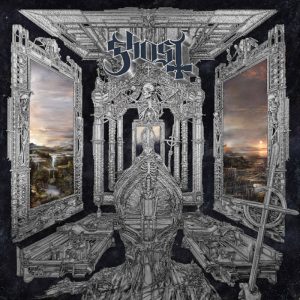
I agree with the whole flock of the band’s followers (myself included) on two things: the first is that this isn’t their best album, and the second is that this is by far the worst cover art of their entire discography. Let’s clarify that it’s not a bad record — Ghost doesn’t have a bad record — it has good tracks, but after several listens they just don’t stick the way the huge heavy-Eurovision anthems we’re used to from them do. Maybe the problem lies with the listener, who expects Tobias Forge’s next record to be another collection of “greatest new hits”. This time he’s leaned too far into pretty-satanist eighties AOR sounds, and the ballads come across as bland, closer to Def Leppard’s hair-metal than the Black Sabbath doom that defined them at the start.
That said, the storyline they’ve been building up has already turned into one of those B-movie sagas you get hooked on with every new instalment. Oh! And it’s easier for Forge to pick a new Papal successor to front the new tracks than it is for other churches with a much smaller back catalogue.
Harem Scarem “Chasing Euphoria”
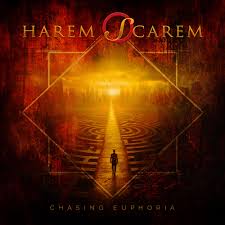
Canadian band Harem Scarem are back with a set of tracks shaping up into AOR with hard-rock touches. The record in question is “Chasing Euphoria” and it continues the direction of their 2020 record, “Change the World”. Standout tracks include the title track, “Slow Burn”, “In a Bad Way” and “Wasted Years”. No surprises here, but it’ll delight fans of varied hard rock.
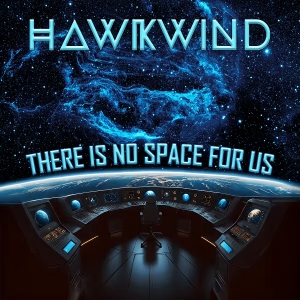
Hawkind “There Is No Space For Us”
Dave Brock seems to have hit the music market wielding the sword of “The Highlander”, shouting: “There can be only one”. At 84 years old he’s still active in his band, and they offer us another record somewhere between psychedelic rock and space rock, though more interesting than their previous album. As we’ve said before, composing from jams or from ideas that develop very organically is always a bit of a box of chocolates — you never know what you’re going to get.
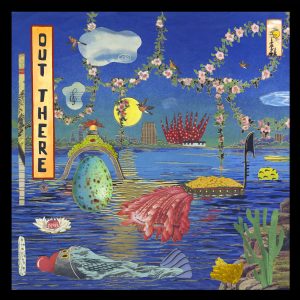
The exceptional pianist from Hamamatsu brings us a new record with her backing band Sonicwonder, but don’t worry, this time she’s not mixing jazz with video-game music. The listening experience is a wonderful chaos performed with brutal force and abandon, creating a work that steers her away from being seen as an artist who doesn’t settle for less — and that, especially when it pays off, is always worth applauding. Even so, there are moments that feel a bit too festive, or tracks that cut the mood a little short, like “Pendulum”, but broadly speaking we’re looking at a jazz-fusion record (which is what everyone’s doing right now) of tremendous quality and sensitivity.
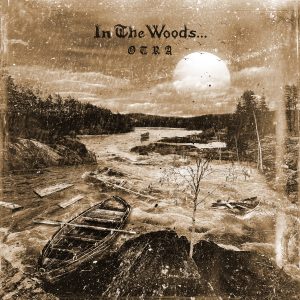
The seventh studio album from Norwegians In The Woods is a collection of well-crafted tracks, with melodies drifting between folk and Nordic tradition, built around stories tied to the Otra river. Quality avant-garde metal with hypnotic melodies that still holds on to the black-metal foundation they were born from. Earlier records may be more captivating on first listen, but this is one of those that earns more points with every spin. Elegant and rustic at once, it plays beautifully with its different voices: clear, clean, feminine or guttural, placing us within the inhospitable landscapes and turbulent waters that surround them.
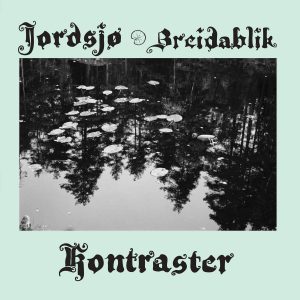
Jordsjø & Breidablik: Kontraster
These two Norwegians have decided to eat at the same table, but each with their own plate. Roughly twenty minutes of material each, creating a synergy between the two. The first side is Jordsjø’s, offering prog very much rooted in the Canterbury scene, built mainly around guitars, which contrasts (it had to be said) with the more atmospheric ideas sustained by keyboards that Breidablik brings. The result is lovely and well worth a listen, though it lacks cohesion as an album, which, honestly, isn’t really worth losing sleep over.
This Buenos Aires trio presents a record with clear influence from the Guitar Craft school, whose most famous exponents are probably California Guitar Trio. That said, the compositions here are somewhat less complex and technical, almost bordering on post-rock. A perfect listen for days when you want quality wrapped in easy listening.
Could we call this trio the Emerson, Lake & Palmer of the 21st century? Well, allowing for the differences, why not? Sure, it’s a largely instrumental band, and the rhythm section leans metal at times, and there’s a lot missing of the classical musical language those three had at their disposal; but we’re trying to draw an analogy across a fifty-year time jump here. We’d recommend listening to “Neon Rain” or “P.L.O.N.K.” if you’re approaching this band with a bit of skepticism, and from there you can enjoy them however you like.

Lost Crowns “The Heart Is In The Body”
A wonderful, brilliant madness from this British outfit, where it feels like Black Midi, Gentle Giant and Arnold Schoenberg had a few drinks together, popped a couple of those pills that make you hear colours, and went straight to the studio from there. It must be said this wild combination represents a real challenge for anyone attempting a full listen of the album, especially without any pills close at hand.
The collaboration between these two musicians is proof that different styles can be entirely complementary, especially when there’s talent to spare on both sides. Randy McStine’s smoothness and elegance blend perfectly with Marco Minnemann’s sharp energy, letting them range from Beatles-esque sonorities to extremes more typical of Frank Zappa. A truly excellent record you can absorb in one sitting, with exceptional dynamism.
From Oslo comes a new instalment from this band straddling prog and long-form rock songs. Either way, it’s far from what we’d consider mainstream, and it’s well worth lending an ear. A handful of songs that are both gentler and more energetic than they first appear. We’d place them in the more acoustic territory of Steven Wilson or Abigail’s Ghost.
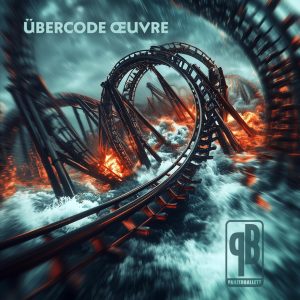
Panzerballett “Übercode Œuvre”
This Munich quintet of extraordinary musicians has put together an album of covers that’s fairly complex, yet also curious and fun, showcasing the most elegant, enjoyable side of jazz metal. We find Meshuggah, Vivaldi, Average White Band, Beethoven, Planet X, György Ligeti, or even Nélida Béjar herself, who wrote them the song “Seven” back in 2023.
Is it possible to fuse technical death metal, jazz and classical music in a way that pleases fans of each style? Probably — though few will fully grasp the great musical joke these Germans are pulling off.
Well, we simply don’t think classical-music fans will be able to stomach these versions of “The Four Seasons” as if Animals as Leaders had regurgitated them, or “Ode to Joy” with distortion, dizzying vocal-key changes and impossible tempos, but the experience is more than curious. Technically flawless, with genuinely surprising displays of freshness and creativity. Panzerballett are proof of all-round musicianship capable of melting more than a few brains.
Imagine Watchtower or King Crimson, but also Thelonious Monk and Dizzy Gillespie, performing all these pieces. And as if that weren’t enough, it features several guest artists, including Rafael Trujillo, Marco Minnemann, Anika Nilles, Andromeda Anarchia or Virgil Donati. Essential listening.
This Canadian composer offers us his nineteenth record, carrying plenty of Pink Floyd and Alan Parsons Project in its DNA. Calm, lovely, well-made and pleasant music that leaves us in a relaxed state, requiring no great concentration.
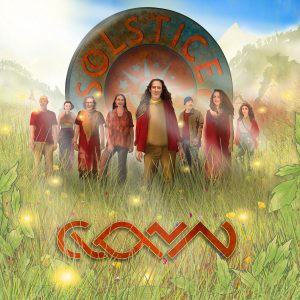
The veteran Milton Keynes band now has only Andy Glass left as an original member, and it shows. The album sounds like someone handed an orchestra, the kind with a summer-festival repertoire, over to play neo-prog. Especially with so many extremely standard-sounding harmonised female backing vocals, a flat, crowd-pleasing production, and the appearance of a track arranged with brass of questionable taste. In short, precious little rock, prog or personality.
The Mars Volta “Lucro Sucio; Los Ojos del Vacío”
It wasn’t hard to improve on their previous two records since the Bixler-Zavala and Rodríguez-López partnership reunited: “The Mars Volta” (2022) and “Que Dios Te Maldiga Mi Corazón” (2023), the latter of which was, on top of everything, an acoustic recording of the former. So, while it’s a modest record, made up of short but unhurried compositions, and rather lacking the overwhelming energy of the partnership’s best days, it recalls the essence that made them a landmark of avant-garde music. Recommended as a soundtrack for a lazy Saturday at home.
Writers: Josep Maria Llovera, Gabriel Martín, David Sàez