
Metal
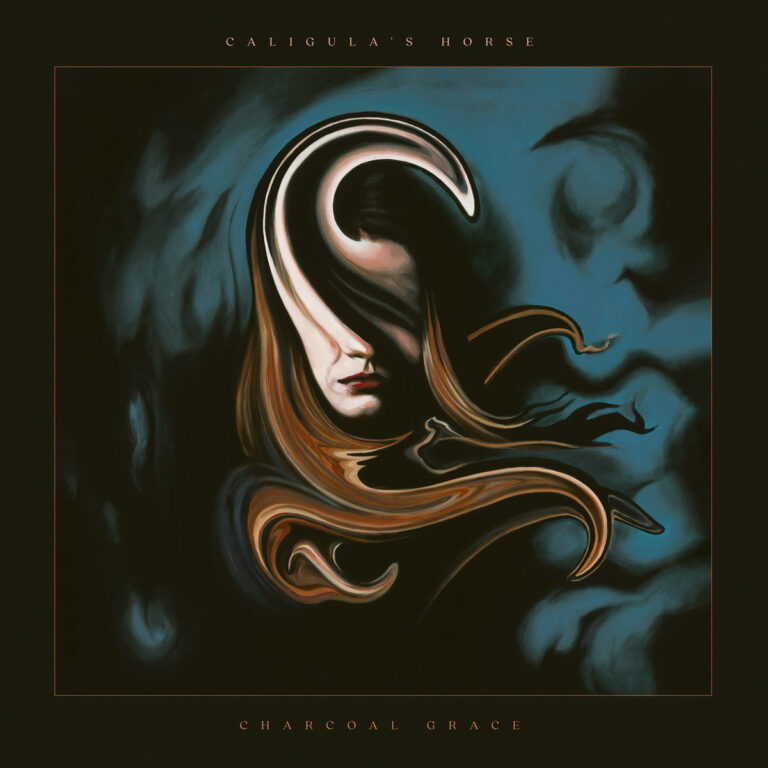
Caligula’s Horse, “Charcoal Grace” (2024)
The horse was called Incitatus. Just this once that I actually know a trivia answer, you’ll let me say it, right?
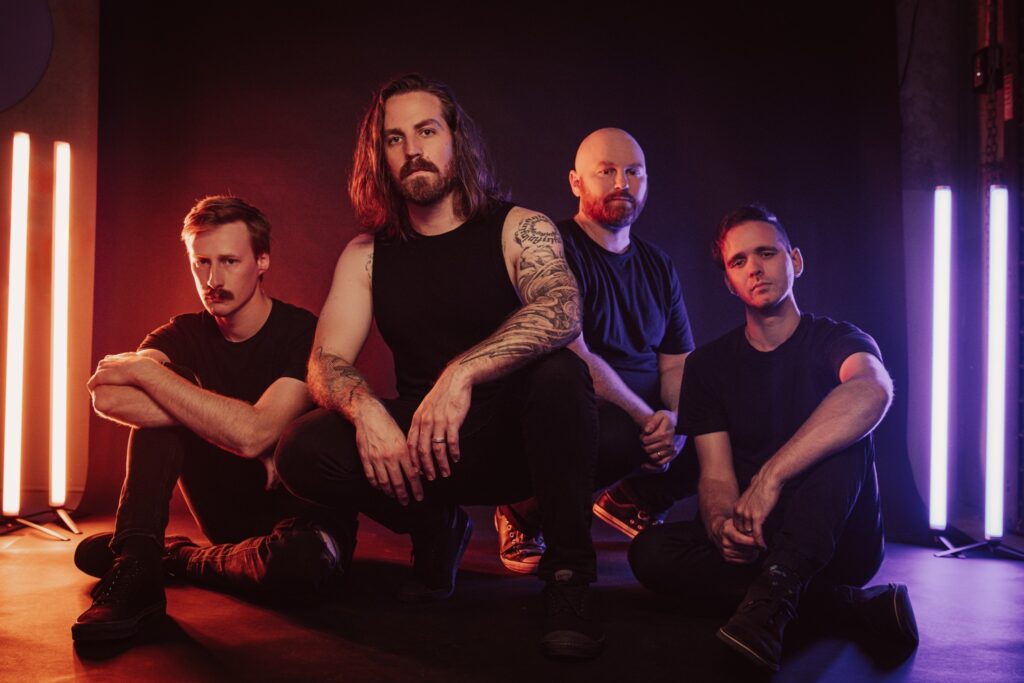
Sixth album from this Australian band, whose line-up consists of Jim Grey (vocals), Josh Griffin (drums), Dale Prinsse (bass and backing vocals) and Sam Vallen (guitars). Their offering for 2024 follows the progressive-rock paths of bands like Haken, Leprous and similar acts, but it’s come out rather short on compositional variety. Let’s take a look:
A relaxed, ambient passage opens the way for “The World Breathes with Me”, which shortly after presents its first melodic motif, soft and unhurried. Once both parts are laid out, we get the first riffs, carrying new melodies played in unison by keyboard and guitar. The latter offers a short solo to close out the track’s long introduction. The first verses bring in the common elements of today’s progressive rock: hard-edged compositions with clear, gentle vocals, here backed by a keyboard. But it also suffers from over-compression in the mix, which ends up creating an incomprehensible mess out of what’s happening underneath, especially on the guitars, which turn into a distorted “blob” whenever they play open chords, and to make matters worse, there’s a real pile-up in the mid frequencies between guitars, keyboards and cymbals. If we set aside the fact that half the instruments are unintelligible — which is quite a thing to set aside — it’s a decent enough opener, though I doubt we’ll be jumping for joy.
Ab initio, “Golem” is heard fairly clearly throughout. Probably because it’s built on bass and guitar lines, but once the chorus arrives, with its guitar chords, we fall back into that frequency clash that will stick with us for the whole record. All the more successful, then, is the tonal modulation in the middle section, which gives it a more atmospheric feel for a moment. A trick they repeat, rather grandly, in the riff that underpins the guitar solo.
Next up is the album’s magnum opus, split into 4 parts: “Charcoal Grace I: Prey” opens with a two-guitar arpeggio giving way to a fairly classic-sounding main motif. It then looks for a more intimate, restrained atmosphere to present the verse, along with a section built on a vocal ostinato. The repeated verse, with full-band instrumentation, was predictable ahead of the chorus. The production doesn’t help create any real dynamism, and the track ends up feeling very linear; the guitar arrangements try to add weight but, in reality, don’t quite gel in certain spots — for instance, in the bridge after the final guitar solo, which genuinely feels as if the essence of that passage wasn’t fully grasped.

“Charcoal Grace II: A World Without You” uses the main motif to give a sense of unity, even repeating the arpeggio-then-intimacy concept, though with a rather lovely chord progression that grabs your attention. Even so, we run into the same cadence ad nauseam, the result of a composition that’s a bit too similar to what came before. The arpeggiated interlude and the following verse are ideas already put forward, leading to a new guitar solo, before reaching a conclusion where a clean guitar links up with an acoustic one that will become part of “Charcoal Grace III: Vigil”.
It’s a clever modus operandi to leave all the rawness in when it’s impossible to play acoustic-guitar chords without the fret-changing noise showing through; so if you leave it in and lean into it, it suddenly looks intentional. In a soft, melancholic atmosphere, stricto sensu this is really nothing more than a transitional track heading toward the conclusion.
And the conceptual section closes out with “Charcoal Grace III: Give Me Hell”. Ex novo we get a soft opening giving way to guitar motifs, teetering on the edge of forced affectation, over which the voice tries to develop, but it all ends up feeling a bit loose. De facto, it’s got a couple of extra layers of production and over-compression too many, which just bring back that “blob” sensation we already talked about, making everything fairly linear. To top it off, there’s a whole long, excessive, pompous ending, with certain airs of grandeur that don’t do much for the vibe.
In absentia of better ideas, the same arpeggiated opening returns, with a dragged-out voice and the subsequent presentation of a guitar motif, on “Sails”. Not even the typical choral modulation you’d find in plenty of prog records makes this ballad stand out in any way. This track might well work as a single, but these reviews are about the impressions gathered from a full listen of the record on offer.

And it’s a shame we can only say “Stormchaser” is ídem de ídem — more of the same. Everything said in the previous paragraphs applies here too: dragged-out melodies, similar and excessive arrangements, monotonous production, and the sense that this is a superfluous track that doesn’t add much.
So it’s a pleasant surprise that on “Mute” the vocal performance wields registers a little different from what we’ve heard so far. Even so, this is no rara avis, since the same compositional clichés continue, though with different production choices, like adding strings, flutes, or a subtle mellotron, which give it a bit of colour. Otherwise, nothing we haven’t already heard, and, more worryingly, the appearance of some extreme double bass drum to accompany the riffs. Prioritising modernity over what a piece actually needs is never the right call. There are countless compositions where double bass drum ad libitum works perfectly, but that doesn’t mean it always should; you might not come off looking terribly modenno and yé-yé, but you have to do what the moment calls for. Take, for example, the middle section, which is fully steeped in the more classic side of progressive rock and works well here; and right after, a touch of excess is even justified.
Grosso modo, there are more shadows than lights on this record. A warning sign that they could end up becoming a kind of Marillion once they’ve grown old — the sort of band whose VIP concert package comes with an alarm clock and a pillow included. Listening to it won’t do you any harm, but you’ll probably end up filing it under listened-and-forgotten.
Writer: David Sàez