
Metal
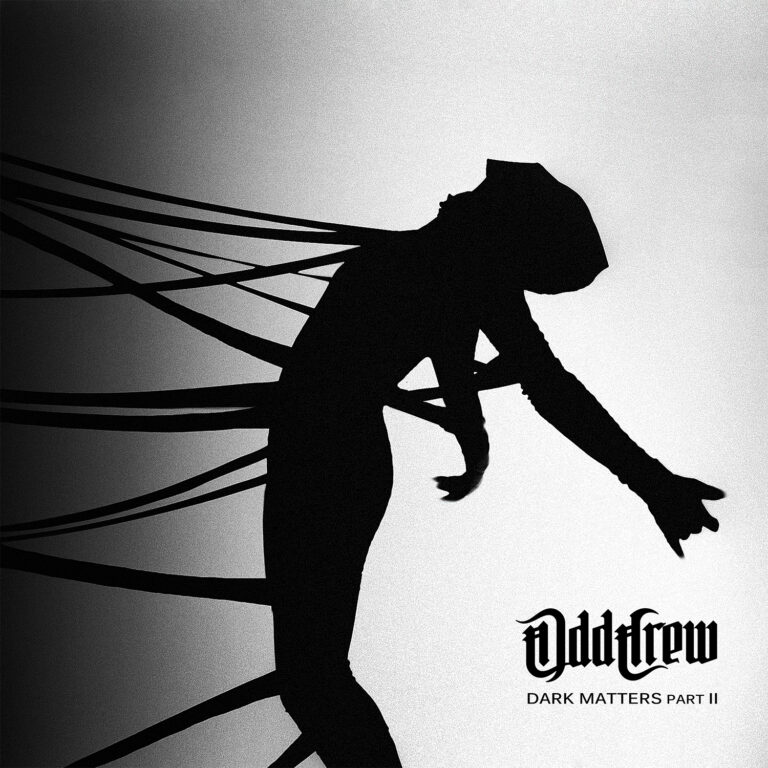
From Bulgaria comes Odd Crew’s sixth record, the continuation of “Dark Matters” (2022). Given the state of the music world these days, splitting a band’s material into as many instalments as possible is a wise decision. The era of double and triple vinyl records is long gone.
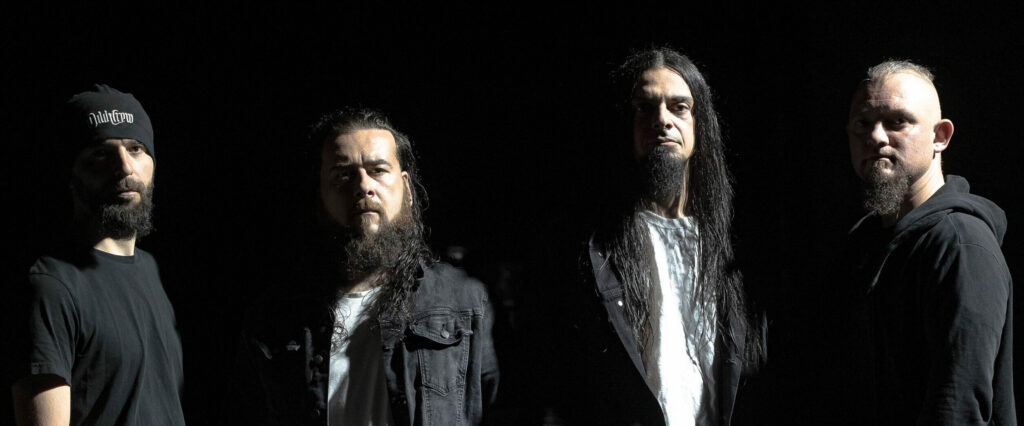
It’s worth noting that the band hasn’t had a single line-up change since forming in 1998. So congratulations are in order, on their twenty-fifth anniversary, to Boyan “Bonzy” Georgiev on drums, Vasil Parvanovski on guitar and backing vocals, Vasko Raykov on vocals, and Martin Stoyanov on bass and backing vocals.
With a noisy introduction giving way to a dense opening, we get “Wing on a Burning Wind”, carrying a certain doom flavour. It continues with a soft passage presenting the main motif, progressively (it’s what prog does) leading us toward the chorus. With this loud-and-soft interplay, all the piece’s ideas unfold up to a big final choral section. A solid way to introduce the album.
The raw, persistent riff of “In Silence” gives us a lovely contrast with the fairly subtle vocals. It’s notable how the band holds the track back without ever fully letting it loose, and the mid-tempo chorus only heightens that tension further. The surprising classical-guitar solo lends a touch of class that arrives right before the track’s expected explosion, where they finally give everything to the electric guitar solo. It speaks well of the band’s collective compositional work that these stops and starts are so well measured and thought out. And on top of that, they bring in an acoustic guitar — good old Parvanovski excels on all of them — for the beautiful ending, where the rhythm section’s work is phenomenal. They couldn’t pack in more variety. Excellent.
Continuing along the same forceful, slow-tempo line, we get “You Are but One”, exploring winding vocal melodies under tense full-band arrangements. It hardens further with the arrival of the interlude and its guitar solo, making the contrast with the vocals even more extreme.
“Closer” opens with an unsettling, dark guitar. Worth highlighting is Stoyanov’s captivating bass work on this track. As something new, we get a chorus that’s less melancholic than previous ones, giving it a bit more colour and variety — which it needed right about now, since so many minor chords eventually need to give way to a major one every so often, or we’d end up sticking our heads in the oven (doesn’t work with electric ones, fair warning). Even so, as we move forward, we end up hearing arrangements close to thrash metal on occasion, but the lovely chorus rescues us as we reach the conclusion.

But if darkness is what you want, then listen to “On to the Sun”, contradictory as that title might sound. Some change of compositional approach would have really suited things by this point, given the aforementioned minor harmonies, slow tempos, dense development and fluid vocals. Even so, we can’t deny it’s a good track, especially since Raykov is like a bright bend in the river running through a dark valley.
And it’s exactly the opening rhythmic amalgam of “Thin Air” that gives us what we were just discussing. Without straying from the production style that defines this record, we do find a different feel here, one it sorely needed. Worth highlighting are the lovely female backing vocals, which come across like a princess in the hands of a dragon — the dragon here being the band. It’s a smart move to pause the track with a verse before continuing into a guitar solo, which serves as a prelude to the close.
Titled “Witching Hour”, this track’s main feature is the interplay of speeds within a single tempo, along with interesting structural complexity and gorgeous drumming, sensationally played by “Bonzy”. We won’t say it radiates optimism, but the chorus is considerably gentler than the rest of the track, and since it’s so dominant, that works in its favour.
And the culmination arrives with the intimate “A Thousand Smiles”, featuring a gorgeous vocal line from Raykov who, incidentally, has done a fabulous job across the whole album. Closing this way scores double points, showing courage and confidence in your work by ending on an emotional composition with an interrupted resolution. Bravo.
In short, a fabulous album, especially for fans of the darkest music — never has that word fit better — and of musical contrasts.
Writer: David Sàez