
Progressive Rock
Fiction Records · 6 November 2026 · 54 minutes
A review of a Steven Wilson album always calls for a reset of preconceptions. You can’t look for flashes of genius on every record, and even less so when the person writing the review holds the artist in such high regard. With Wilson there is the risk of comparing each new work with his own milestones, with the album that left us speechless or the one that kept us company through a period of our lives. And that would be unfair. We need to listen to him without demanding that he be the same again.
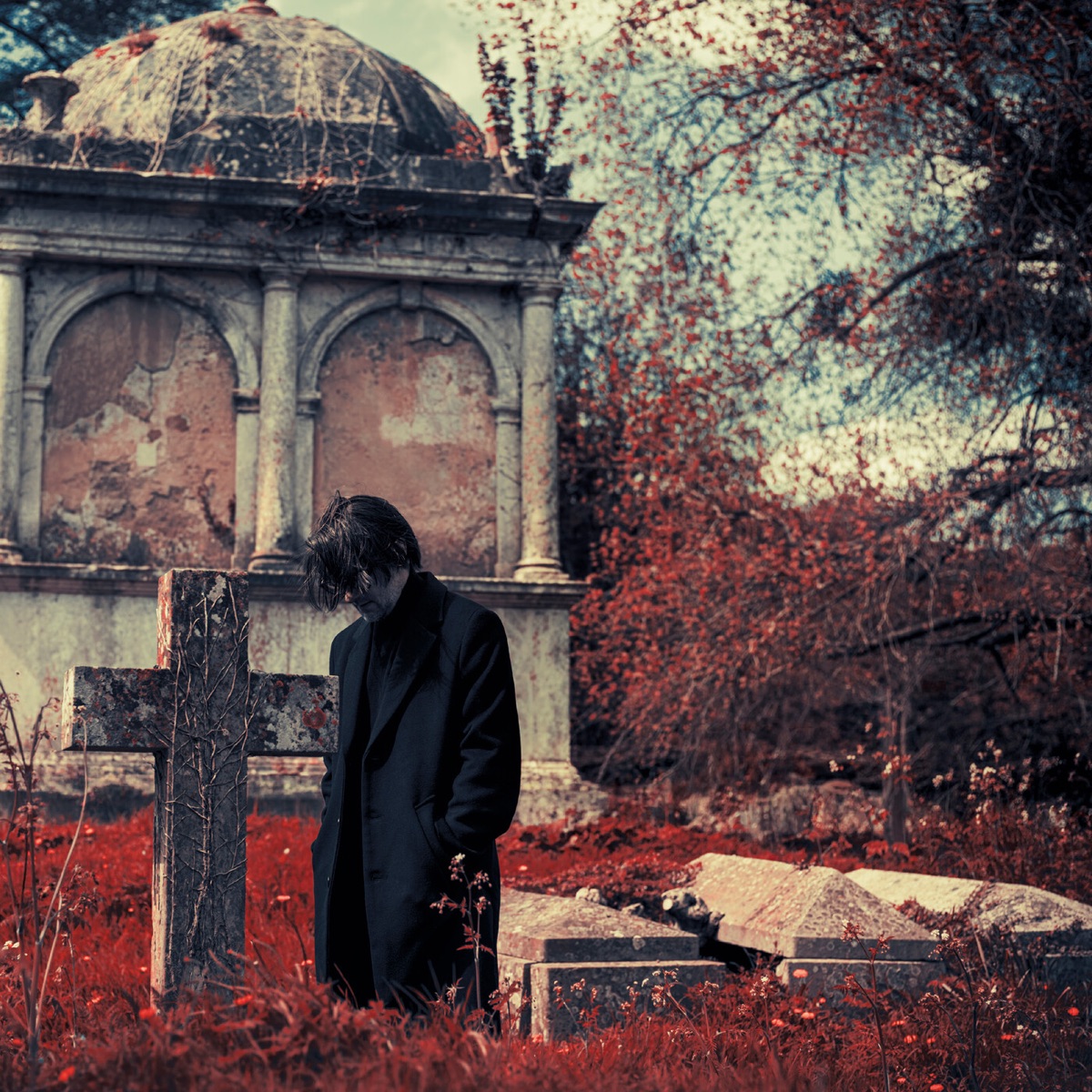
Requiem for a Village is a new demonstration of the creative restlessness of a musician who still has no interest in settling into a formula. After the almost cosmic experience of The Overview, Wilson takes us to a radically different setting: a fictional English village, stopped in time, surrounded by folklore, superstition, mystery and a certain sense of decay. A place that could come out of a 1970s cult film, an M. R. James story or the unsettling universe of The Wicker Man.
The album works as an imaginary soundtrack. Rather than a succession of songs, it is a journey through a landscape that reveals itself little by little. There is a very clear narrative intent, reinforced by the voice of David Tennant, who gives words and characters to this universe through words by Andy Partridge, the legendary member of XTC. His contribution adds a literary and theatrical dimension that suits the strange, slightly sinister character of the project especially well.
Musically, Wilson shows once again that progressive rock can be many things without resorting to its most predictable clichés. There is British folk, psychedelia, electronics, hard-hitting rock and passages that approach cinematic horror. It all coexists naturally, without the album feeling like an exercise in technical showmanship.
One of the most interesting things is the instrumentation. Wilson recaptures the pleasure of experimenting with acoustic and analogue instruments, some of which he doesn’t especially master. We find violin, oboe, harp, accordion, banjo, harmonium, piano, Mellotron and a good variety of synthesisers. There are also acoustic and electric guitars, basses and percussion that come in as each piece requires.
This time, moreover, one production decision defines a good part of the result: leaving room for imperfection. Wilson has wanted to get away from the excessive polish that studio technology imposes. He has worked with analogue synthesisers and accepted out-of-tune notes, small irregularities and performances that do not aim for academic perfection. He has even experimented with instruments unusual in his repertoire. It is a way of recovering the human element, that small accident that can end up giving a composition its personality.
The production, of course, remains very carefully crafted. Wilson knows exactly how to place each instrument, how to play with depth and how to give the different elements their own space. But here the texture is less polished, more organic and, at times, deliberately unsettling. The silences, the atmospheres and the details that appear in the background matter as much as the main instruments. It is an album that demands proper listening, preferably with headphones or a system that lets you appreciate its nuances.
The opener, Swirl in a Lark’s Eye, already places us in this territory of bells, atmospheres and omens. The title track brings in a more rock-driven energy, with guitars that break the apparent calm of the landscape. The Same River Twice and Now Departing go deeper into the narrative dimension, with a combination of music and story that helps build this very particular world.
On Chapel Slope is one of the pieces that best sum up the spirit of the album. It has an atmospheric construction very characteristic of Wilson, with a progression that gains tension without needing to resort to big instrumental explosions. There is a dark elegance in the way it unfolds.
But Murmuration is probably one of the album’s standout pieces. The keyboards, the electronic textures and the voices of Katherine Priddy build a passage of strange, almost spectral beauty. The harp brings a delicacy that contrasts with the darkness of the atmosphere. It is one of those pieces that show that Wilson can create emotion without loading the composition with artifice.
In A Basket of Bees we find another of his great virtues: the ability to move from guitar work of great melodic sensitivity to far more aggressive moments, with hard-hitting riffs and an energy that recalls his rockier side. Randy McStine plays a prominent role here, as in much of the album. His rapport with Wilson is increasingly evident and helps give the album its cohesion.
The work of Russell Holzman on drums also deserves mention: he provides a solid rhythmic foundation without turning the album into an exercise in virtuosity. Adam Holzman adds modular synthesiser textures, while Lee Harris contributes guitars. These are contributions that broaden the sonic landscape without diverting attention from Wilson’s overall vision.
This is, essentially, a Steven Wilson album. He takes charge of the musical direction, the production and the mix, and plays a considerable number of instruments. But he knows how to surround himself with collaborators who bring personality and who understand perfectly the kind of music he wants to build.
Not everything has the same intensity, and not every piece reaches the same level of impact. At times, the commitment to experimentation and the narrative construction can make the album lose a little tension. Nor will we necessarily find here the immediate melody that keeps bringing us back to some of his more accessible works. But it would be a mistake to judge it only from that perspective. It is an album that needs time and that gains when we agree to enter its universe.
What I value most about Requiem for a Village is precisely this freedom. Wilson does not seem to feel any need to prove anything to anyone. He keeps probing, searching for sounds, combining instruments and exploring territories that are not the most obvious. And that, in an artist with such an extensive career, is very much to his credit.
This is not a masterpiece, nor an album that will change the history of progressive rock. It doesn’t need to. It is a work with plenty of personality, an extraordinary production, a rich instrumentation and an atmosphere that is hard to find in other current releases. An album that confirms that Steven Wilson remains one of the most interesting and restless musicians of his generation.
RATING: 8.9/10
A great album. One of those you don’t have to fully understand on the first listen. You have to let yourself be carried along, go back to it and discover its hidden corners. And, above all, be grateful that Steven Wilson still wants to surprise himself.
Words by Jordi Amela