
Progressive Rock
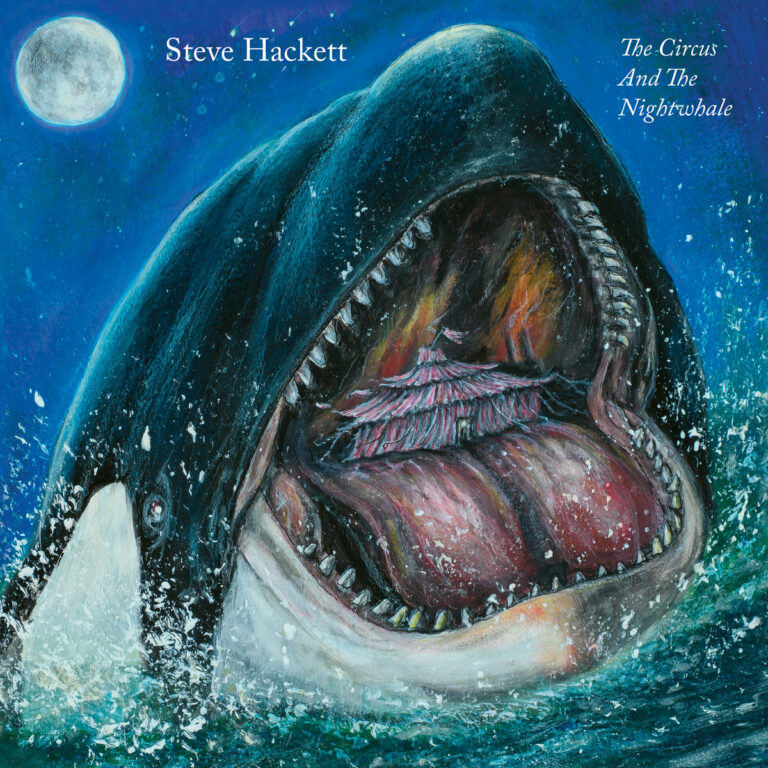
Ever since deciding to strike out on a solo career away from Genesis, Steve Hackett has built an important body of work, and this now stands as his thirty-second studio album. And although his records haven’t always been thrilling, they’ve always stood for great quality. This one is no exception, despite the odd small shadow.
As you’d expect, he’s taken the reins himself, surrounding himself with a string of top-tier musicians who’ve delivered powerful performances, though some of the assembly choices have kept this from being a truly brilliant production. But given the state of things these days, it’s well worth giving it a careful listen.
A series of effects introduce the keyboard motif on “People of Smoke”, emulating strings in a Baroque style. Right after, we get a guitar line that keeps repeating between the somewhat flabby verses. The interlude consists of a run of effects and arrangements trying to create a certain unease, but beyond confirming that good old Steve is in fine guitar form, the truth is they end up loose and don’t add up to a cohesive piece. On top of that, the chosen keyboard tone is a bit cheesy.
“These Passing Clouds” is also questionable on the production front. Alongside the already-mentioned corny keyboard tones, there’s a rhythmic sequence worthy of a Casio PT-1 underneath — for those who don’t know this legendary keyboard, I’d recommend looking up a demo on YouTube, or just putting on a reggaeton album, since that keyboard has that genre thoroughly covered. That said, the guitar does drive the track correctly. It’s a short, transitional composition with a certain classicist air.

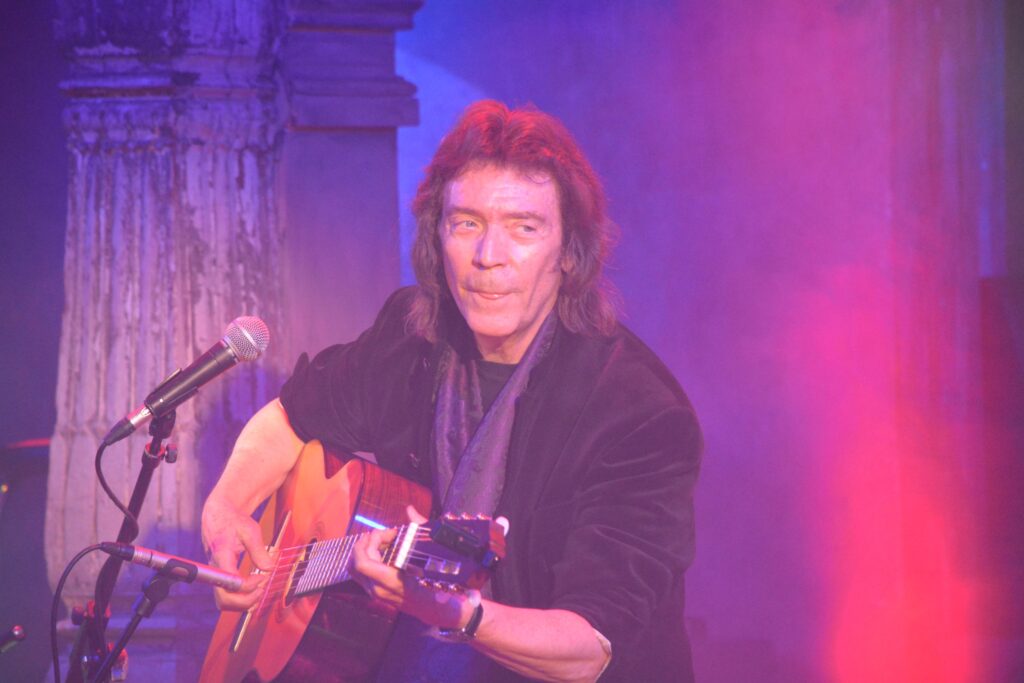
“Taking You Down” is an attempt at a rock song. You can tell this isn’t the setting where the artist composes with his greatest creativity. It sounds false, forced and, to add insult to injury, it’s fairly clumsy in its production — almost as clumsy as Hackett’s own website. If the musicians told us they were actually playing “Paquito el Chocolatero”, we’d believe it, since it feels like they just happened to be passing through with no real cohesion achieved. Luckily, the closing coda offers a passage that’s much more in the artist’s true spirit, and it’s a shame the idea isn’t developed further.
He does start to on “Found and Lost”, which finds its footing in the first part — classical, magnificently played, with great talent on Spanish guitar — but loses it in the second part, where a jazzy section appears that, despite its neatness, is a bit of a mood-killer.
But the best moment really comes with “Enter the Ring”, where acoustic guitars give the atmosphere a folk feel, complemented perfectly by a very melodic, almost ethereal vocal chorus. The rest of the arrangements here really do land, and add real depth. The brief flute solo, courtesy of brother John Hackett, gives way to a guitar solo, which then alternates with vocal sections. The interlude, with its circus-like intent, is a pleasant surprise, but once again we run into the pitfall of tasteless production, which ends up impoverishing a great track.
Next up, “Get Me Out” is a rhythm-and-blues number that tries to throw us off with a dark, dramatic riff. Just as notable as Steve Hackett’s impressive guitar work (olé) is the bass played by Jonas Reingold (olé to you too). Thanks to both of their virtuosity and, this time, real solidity among the rest of the musicians involved, we get a successful ending.
A beautiful choral opening, led by Amanda Lehmann’s voice, is completely wasted by the arrival of a sugary, insignificant pop composition, one that also reverts to the disconnect between the band’s musicians. Not even the guitar solo or the closing coda, repeating the formula from two tracks back with some pretty backing vocals, can pull us out of the sheer boredom that is “Ghost Moon and Living Love”.
The impressive tar introduction, courtesy of Malik Mansurov, takes us into a very Arabic-flavoured track where some vocals seem to be singing an entirely different song, or at least that’s how it feels, since they don’t blend together even with glue. After that we get a run of strange arrangements that never quite reveal where they’re heading. A brief saxophone solo from Rob Townsend arrives, and it closes on a looped vocal chant. “Circo Inferno” is a track whose complexity feels somewhat pointless.
A powerful riff serves as the main motif of “Breakout”, allowing for the kind of display of class, technique and virtuosity we’ve come to expect from Steve Hackett, and it’s worth noting that whenever he lets himself go, the album jumps up several notches. And straight after it presents “All at Sea”, trying, with considerable success, to take us into the depths of the ocean. It’s a shame the whole record’s production is so uneven, because the quality range here is more than notable.
And the sea voyage ends like Jonah’s: inside a whale — in this case, a nocturnal one. “Into the Nightwhale”, progressively (it’s what prog does), presents us with an ostinato over which keyboard arrangements gradually build. It all recalls, spectacularly, the “Mars” movement from Gustav Holst’s “The Planets”. That’s what makes it so surprising that they choose to end the track with a very soft, beautiful section, one that will transport many of us to a whole host of references like IQ, Jadis, and other Neo Prog bands. In reality, the reference point for those bands is, to a large extent, Steve Hackett himself. So, our respects, sensei.
On “Wherever You Are” we return to more standard territory, with a certain brilliance and solidity. Classic precepts and biting guitars. Here, the composition’s heterogeneity is genuinely well crafted, achieving a solid unity in a magnificent track.
And, of course, closing with Spanish guitars on “White Dove”, played with the class the artist always brings, can’t help but win us over and make us appreciate the great and generally underrated figure of Steve Hackett as a guitarist and composer of delicate, excellent pieces for this instrument. An exceptional way to close out an album that grows steadily better, leaving you wishing there were one or two more tracks — though only at the level of these closing ones, mind.
Writer: David Sàez