
Progressive Rock
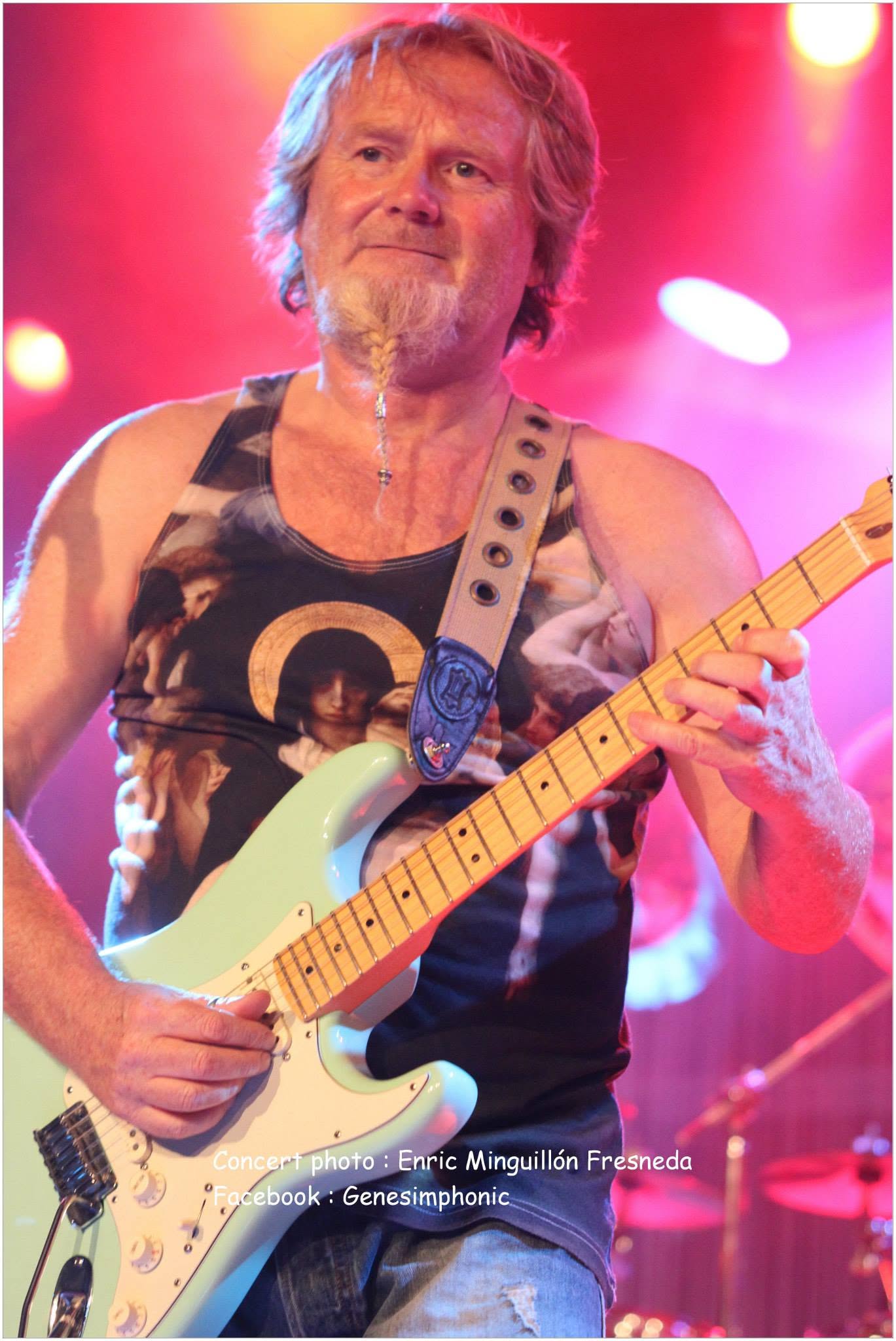
Photo: Enric Minguillón / Genesimphonic
Interview by Jordi Amela
Pendragon have spent almost half a century doing something particularly difficult: continuing to exist without becoming frozen in the era that first made them recognisable.
Since 1978 there have been changes in personnel, aesthetics, personal circumstances and the music industry itself. There have been albums that found a far larger audience than seemed possible, difficult years, changes of direction, and an unusually close relationship with an audience that has grown older alongside the band.
On 3 November 2026, Pendragon will return to Barcelona to play at Apolo 2 as part of a deliberately short tour.
At Tótum Revolútum, we are interested in that concert, but even more interested in everything that has had to happen for Pendragon, almost fifty years later, still to have something new to say.
Pendragon have existed for almost fifty years, but during that time there have been very different versions of the band. If you strip away the line-ups, production styles, fashions and even the vocabulary of progressive rock itself, what is the one thing that absolutely has to remain for something to sound genuinely like Pendragon to you?
The melody is one thing, having something slightly different to say and the way you say it, I’ve always being fascinated and curious about music and the friendship that Peter Clive and I have had for so long. Also a basic love of the craft of making music and playing live.
You have explained that The World was made at a very difficult financial moment and almost as a final attempt to see whether the whole thing could work. Has knowing that one of the albums that changed the course of the band was born out of those circumstances altered the way you think about creative security? Can being too comfortable actually become dangerous when you are trying to create?
Yes, in a word. Pendragon is quite often on a bit of a knife edge financially and it’s never easy to keep the whole thing going but that keeps us true to the craft because we’re always striving, I always joke that one of the reasons why we’ve managed to stay together is because we never became very popular. Bands that become popular often seem to end up hating each other and not being truly creative because of outside influences such as big managers, big record companies, big stakes, big egos all these things are distractions from being creative.
I’ll never forget how the world turn around in a way you never expect after we released The World album. I’ve had a few similar moments when I thought we were on the edge of disaster for example when illegal downloading almost stopped our record sales completely but then you remember there might be something around the corner and hey presto, people start buying vinyl. Vinyl and prog is a match made in heaven.
The Masquerade Overture appeared in 1996, at a time when a long progressive rock album, released independently and outside the machinery of the major labels, seemed to have almost every commercial circumstance working against it. And yet it went on to sell more than 90,000 copies worldwide. What do you think people found in that record that allowed it to travel so much further than even you could probably have imagined?
We had built up a following with The World and The Window Of Life direction and I think when you come along with a third album of a similar style people are ready to like it, with the artwork and the very classic progressive rock sound it had a lot of appeal at a time when some of the prog bands were starting to distance themselves from prog rock.
For some guitarists, the solo is almost a separate event within the song. With Pendragon, something different often seems to happen: the guitar appears at precisely the point where words are no longer enough. When you write one of those long melodic solos, are you really thinking as a guitarist, or are you trying to continue the lyric without words?
Interesting question! I think ever since I heard the song Ice by Camel I realised that you could virtually speak through your instrument a very deep language without one word being spoken. I’m very aware of this particular approach so the soul and the melodies of the guitar parts are very much entrenched in the song writing rather than just an after thought. I loved the way Tony Banks from Genesis also used to do this, writing Keyboard melodies into songs that weren’t really “solos” but structural parts of the song.
You have spoken openly about how Not of This World was shaped by a particularly difficult period in your life. Did that album allow you to write in a different emotional language? And once you have discovered that way of writing, is it possible to go back as a songwriter?
Yes, that’s absolutely correct. I actually felt that with Not of this World I lyrically said exactly what I wanted to say in a deeper emotional way. It depends what kind of song you’re trying to write, if you’re trying to write something uplifting you’re probably not going to tap into heart breaking or melancholy subjects, basically it gives you another tool in the tool box so you can write some songs which have very deep meanings or some which are more upbeat, it makes for a good variation.
Progressive rock audiences can be extraordinarily loyal, but that loyalty has an interesting consequence: over the years, listeners begin to construct their own idea of what Pendragon is. Have you ever felt that the audience understood Pendragon differently from the way you understood it yourself? And when that happens, how far are you prepared to disappoint part of the audience in order to follow where the music is taking you?
First of all I don’t think Im going to disappoint the audience that much because no matter what we do it will always be the melody “the Pendragon sound” when we did the rap on Passion it was followed by a very typical Pendragon guitar melody so with the audience I guess we “knock ‘em down” and then build them back up. It’s like watching a film there has to be an element of peril otherwise it could be a bit boring.
Most people think they want the same thing but they actually want, deep down, an element of peril as in life, driving fast cars, mountain climbing, the possibility of your football team losing, films and indeed music. There needs to be an element that challenges us in someway. I think quite often when people first hear an album they are a bit aghast if there is anything that sounds different from the last albums but that is the marrow of life, I hated The Lamb Lies Down On Broadway when I first heard it, then 2 months later it was the best music I’d ever heard in my life.
Progressive rock was, to a large extent, created by very young musicians trying to do things that had not existed before. You are now making music with almost fifty years of experience behind you. What can Nick Barrett write about today that the twenty-five-year-old Nick Barrett simply had no way of understanding?
I’ve discovered that as you get older the vortex of creativity becomes ever more infinite and I’m learning things that I didn’t even think of when I was 25 probably because again my mental outlook has meant I’ve spent time looking at being creative and the craft rather than trying to make Pendragon popular. The craft is where the energy goes and you get to a point where there are infinite possibilities. I think I’ve become more open to absorbing many more different influences than when I was 25.
You have explained on various occasions how activities that seem far removed from music — travelling, living in Cornwall, surfing — have eventually fed into what you write. Do you think musicians sometimes make the mistake of separating “living” and “working” too sharply, when the time in which they appear not to be making music may actually be where the next album begins?
Yes, I know some musicians who just do music and one particular one I asked “why are you making another album so quickly after the last one?” and he said “that’s all I do” and I think he was worried about losing people’s interest, the trouble is then all their stuff sounds the same there is no real deep thought there’s no inspiring new ideas and it becomes just work, ticking boxes to get stuff released.
Sometimes you’ve got to get other influences, nature, ghosts, God, politics, flying, swimming, exercise, reading books, all these types of things and just thinking creates inspiration. I find it very hard to just sit at a computer and come up with lyrical ideas I’m better off staring at the sea.
In 2023, you spoke with unusual candour about the real economics of touring: buses, crew, rehearsals, manufacturing, fees, hotels… And you used Spain specifically as an example of a place where wanting to return did not necessarily mean being able to make it work. At what point does accepting a concert stop being a rational business decision and become an emotional one?
To be honest it’s rarely a business decision unless we’re feeling particularly broke (no money) the way I think of it is if we can make it work, we will make it work. I used Spain as an example because it’s hard to get to just to do one or two shows because of the costs getting there where as The Netherlands for example you can be there following day do the show and be home the next. It’s geographical as much as anything else and probably why we’ve never played many shows in Italy.
The way I see it over all is the following we have world wide have supported us for so long that if we can make it work then we will really make the effort to come and play there. We’re not a big band so we’re beholden to financial restrictions to where we can play but generally speaking the “emotional” decision to play usually overrides the financial one.
There are people who have been buying your records for thirty or forty years, travelling to see you and, in a very real sense, growing older alongside Pendragon. That closeness is extraordinary, but it can also become a responsibility. Does it make it harder to take an artistic risk when you know there are people in front of you who have built part of their lives around this music?
No. It’s been quite easy to take that risk of course you’re going to get some people not being very keen on the rap on the Passion album ha ha! But a staggering amount of people actually accepted that and gave us the benefit of the doubt, I think we’ve been extremely lucky that people who have followed the band have been very open minded to what we do. I don’t really write the music to please a fan base but I do write the music to please me and I think if I like it there is pretty good chance the fans will like it because we’re usually on the same page.
Bands with decades of history often say they are “like a family”, an expression that can sometimes sound more threatening than reassuring. What has actually allowed Pendragon to survive its own members for so long? Friendship, distance, clearly defined roles, a sense of humour… or simply knowing exactly when it is best to leave each other alone?
All the above! That’s what you learn with being with people for so many years.
You are working on new music while preparing for this tour. Without asking you to reveal anything you are not ready to discuss, I am more interested in something else: what is the question you are trying to answer by making this new album? Not so much what it will sound like, but what you are trying to discover while making it.
That there must have been a million melodies that Tony Banks hasn’t written! I’m looking for melody and not I’m not hearing enough of it in today’s prog music. I love those old Genesis albums so that will always be a powerful influence on me along with many many others.
When I’m writing a new album I usually don’t have much of a clue how it’s going to end up, I always compare it to a building site, there’s bags of cement and some bricks and a digger and a cement mixer but you don’t really know how it’s going to shape up. Also lyrically, making something with some sort of meaning something with some sort of philosophy, theology, perhaps some humour, all this goes into the pot.
This tour arrives while part of your mind is already occupied by that new music. When you go back to material written ten, twenty or thirty years ago, have you ever rediscovered something you used to do and realised that, without noticing, you had left one of your own instincts behind? Can an old song end up changing an album that does not yet exist?
Not really, you tend to move on with your techniques, for me my guitar playing, my piano playing, my lyric writing are all very different approach to 30 years ago. I think it’s very hard to go back, I don’t know but would it ever be possible to write something as amazing as Dark Side of the Moon again? Probably not. I suppose it’s a bit like finding an old pair of flared trousers in the bottom of your wardrobe, they were good in the ’70s but your brain just can’t comprehend that you might want to wear them now.
For someone who discovered Pendragon through The Masquerade Overture, the band may represent something very specific. For someone who arrived through Pure or Love Over Fear, Pendragon may mean something rather different. How do you build a set today that is honest to all of those versions of the band without turning the concert into a museum of your own history? And, specifically in Barcelona, would you rather someone who has waited years for your return recognise exactly the Pendragon they remember, or leave Apolo having discovered something they were not expecting?
Well, I’m proud of everything we’ve done. I had to listen to Fallen Dreams and Angels vinyl a couple of years ago which has our first mini album on it and I loved hearing it, so I don’t really have a problem picking songs from all eras to put in the live set. I’m not one of these people that hates a particular period of the band.
In Barcelona we will be playing something from The Jewel, Kowtow, Masquerade Overture, and just about every other album, this is just the way we do it and the amazing thing is quite often we’ll find a new way of presenting those songs that we didn’t do when they first came out.
If you could sit the Nick Barrett of 2026 down for five minutes with the young man who started Pendragon in 1978, which part of this entire story do you think he would find hardest to believe? The records? The difficult years? The fact that you are still searching for the next song? Or simply that, almost fifty years later, on a Tuesday night in Barcelona, there will still be a room full of people waiting for Pendragon to walk onto the stage?
I don’t think I can believe that at 65 years old after 50 years of doing this that that would have been possible, I would have been amazed. I would have been amazed that I probably got an even greater love for playing and my curiosity to make music has not diminished.
The fact that people are coming along to see us in Barcelona is incredible, there’s a song on the Believe album called “Edge of the World” where I actually sing about the possibility of us not being able to play any more to people who have been with us for so long because after Not Of This World and my divorce I thought it might all be over but as we all know from an acorn grows and oak I should know that by now.
Thank you very much, Nick, for your time, your honesty and for looking back with us over so many years of Pendragon’s history. We are very much looking forward to welcoming you back to Barcelona on 3 November.