
Writer: Carles Pinós
Photos: Jordi Amela (@amela_photo_concert)
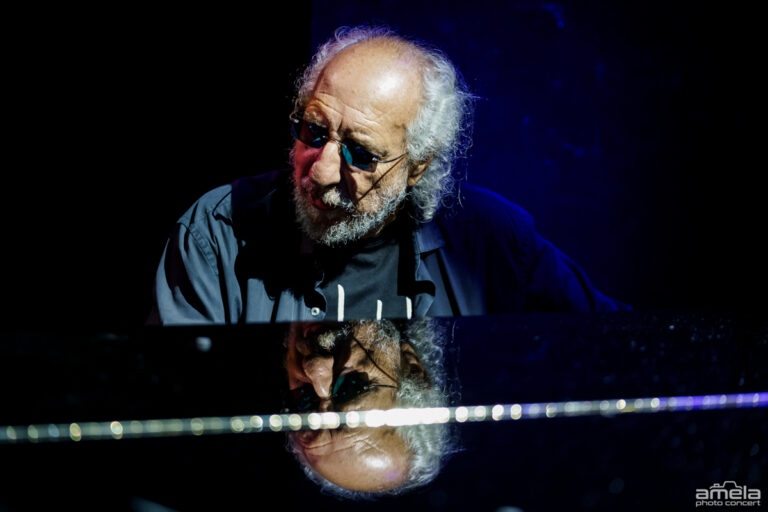
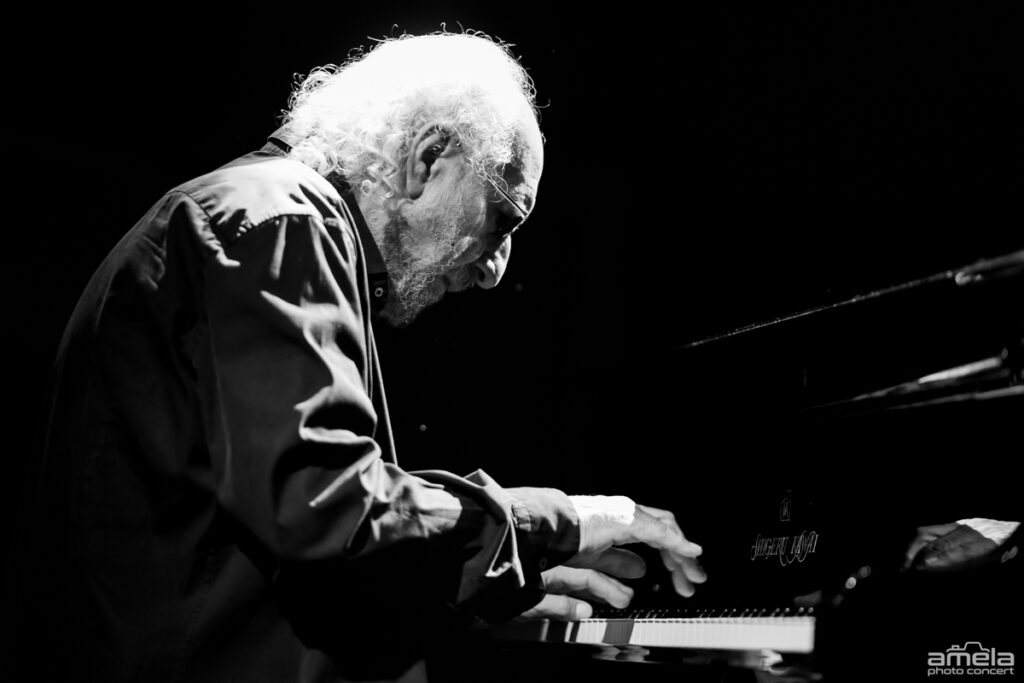
Josep Mas i Portet (1954), better known as Kitflus, is one of the most important musicians in our country. A pianist, composer, arranger and producer with over 50 years of musical career behind him, a legendary figure of the Rock Laietà scene with the band Iceberg, and a founding member of one of the region’s essential jazz-rock bands, Pegasus, he will present his new musical project on Wednesday 29 November as part of the 55th Voll-Damm Barcelona Jazz Festival 2023 at Sala Luz de Gas. Tótum Revolútum Press had the pleasure of spending some time with the musician, talking about his new project, his career, and his outlook on the world of music.
TRP: Mr Mas — or would you prefer we call you Kitflus? — what can you tell us about this new project?
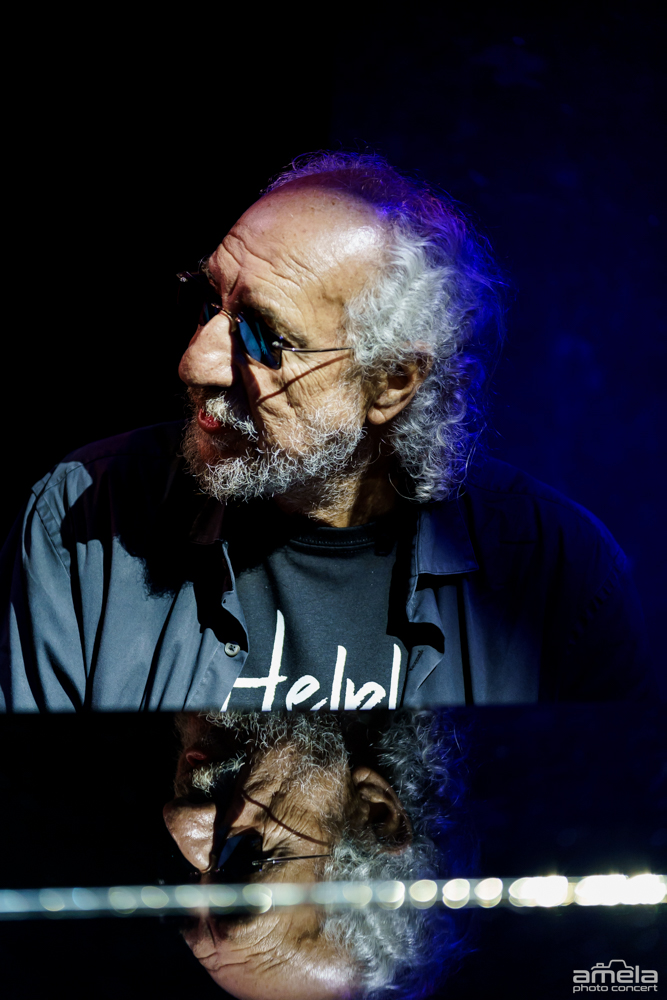
Josep… but everyone calls me Kitflus. The name Kitflus first appeared when I was 16. I was playing with Tony Ronald, the one behind “Help, Ayúdame…” and his brother came over from Holland, who didn’t speak a word of Spanish or anything, and, don’t ask me why… I have to go back a bit first. When I was 15 I joined Frank Dubé in a project called Proyecto A, and the pianist there was known as ‘Kisguei’, because the guy before him had been called ‘Kisguei’ too — musicians had these odd names, nicknames. When that ‘Kisguei’ joined Tony Ronald’s band, his brother mangled it into ‘Kitflus’, which doesn’t mean anything, not in Dutch or any other language; I just went along with it, since there are plenty of Joseps out there, but I can guarantee there’s no other ‘Kitflus’. And over the years it stuck as Josep Mas Kitflus, like a second surname. Usually people call me ‘Kitflus’, Serrat calls me ‘Kit’, but my wife calls me Josep.
When I finished my last tour with Serrat, ‘El Vicio de Cantar’, which wrapped up last December, I had strings on my mind — I’ve always loved string instruments — and I already had the idea of doing my own material with acoustic piano and a string quartet. Around January, seeing as I no longer had the tour and Pegasus had said their goodbyes a year earlier, I decided to put together a personal project around the idea of piano and string quartet, and I called it Kitflus Ensemble, a name that just means a group, and I started working on 12 tracks, all of them my own originals (some older, some newer), plus 1 or 2 covers.
TRP: The format of this new project is acoustic piano accompanied by a string quartet. Were you trying to get away from your more electrified period with Pegasus, or is this a natural evolution of your musical approach?
I wasn’t trying to get away from my more electrified period — I have an album I made called Kitflus Kuartet, where it was a trio plus a cello as the fourth element. I love string instruments, so this is a natural evolution. I was really excited to do this project with a string quartet, which isn’t easy. I hope people like it.
TRP: Do you work differently with a string quartet compared to a traditional band format with bass and drums?
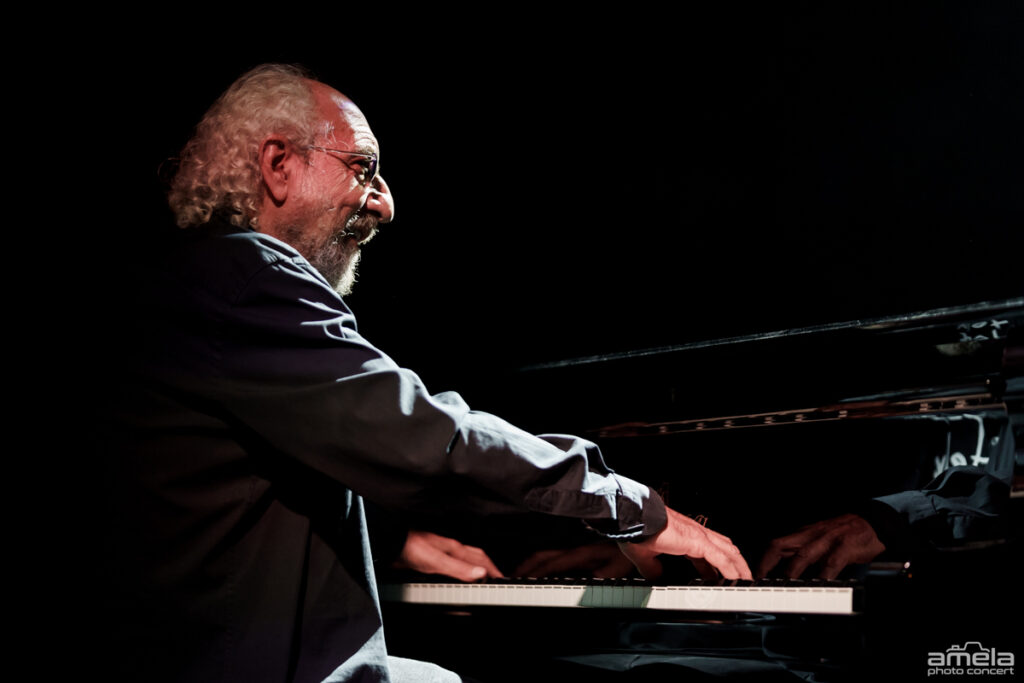
It’s completely different — the string parts are entirely written out, what they play is written down to the very last note, but what I play has a significant improvised element. So they have to act as the engine, doing everything: bass, drums… they’re the entire foundation, and I get to play around on top of it. It’s difficult, but it’s a real challenge. Everything’s natural and acoustic, it’s very original — my music, you might like it or not, but it has a personality, it dips into more classical things, into jazz… it has no fixed language, it’s purely music. The idea behind presenting it at the Barcelona Jazz Festival is that it could work at any jazz festival in the world.
TRP: In 2004 you released an album called Kitflus Kuartet, where your piano was accompanied by Roger Blàvia on percussion, Rafael Escoté on bass and Manuel M. Del Fresno on cello. Do you see this Kitflus Ensemble as directly connected to Kitflus Kuartet?
I wanted to make an album separate from Pegasus with a project called Kitflus Kuartet, and I’m carrying some of that over now. It’s a progression from all of that.
TRP: Will there be a record release for this new project? If so, in what formats? What are your future projects?
My plan is to record it live at Sala Luz de Gas, and it’ll come out on digital platforms, at least for now. I’m not planning to release it as a physical record at the moment — releasing records these days just isn’t worth it… maybe a vinyl… but definitely not a CD.
This is the first thing — let’s see if it takes off and I can play plenty of shows. The other thing I’ve already put together, and already performed once, is Les cançons de Serrat sense Serrat (Serrat’s Songs Without Serrat), which I actually did already with two pianos, Ricard Miralles, the other person who worked with Serrat for many years, and myself. We already did that project, it’s recorded, there’s a video, but this time I wanted to make it more pop, with David Palau on guitar, a guitarist who’s also played a lot with Serrat. Instead of two acoustic pianos, it’ll now be acoustic or electric piano plus electric guitar.
Another project is with my wife — Joana Amaro has a heavy band, Amaro, they’ve got several albums out and they’re currently working on a new one (I’ve produced some of their records). She’s also put together a duo where she sings classic boleros. We’ve done a few shows where I play piano in the first half, and the second half is a duo playing boleros.
I’ve got another project with a flamenco singer-songwriter, Pedro Castro, who I’ve been working with for a while now — he wants to put on a show, but the money’s not there yet to make it happen. It’s a show with flamenco ballet, several performers, a choreography… it’s a show that’s already fully designed, but to get it off the ground someone needs to put up the money.
Right now, what I’m focused on is the quartet — I see it as viable and musically very interesting, it has substance, and I honestly believe it could get booked at any jazz festival in the world.
TRP: You’re a complete musician: pianist, composer, session musician, teacher, arranger, producer, and on top of that, you have your own recording studio, Kitflusound. Which of these roles do you identify with most?
I really enjoy my work, my profession, so I enjoy every one of my roles, although what I love most is when I’m playing, when I put myself in the performer’s shoes. But I also enjoy arranging. If I’m composing, especially for picture, I enjoy that too. I have a great time with all of it! If I had to pick one thing, though, it’d be playing.
TRP: Last 2 September, as part of the Mas i Mas Festival, the “50 Years of Zeleste” concert was held, where the Barcelona Art Orchestra reimagined tracks by Música Laietana bands like Iceberg, including a selection of songs from the 1975 album Tutankhamon. Did you attend?
I was actually supposed to be there. They’ve done a couple of these now — the first one was last year at the Palau, and they contacted me to play, I wasn’t on tour with Serrat yet at that point. For this second one I had to drop out — the show at Sala Barts clashed with me being at Sala Apolo doing the Lola Flores show, where they’d asked me to put together a band. I wasn’t supposed to play, but in the end I reached an agreement and did it. The project itself was fantastic, it went really well, but the promotion was terrible, people just didn’t hear about it — it ran four weeks, Thursday to Sunday, with barely anyone at first, then a bit more later on… The Teatre Apolo and other Barcelona theatres are managed by a Madrid company that barely did any promotion, the production company and the management company just didn’t see eye to eye.
What do you think of Música Laietana? Do you feel that whole musical legacy has been properly recognised?
We weren’t exactly part of Música Laietana as such — it’s more that it was the same era. Música Laietana were the bands that came out of Zeleste, we didn’t come from there, even though we played there a lot. Back in that period, which will never come back and lasted about five years (the years of the Transition), 24-hour festivals started popping up all over the country — Canet Rock, in Burgos, in Andalusia, in Galicia, festivals happening everywhere, and at these festivals all kinds of musicians shared the same stage: there was Iceberg, Triana (Andalusian rock), Alameda, also Andalusian rock, Orquestra Mirasol, which was more Latin, there was something more classical too, Jordi Sabatés, heavier bands like Leño, Bloque… the audience was the same for all of it, and they experienced music the way it should be experienced — as one single thing. That ended the moment people started slapping labels on everything.
The system pushed things that way, politics too — they started dividing everything up, here with Música Laietana, in Madrid with the Movida Madrileña, and so on. And it got exploited politically, people campaigned for political causes off the back of the music without actually caring about the music itself, just using it as a promotional banner. The media also helped tear it all apart with the format radio stations — back then there was Los 40 Principales, and Iceberg actually reached number 1 on Los 40 Principales with a track called “La Flamenca Eléctrica” — unimaginable today!
There hasn’t been real recognition — in this country the cultural world is really tough, and the people who’ve actually done things, aside from specific cases like Serrat, don’t get valued. Things that weren’t especially commercial just get lost. From that point of view, even I, with more than 50 years of playing, composing and running projects, and not remotely retired, still find it hard — what’s hardest is selling original material, I have to hustle a lot just to land a concert.
TRP: You started your career very young — before Iceberg you’d already worked a lot in the music world, appearing in projects like Frank Dubé’s Proyecto A, and as a backing musician for singer Tony Ronald, where, curiously, you met the rest of Iceberg’s members before the band was even formed. What do you remember from that whole period?
Proyecto A was the start of it, when I arrived in Barcelona at fifteen — before that I’d played in Mollet del Vallès. I’d started studying at six years old, with Miss Sunyer, in Mollet del Vallès, and every year I’d go and sit my exams at the Liceu in Barcelona. While I was in Mollet I made my first appearances with a band called ‘Los Estoicos’, another called ‘Cuarto Mundo’, and at 12-13 years old I played in a band called ‘Folk 3’, where I played guitar and sang — I did 4 years of guitar lessons. When I finished lower secondary school at 14, I moved to Barcelona to live.
All of us who’d end up in Iceberg already knew each other, but we all crossed paths through Tony Ronald. Tony Ronald had a really good band and really good gear, he was one of the standout acts at the time, he took great care of the sound equipment, he was Dutch. For instance, as a keyboardist, thanks to him, I was one of the first to have gear like the Minimoog — there were only 2 in Spain, I had one that Tony Ronald had brought over, and the other belonged to Teddy Bautista (of Los Canarios). I was also one of the first to own a Fender Rhodes piano.
TRP: Do you still have any of those synthesizers? You could put together a whole museum room with them.
I still have a few of them. I’ve owned pretty much all of them, I’ve lost a lot of them along the way, and some of them are extremely sought after these days — a lot has slipped away over time and through all the different spaces I’ve moved through. If I’d kept everything I could put that room together, because some of them are highly sought after. I’ve had them all, including the first polyphonic synthesizers.
That served me really well, because I became a session musician — there was an enormous amount of recording happening in Barcelona back then, it’s where the best recording studios were. The multinational record labels were based in Barcelona, EMI had its studio, CBS (Columbia) too, Belter was also a big player, which later became Horus — the vast majority of them were here. Since I was a musician who could read sheet music and lay down the foundation on acoustic piano, and on top of that I had all this trendy gear for making recordings, I recorded a huge amount during that period. There’s an organisation called AIE (the Spanish performers’ rights society) that registers the tracks you’ve played on — I have around 6,000 registered, a lot of them from that era. It gave me a huge amount of experience.
Back then we were all session musicians, we made a living from recording sessions; nowadays, with new technology, the session musician basically doesn’t exist any more.
TRP: How did the idea of forming Iceberg come about?
We were already playing together, and we made the decision to form a band all together. Max and I were the ones writing, Primi on bass — the only one who hadn’t been part of it all up to that point was drummer Jordi Colomer, who I actually lived with. Jordi Colomer was someone who, when I arrived in Barcelona at 15, was renting a room in Plaça Reial that I shared with him, and we became very close friends. On the first album there was a singer, Àngel Riba; by the second album it had already gone fully instrumental.
TRP: How did that shift from the first to the second album come about?
(Laughs) It’s a silly story really — on the first album there were singable melodies, lyrics full of satire aimed at the system, and so on. On the second album, the melodies weren’t singable any more, we kept making life difficult for ourselves, time signature changes… the singer, who also played sax, performed with us on a couple of occasions and then became our manager — it was actually a pretty natural process.
TRP: Your style draws on influences from classical (or academic) music, jazz, rock… What’s your musical training, and how has your way of understanding music evolved over the years?
I started out with classical music, but I very quickly became interested in music that allowed for improvisation, even though labels have never really appealed to me — music is one single thing. When people ask me what kind of music I make, I answer that I make a lived-experience cocktail, a definition I really like, because any musician who’s actually making something is a cocktail of everything you’ve learned, everything you’ve felt, and everything you’ve lived. I used to play every year in Tiana, at the Casino, at a festival called Festival de Jazz y Otras Músicas — I always found the concept of “Other Musics” really amusing, anyway…
TRP: Your career has been closely tied to the world of television and audiovisual work, going back to Iceberg’s breakthrough with the theme for TVE’s Popgrama, Teverano with the legendary show Musical Express, or your time at TV3 composing, among other things, the soundtrack for the series Poblenou, or the hugely popular Per molts anys for Club Super3. How do you look back on that side of your career?
One of my first appearances was in Bigas Luna’s film Bilbao, with the track “Sentiments” from Iceberg’s album Sentiments. As for Teverano, I was very close friends with Josep Maria Bardagí, in fact we crossed paths through Joan Manuel Serrat’s band too… I’ve done a lot of commissioned music over the years — one of the first TVE theme tunes I wrote was for Rockopop, which was groundbreaking because the visuals were animated; you can find it, along with other work of mine, on my website www.kitflus.com
At TV3 I did a lot of things — Club Super 3 from the very beginning, the famous “Per Molts Anys” birthday song, I wrote all the music from Club Super 3’s early years (Christmas carols, and so on), the Telenotícies news theme, the clock jingle… There’s a record out there called Poblenou that I don’t even have a copy of myself — Poblenou was TV3’s first ever soap opera.
I worked on one series of Operación Triunfo, since I did a lot of work for Gestmusic, back when Josep Maria Mainat and Toni Cruz were there — they’re not there any more. I did the only edition of Operación Triunfo that featured live musicians on stage. I also did a lot of New Year’s Eve broadcasts for TV3, and La Marató — Josep Maria Bardagí started it, and after he passed away, I took over and did it for 3 years with a full orchestra.
With the song “Anys i anys”, there was some advert for a product, I don’t even remember which, that wanted to use it, but TV3 refused because it was tied to Club Super 3 and TV3’s own image. I wanted it to become something popular, a birthday song in Catalan, something genuinely local — I hold 50% of the authorship, the lyrics aren’t mine, TV3’s own scriptwriters wrote those. If it had been unlinked from TV3 it would be far more popular today.
TRP: To finish up, what music do you listen to nowadays? What do you think about the current state of the music industry?
The only time I really listen to music is when I’m driving, mostly the radio, Los 40 Principales, Cadena 100, Europa FM, I flip around and hear all kinds of music. In my normal day-to-day routine I listen to what I have to work on, I don’t listen to much music for pleasure. Some really good things are being made these days, though there’s also plenty being made now that isn’t music — I’m not trying to trash it, but there are things that simply can’t be classed as music. Music needs more ingredients: there’s the rhythmic side, the lyrics matter (whether they say more interesting things or less), the vocals carry a lot of weight, but there’s a lack of harmony, in urban music being made today, for example — the whole thing ends up feeling pretty lopsided. I’ve got no problem with it existing, but it shouldn’t be the only thing available to young people. It gets consumed because it’s the only thing they’ve been given and they don’t know anything else — there’s no culture there, no musical culture. It’s not there because they were never given the chance to have it, what’s offered to them is what they end up consuming, and since it’s easy, and the industry doesn’t care whether something lasts a long time or not, what matters to them is fast consumption.
Distribution has changed enormously, CDs barely exist any more, cars aren’t even sold with CD players any more, the cassette disappeared ages ago, the only format left is vinyl for the romantics, everything else is digital now. Digital, and consuming a track, or 15 seconds of one… It’s a real problem for musicians and songwriters, and what they actually see in royalties is even less. Where the rights-management bodies spend most of their money these days is on legal matters, trying to get royalty percentages to something slightly more dignified — right now they’re completely undignified. If every Spanish songwriter, across every kind of music, could band together on a single platform, bypassing Spotify or similar services, instead of earning 1,000 they’d earn billions for the exact same thing. That will change eventually, but it’s a very slow fight against the big machines, the platforms hold a huge amount of power.
Music has changed a great deal, the situation is really tough, the industry has changed… the professional musician — which is what I am — even if it’s my passion, it’s also my profession. I’ve made my living from this since I was fifteen, and now I’m 69, but everything has changed so much, and it’s difficult — playing and actually getting paid for it has become a luxury.
It’s been a pleasure to interview you and have this conversation. I wish you the very best of luck with the Kitflus Ensemble’s debut and with all your future professional projects.