
Progressive Rock
Moonquake Records · 30 May 2026
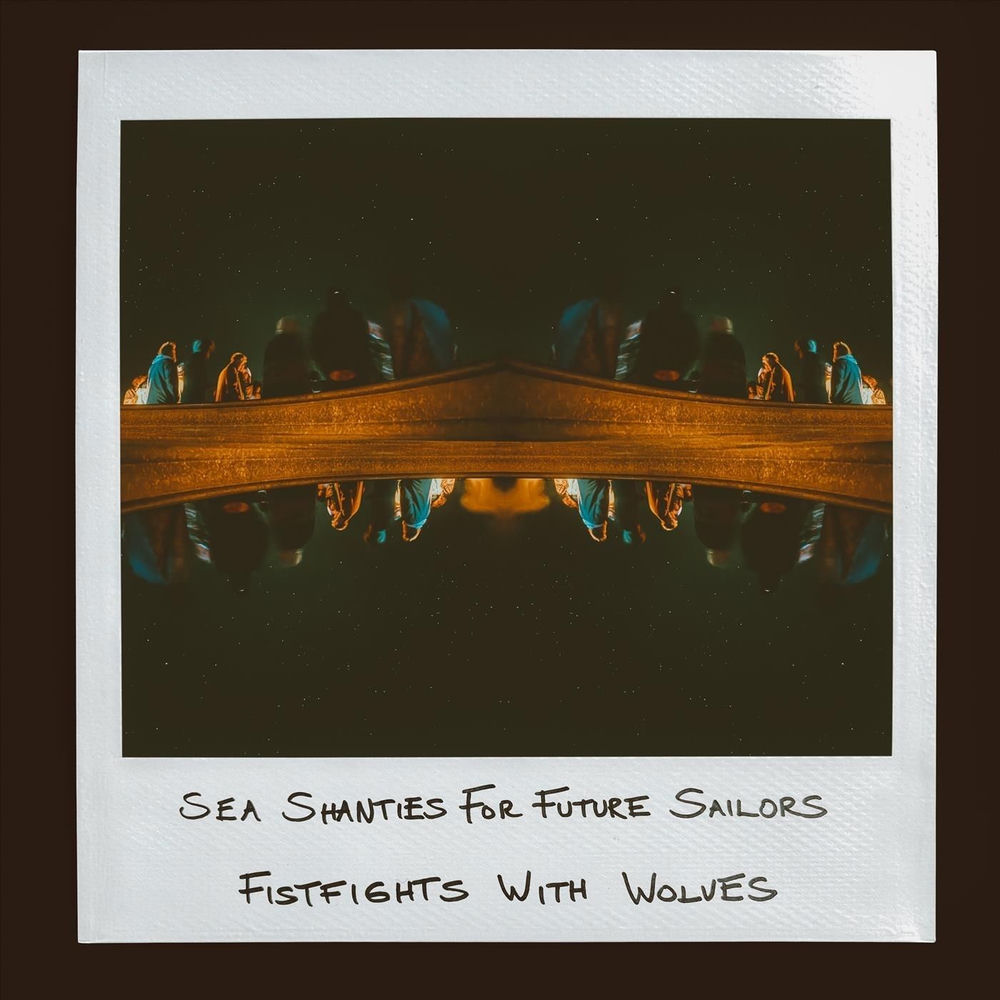
Thirty-four minutes and forty-three seconds for nine tracks, only two of which pass five minutes. “Sea Shanties For Future Sailors” opens with “Prelude”, a minute and a half of breaking waves and choral voices, and shuts with “Pirates Recapitulation”, seventy-six seconds that return to the theme of the second track: the record is a circle, and inside it are four-minute songs with more going on than some twenty-minute suites.
The San Diego sextet used to be Interrobang, the name under which Mat Rakers — chief composer, keyboards and guitar — put out largely instrumental home recordings. The change has a prosaic explanation: a few local promoters blacklisted them when Rakers was too outspoken about the industry’s problems, and the band voted for “Wolves” as a nod to that same industry. Ryan Bradley plays guitar, Nathan Robinson bass and Kevin Capacia drums, and carrying the weight of the album are the twin vocals of Anastasya Korol and Latifah Smith. On “Archons”, two and a half minutes, they sing almost unaccompanied and in harmony; “Pirates” opens into a prog-jazz passage with shrill keyboards halfway through before a Celtic-sounding finish; and “Elegy”, seven minutes, starts like a piano concerto for two voices and ends in an a cappella that circles back on itself. “Thing Eater” is where the eclecticism the band claims for itself (chamber music, math rock, jazz, prog) shows clearest, since in five and three-quarter minutes it also takes in symphonic metal and classic prog keyboards.
The device that identifies them is the one thing they never rest. The two voices are on every track and almost always at the same height, and when the album wants intensity it goes looking for it by pushing them up rather than changing their colour. “Gambler”, two minutes fifty-seven, is where it tells most, because the song is short and has no time to do anything else. The economy that’s a virtue at album scale — nothing stretched, not a minute of filler — turns against them at song scale: on three or four tracks an idea stops before it has been developed. Even so, this is the shortest of their four albums: “The Sheep That Eats The Wolf” (2023) had sixteen tracks, and before that came “Bone Script” (2019) and “Plot Armor” (2017). The trim has done them good.
Rating: 7.5/10
Text by Guillem Cardós