
Progressive Rock
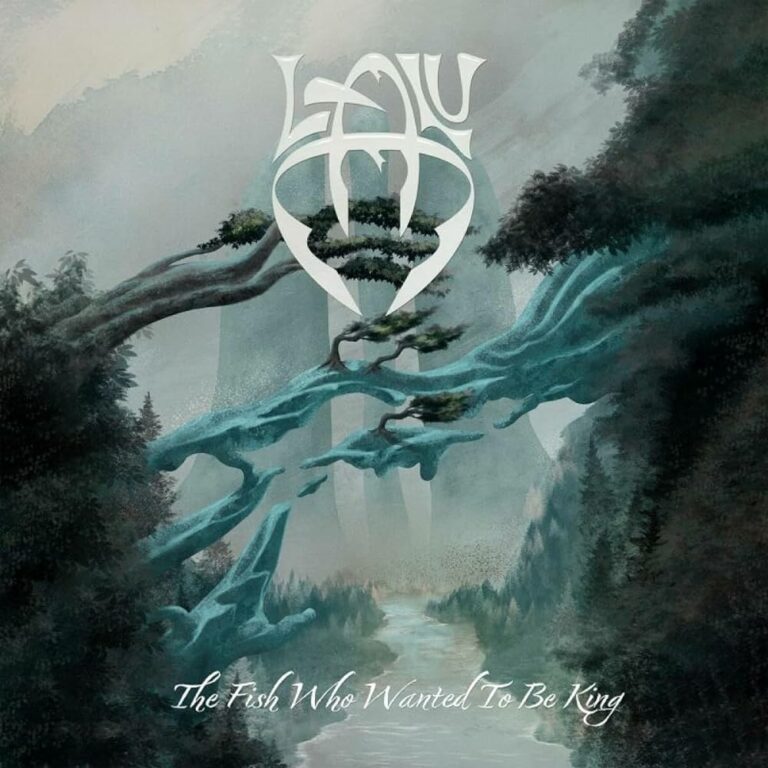
French keyboardist Vivien Lalu is prolific, which shouldn’t surprise us given the warm reception of his previous work under the name Lalu, “Paint the Sky” (2022), and I’d even go so far as to say this “The Fish Who Wanted to Be King” is even better, at least in terms of production.
He’s back with the same line-up, adding this time the Dutch Matt Daniel (keyboards), who shares his nationality with Joop Wolters (bass and guitar), along with Jelly Cardarelli (drums), who, like Vivien Lalu himself (keyboards), is French, and — perhaps the most recognisable name — the ever-busy Englishman Damian Wilson (vocals), whom you’ll know from other line-ups like Arena, Threshold and more quality bands you can find listed on Wikipedia.
We start with “Forever Digital” as a calling card for what’s to come: a fairly classic progressive-rock concept in the style of Neal Morse or The Flower Kings, though in the more instrumental passages there’s a clear reference point in the Canadian band Saga, which makes you pay more attention and take more interest. The song shows good dynamism, a great variety of moods and high-quality production. An excellent, promising opener.
The next track is the album’s title track: “The Fish Who Wanted to Be King”. After a soft introduction, we get a lively first section that surprises us, since we were expecting the opposite. Some might find it a bit cheesy, but the arrangements soon steer it toward more digestible territory. Once again, we get plenty of variety, very pleasant and easy to listen to. But it has a structure that tests the musicians’ memory, and a play of speeds using a kind of start-stop trick that could easily have tripped up the track, but doesn’t at all — showing off real conceptual richness.
“Deoxyribonucleic Acid” takes us into lighter, unpretentious song territory, though with the class we’ve come to expect, and a style closer to Toto this time. Though we might turn our nose up a bit at the keyboard solo, somewhat extravagant in its choice of tone.
Imitating telephone tones, “Is That a London Number” opens, once again bringing us a track with a strong flavour of Saga and Toto, which works out nicely, since both the Canadians and the Americans are approaching the final stretch of their careers, and it’s genuinely satisfying to know Lalu is picking up the baton. The background keyboard arrangements are lovely, and everything sits exactly where it should.
A keyboard-and-Hammond-organ introduction, about as classic as prog gets, presents “Amnesia 1916”. It’s the record’s longest track, and this time I’ll cite Styx or IQ as reference points, on top of the usual ones I’ve already mentioned to those of you reading along. I’ll also say we’re back to a genuinely complex track structure, on a song that explores Neo-prog territory. Like the rest of the songs, I find it an excellent composition with real depth, rewarding multiple listens as you enjoy the musical labyrinth it invites you into. Worth highlighting is Vivien Lalu’s taste on keyboards, the odd melody a bit too “happy” for my liking, a very Floydian closing guitar solo that feels too short, and an extraordinary suite in the old style — though that term always sounds a bit pretentious.
It makes sense that, after such a demanding listen, we get a track that’s simpler in appearance, like “A Reversal of Fortune”. In this case it’s also instrumental, providing the number that feels obligatory on any “proper” prog album. It features a piano solo carrying jazz-inflected language in its playing, and, as a spoiler, I’ll tell you the track doesn’t end when it seems to — I probably shouldn’t say that, but it proves I actually listened all the way through. A lovely drum solo carries us toward the conclusion, with one last guitar solo.

And from one king to another, we’ll wrap things up, because everything must end. “The Wondering King” opens with an almost a-cappella introduction of a melody that gradually fades into the verse. And since the record runs long, at 54 minutes, we find all the album’s elements summed up in this closing track, offering one last composition at the same fine level as the rest.
For me, it’s been a real luxury to enjoy this album, and I had a great time with it, since it’s engaging, pleasant and of high quality. Quite the standout within Tótum Revolútum Press’s life so far. And if you’re a fan of the genre and of the bands I’ve mentioned along the way, you’ll also enjoy this delicacy.
Writer: David Sàez