
Progressive Rock
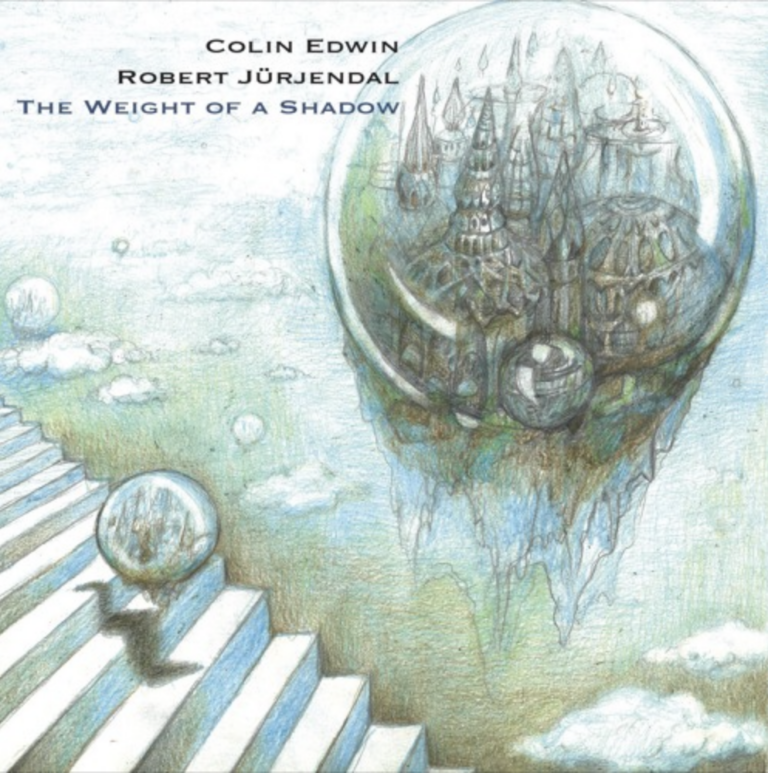
Robert Jürjendal is an Estonian guitarist who, alongside classical training, has also taken part in the Guitar Craft courses run for 25 years under Robert Fripp — an important detail, since it’ll help us understand a lot about his playing. And Colin Edwin is an Australian bassist who’s taken part in countless projects and is best known for having been in Porcupine Tree from 1993 to 2010.
So together — well, remotely — they’ve composed and recorded this “The Weight of a Shadow”. It’s their second joint venture, following their earlier “Another World” (2018).
The opening of “Barely Visible” is a fretless-bass introduction with background arrangements very much in the style you’d find on a Robert Fripp record, and as I mentioned, he’s Jürjendal’s mentor. In a gloomy atmosphere, notes are picked out one by one until the percussion and first melodic lines arrive, giving it an introductory feel. The kind of closing guitar solo confirms we’re dealing with a strange album we could label experimental — though everything they experiment with already carries a vintage flavour.
In the same vein we find “Cyclic Drift”. Worth noting that Mr Edwin has a good ear for pulling lovely tones out of his basses: mellow, precise and authoritative. Otherwise, we get a run of unsettling soundscapes and guitars, the latter playing with dissonances that fit the composition very well. Personally, the track ends up feeling a bit long, since ambient music has that subjective quality where you never quite know where Nirvana is or where the Stop button is.
A bit more entertaining, without setting off any fireworks, is the title track “The Weight of a Shadow”. With a more standard structure, over a rhythmic foundation, Jürjendal plays the characteristic dissonant guitars found throughout the record. It’s more than evident this man knows perfectly well how to play guitar beautifully, but why do that when everyone else does too? Surprisingly, he gives it a peculiarity that makes the song enjoyable, and since it’s not overly long, it ends up working well.
A bit more of a slog is “Time to Find the Sun”. Perhaps because it’s a mix of new-age style and bluesy airs that don’t make it stand out. It doesn’t bring any melodies or rhythms that add value either. So, if it weren’t for the occasional King Crimson-esque mood, it could easily slot into an elevator-music compilation.
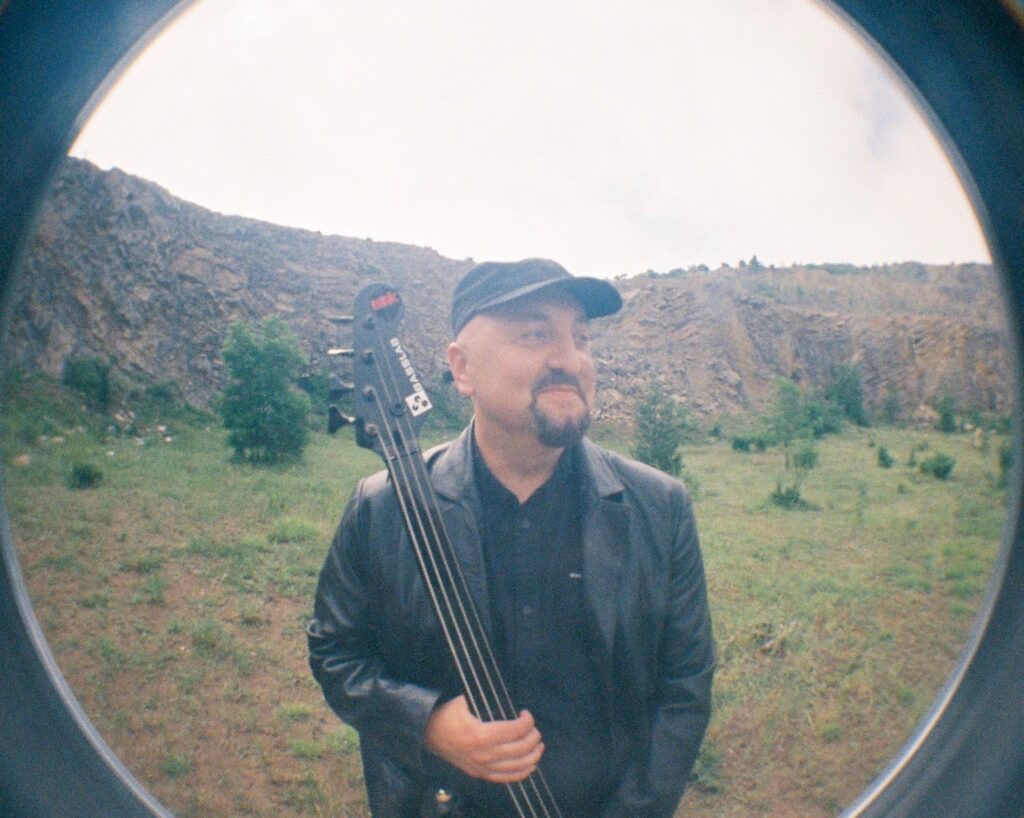
Curious is the almost percussive way the bass is played on “Soul Blizzard”, accompanying lovely guitars and some unpleasant little electronic percussion noises. Then an annoying guitar is added, giving way to a delicate bass picking back up the ideas the guitar had presented, which, no matter how you slice it, keeps droning on. Hard to listen to, let alone enjoy.
By this point we can already say that listening to the whole record in one sitting, besides being an unrewarded heroic act, is like eating a week-old packet of dry ladyfingers with nothing to dip them in. “Unknow Hands” continues in this vein. You can tell the players have real class, but, folks, it demands too much open-mindedness, since the natural reaction is to sigh at the repetition of ideas we’ve already heard plenty of times in many “experimental” compositions, and you start wishing you could switch to listening to Little Richard songs.
And I’ll stress again that, even so, I don’t consider it a bad record. But we return to ambient moments with “frippertronics”-style guitars over creamy bass backing, some percussion and drum programming with a certain amount of judgement, and surrounding effects. But it lacks a “band” feel, and you can clearly tell this was composed via correspondence, as is obvious on “The Grid”, which also runs about two minutes too long.
“Springunal” is a déjà vu of everything before it, perhaps with more noise effects and loops. Track number eight, “Penumbra”, offers a nice bass melody seasoned with the expected dissonant, atmospheric arrangements. And “Shadow Ritual” is the third track I’m including in this same paragraph, which tells you there isn’t much to say that isn’t already recurring across all three.
Moving into the final stretch, we get “Sub Flow”, which navigates more familiar ambient-song territory, and strongly reminded me of the ideas David Sylvian was developing in his mid-eighties instrumental tracks. Curious, since I made the same connection in my review of the new Michael Peter Olsen release.
And we close with “Back to the Light”, whose slightly more conventional structure opens with the main motif acting as a chorus, alternating with guitar melodies. It’s a relief to end things on a gentler note.
Complicated. You won’t get through it in one sitting.
Colin Edwin & Robert Jürjendal bandcamp
Writer: David Sàez