
Progressive Rock
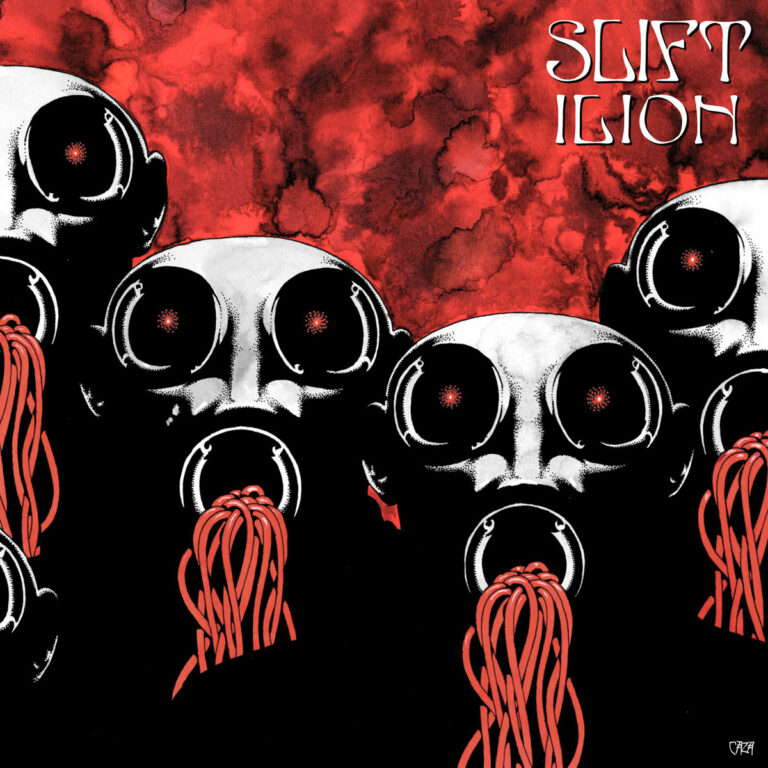
You only need three things to fully enjoy this album, which could be one of the most important releases of 2024: headphones, focus and an open mind. Only then, once it’s over, will you be able to stroke your chin with a knowing look and say: “Mmmm, interesting”, or simply blurt out: “This is the fu… freakin’…”
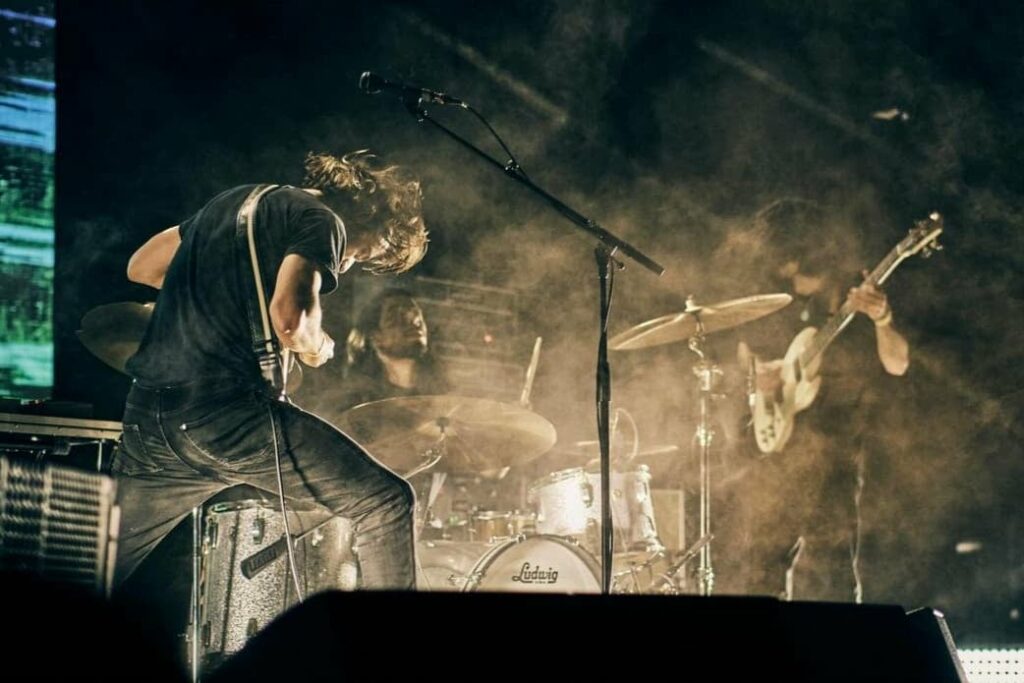
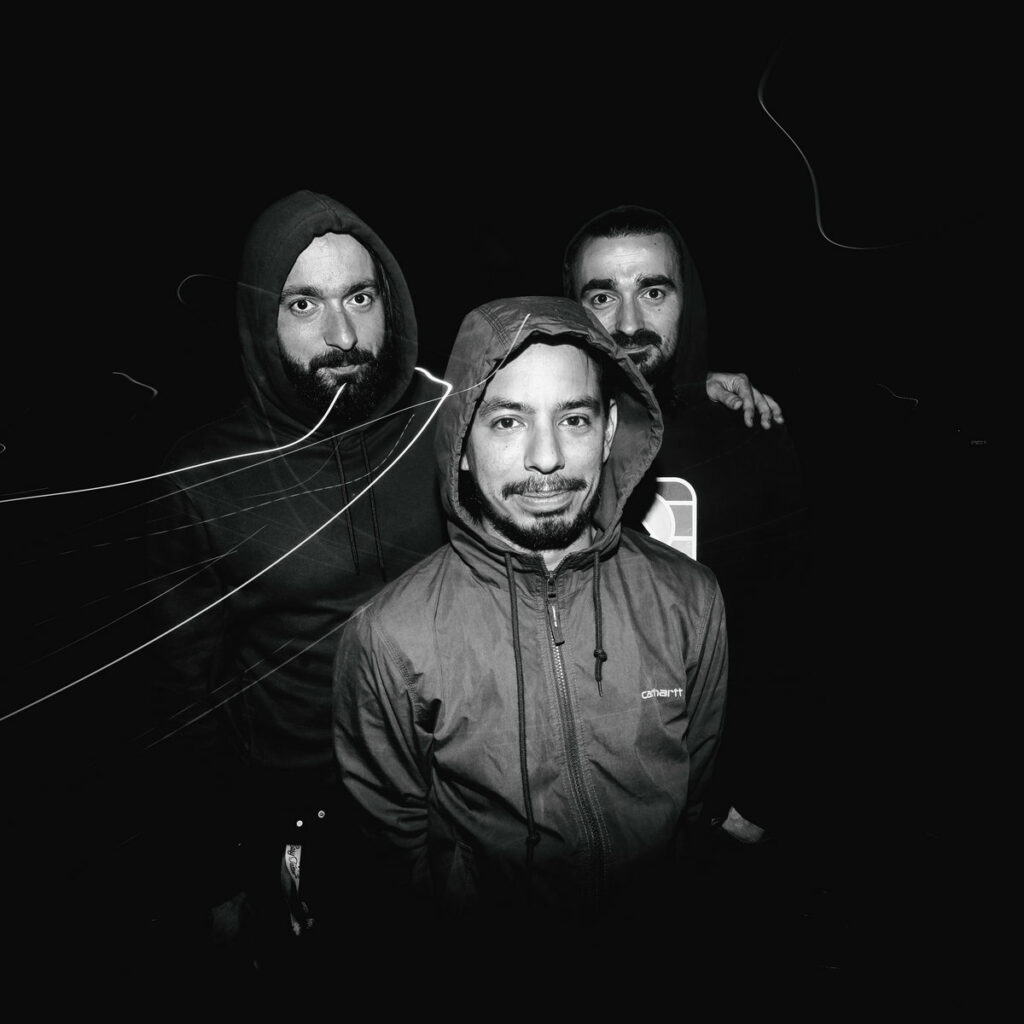
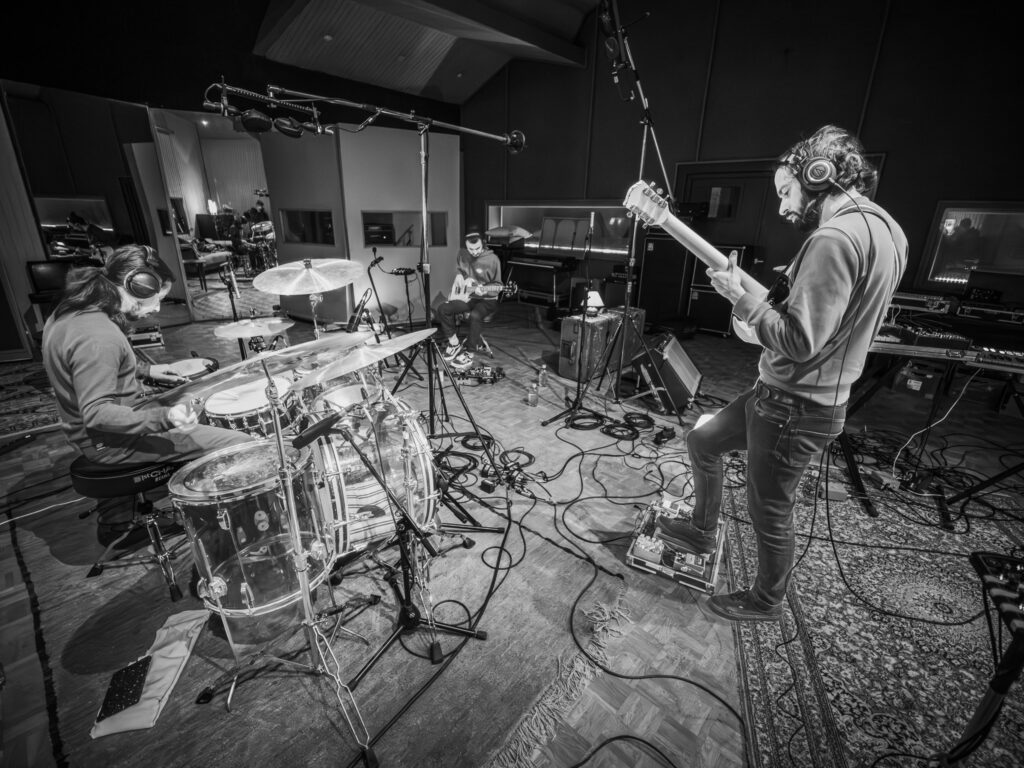
Canek Flores (drums) was a school friend of the Fossat brothers: Jean (guitar, vocals and keyboards) and Rémi (bass). All three from Toulouse. They founded the band in 2016, and since then, with “Ilion”, they’ve now released three full-length albums. And with this one, they’ve really outdone themselves.
A very atmospheric introduction, with backing vocals sitting deep in the mix, gives way to a surprisingly noisy fragment with almost lo-fi production. If we push through the initial shock and apprehension that “Ilion” provokes, we enter a lovely bass-and-drums ostinato that lets a guitar-and-vocal melody develop, both fairly filtered. It’s not an easy record to digest on a first listen, but there’s a fusion of psychedelia, punk and prog here, delivered with real fury and a concept far removed from convention.
The melodies, to name a current reference point, recall the wildest work of King Gizzard & the Lizard Wizard, though with a smaller dose of friendliness, since the listener has to make an effort to let themselves be drawn into almost hostile atmospheres. A brief breather arrives around the midpoint, where the tempo slows and we enter passages somewhere between Pink Floyd and Vangelis, broken by a biting voice that pulls us back to supreme rage, which leads us into a chord progression that would delight Gustav Holst. The ending turns out very chaotic, quite deliberately, which is handy for when we play this track for our grandmothers next time they ask about our musical taste, and then collect the inheritance after the heart attack.
And relentlessly we continue with “Nimh”, which carries on with force and a great deal of distortion, in the broadest sense of the word — but intelligently reined in once the voice arrives. Little by little, it takes us toward more doom-oriented ideas combined with much more classic touches, creating an unexpected musical richness. A good example is the middle section of drums and guitar, giving the spotlight to the voice and to a bass that arranges itself almost recklessly. It’s spectacular how the guitar in particular holds the composition together when it enters a completely unhinged section that, naturally, ends in an explosion. But since this band knows exactly what it’s doing, they give us a bridge that flows into delicate melodies, combining male vocals and female backing vocals, wrapped in hypnotic arrangements. And there’s more detail to notice here: the conclusion returns to the darker, heavier principles that any other band would simply present as they are, but if you listen closely to the bass, you find the ethereal melody we’d heard in the female backing vocals, creating an almost schizoid contrast between barbarism and civilisation. Wonderful.
A set of rhythmic effects deliver a sonic gut-punch as the band comes in screaming on “The Words That Have Never Been Heard”. After the furious introduction, we move into territory where drum toms and a creamy bass, courtesy of Rémi Fossat, hold up the rest of the more relaxed melodic lines. The interplay of loud and quiet is pushed to the extreme, with very intimate, delicate sections alongside terrifying, wrathful outbursts. The middle section is sensational, where the drums authoritatively hold the song together to give the bass some room to shine, perfectly backed by subtle keyboards and a guitar that knows to stay out of the way until its own turn to shine comes, again occasionally supported by a lovely female backing vocal. And you can’t miss the return of the opening ideas, phenomenally cut off by the band’s own rebellion against them, delivering a further onslaught of sonic blows to, masterfully, lead us toward the remorse that will bind this track to the next one: “Confluence”.
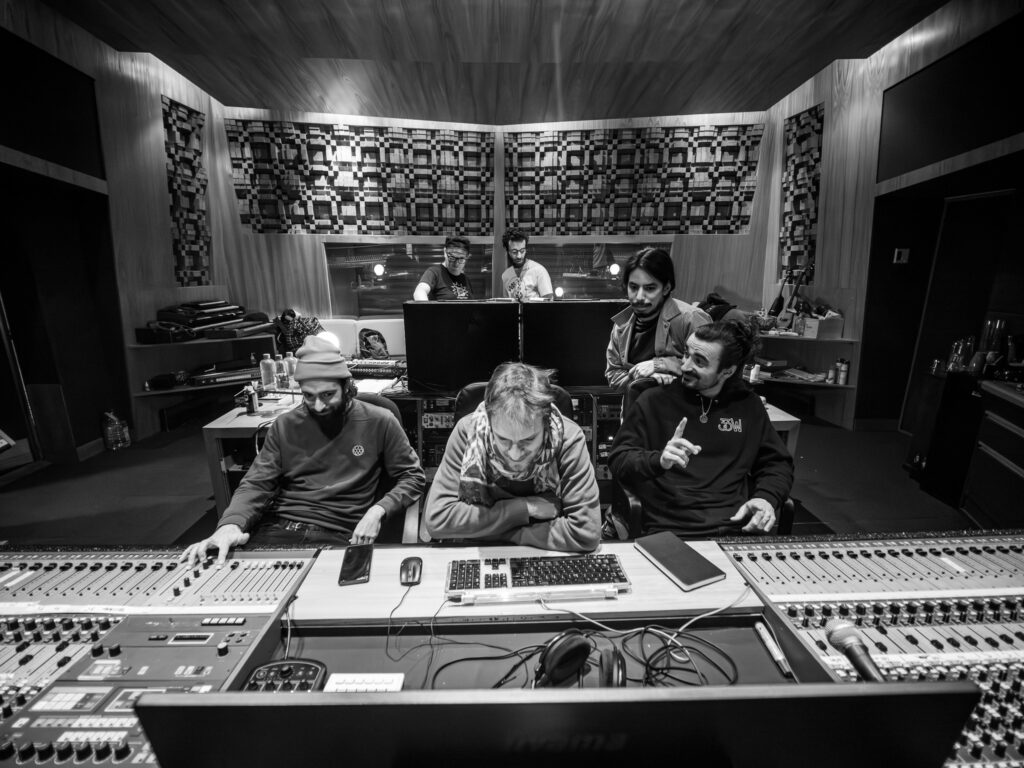
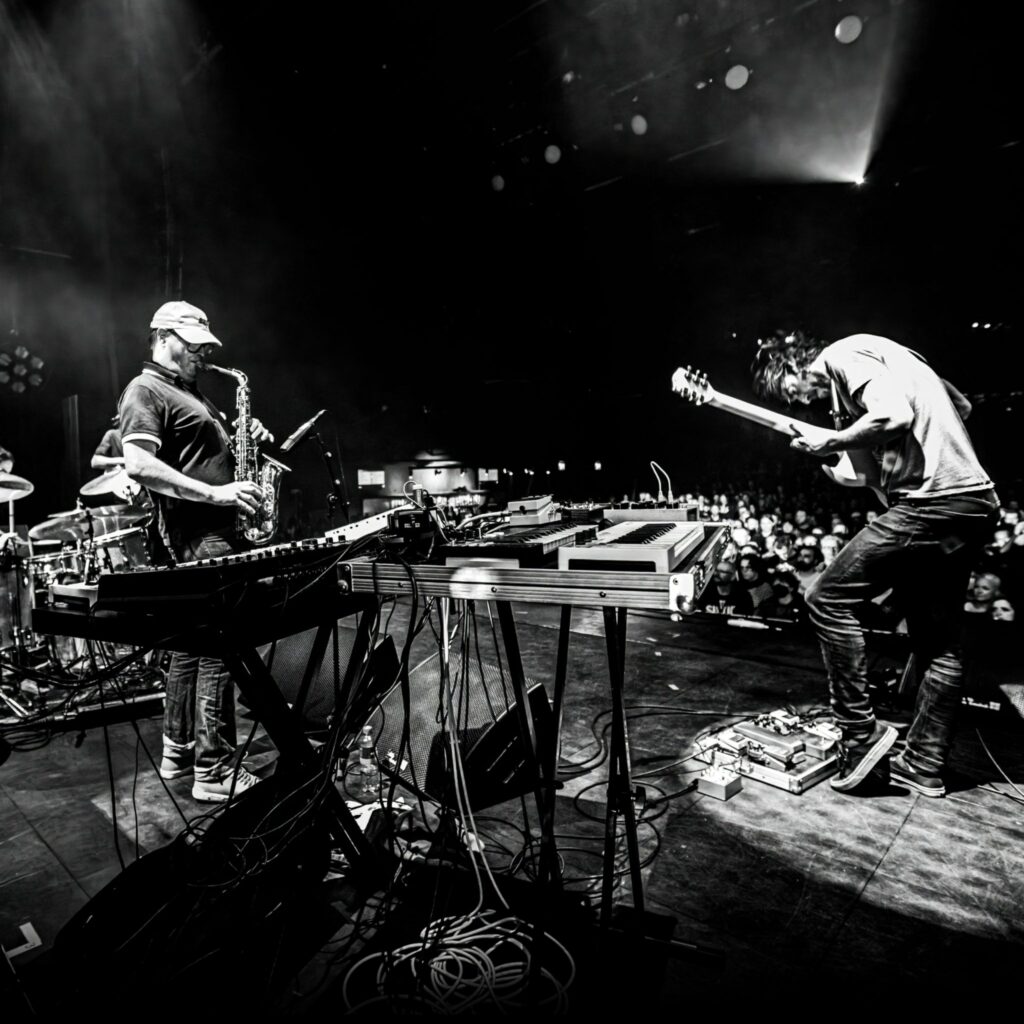
With a moving saxophone entrance that gives you goosebumps when you’re letting the music carry you away, surrounded by your headphones. This splash of colour is very welcome on a composition that, over a flawless rhythmic foundation, lets guitars and saxophone fully express themselves. That’s when you realise that dark, murky, hard-to-parse production has vanished, because by now you’re already inside the band’s sound. Real credit is due to whoever mixed this album.
A strange gentleness and delicacy appears on “Weaver’s Welft”, with vocal melodies you could say carry a touch of Gregorian chant. At least until they decide enough is enough and it’s time for punishment. A brief guitar interlude repeats the structure, which, once the cycle ends, moves into an unsettling section dominated by Canek Flores’s powerful drumming. The constant contrast between heaven and hell works once again, reaching its final third where the two coincide. And they close with a long final coda, ideal for those who love deep darkness but haven’t quite lost hope in the light, since Jean Fossat’s bright, if lonely, guitar arrives to rescue them from it.
A guitar arpeggio, fittingly, opens “Uruk”, with atmospheres close to ambient post-rock, and a strong presence of very well-treated vocals. Over the recurring guitar figure, a chaos gradually builds that allows the new riff to emerge, which the second half of the track will be built around, itself still a variation on the original arpeggio. A third melodic motif enters as an ensemble-played ostinato that, progressively (it’s what prog does), fades away only to ambush us treacherously the moment we let our guard down. A real lesson in how to use the ostinato technique, one that would even draw a nod of admiration from Stravinsky himself, its greatest exponent.
A new surprise awaits on “The Story That Has Never Been Told”, which shows the influence of more classic progressive rock and could easily remind you of Genesis, with the vocals entering along a more modern line in the style of Elder or Kadavar. A nod to Pink Floyd is also almost obligatory, thanks to its psychedelic guitar atmospheres in the development of a kind of interlude. It’s perhaps not the most representative track on this record, but if extreme music isn’t your thing, or if — inexplicably — you liked Neal Morse’s latest album, this would be the ideal recommendation to give Slift a chance. Once again the middle section offers a new delicacy in the shape of near-a-cappella backing vocals, which give way to another long, obstinate interlude, though a very lovely one, that this time really does fade away without any bad intentions.
And as the closer we get “Enter the Loop”, an ambient track of the kind usually used to set the mood at the start of a listen, but which here serves as the cherry on top of an excellent, complex, fabulous and demanding album this French trio has delivered. We hope to see them live on our shores very soon. They needn’t worry about their gear, since round here we don’t go tipping the contents of vans or trucks out.
Writer: David Sàez