
Welcome back to this section! In today’s article I’ll continue talking a little more about this paradigmatic instrument that contributed so crucially to the sound of classic Symphonic Rock: the Mellotron.
The M400 model we saw in the previous article, the most famous and most widely used by bands in the ’70s, only offered a choice of 3 instrument sounds due to its compact design (the tapes had 3 tracks and it had no station system — in the book I explain in detail how the various Mellotrons worked). To make up for this limitation, though, the tapes were housed in removable cartridges that could be swapped relatively quickly for a different set of instruments, always 3 per tape set. The most popular sounds were those with a slow attack and sustain that couldn’t be reproduced or simulated with other instruments of the era, such as violins, string ensembles, male and female vocal choirs, woodwinds or flutes.
In 1975 the Mk V model was released, basically two M400s joined into a single cabinet, offering 6 selectable sounds in total, 3 on each manual. The Mk V was most likely inspired by the personal instrument Rick Wakeman had built by hand, joining two M400s into a single cabinet.
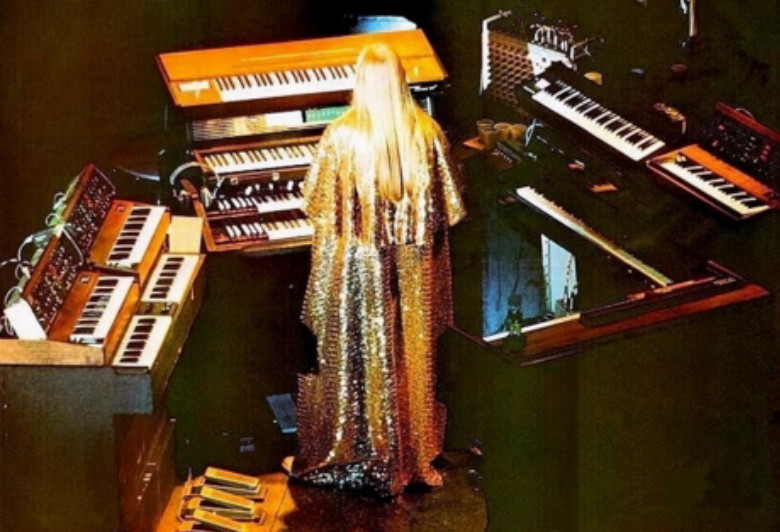
Rick Wakeman in 1974. On the left of the photo you can see his personal double Mellotron M400, with two Minimoogs on top. Can you identify the rest of his keyboards? You’ll find the answer in the book!
In 1976 there was a legal dispute between the Bradleys and the Mellotron’s importer in the USA, which resulted in the latter keeping the licence to the Mellotron name and continuing production of the instrument, also known as “Mellotron USA”. However, the patents to manufacture the instrument became free for both parties, and the Bradleys, for their part, kept manufacturing Mellotrons (M400 and Mk V) in the UK too, but had to sell them under a different name: Novatron.
The Novatron’s specifications were identical to the Mellotron’s, so the tape cartridges were interchangeable between the two brands.
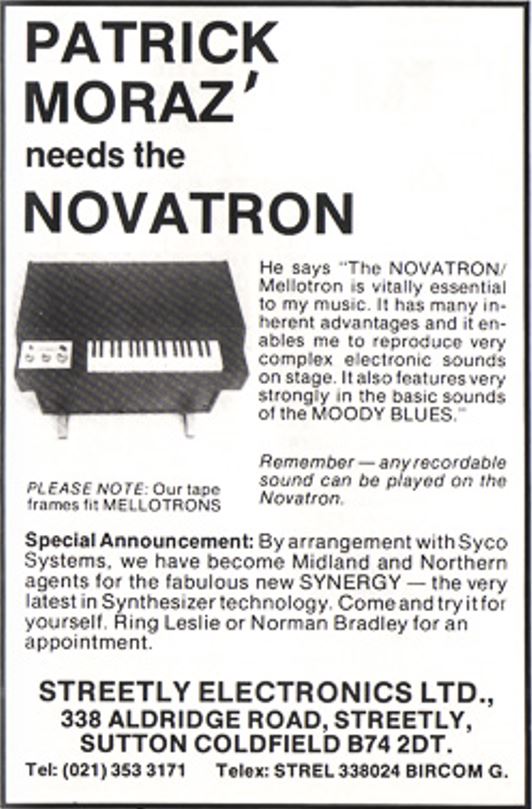
Advert for the Novatron M400, endorsed by Patrick Moraz, who had been Yes’s keyboardist on the 1974 album “Relayer”
From the mid-1970s onward, though, the arrival of more modern, electronic instruments — and therefore also more practical and reliable ones — such as “string machines” (string synthesizers), the RMI Keyboard Computer, or genuine programmable polyphonic synthesizers, caused a rapid decline for the Mellotron, which, with its mechanical magnetic-tape system, suddenly seemed like a prehistoric instrument. And around the turn of the decade, the arrival of digital technology with revolutionary instruments like the Synclavier and the Fairlight, with sampling capabilities, made the Mellotron look even more obsolete.
Faced with this sharp commercial decline, in 1981, in an attempt to keep the instrument alive, both Mellotron USA and Streetly released new models: Mellotron USA launched the Mellotron 4-Track with 4-track tapes, and Streetly launched the Novatron T550, housed in a flight case to make touring easier, but neither was successful, and both companies closed down during the 1980s.

On the left, the Mellotron 4-Track; on the right, the Novatron T550
After the “digital decade” of the ’80s, the ’90s brought a certain resurgence of Progressive Rock and a certain nostalgia for the warm sound of old analogue instruments, and American Dave Kean and Swede Marcus Resch teamed up and, after acquiring the rights to the Mellotron name, starting in 2001 released improved replicas (still analogue, with magnetic tape) of the M400 (which they called the Mk VI) and the Mk V (which they called the Mk VII).
In 2010 they also released a digital model, the M4000D, which is still used today by modern keyboardists who want an instrument dedicated to Mellotron sounds, but fully electronic, lightweight and reliable.
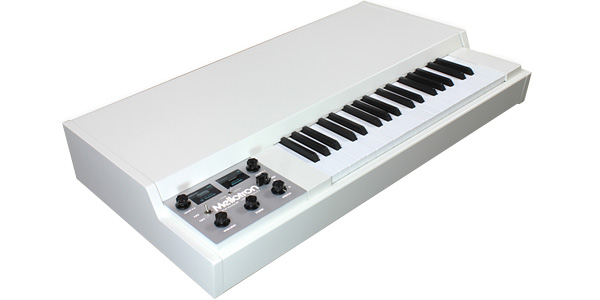
The Mellotron M4000D
Meanwhile in the UK, in 1994 John Bradley, son of one of the brothers who had created the original instrument, reopened Streetly to maintain, repair and restore Mellotrons. By the 2000s they found there was renewed demand for the instrument, but it was very hard to find original units to restore, so they decided to also manufacture a new model — an improved replica of the M400 which they simply called the Streetly Electronics M4000, released in 2007. One important change from the old M400 is that it offers 24 sounds (compared to just 3 on the original M400), bringing back the station system that the earliest Mellotrons (Mk I, Mk II and M300) had used.
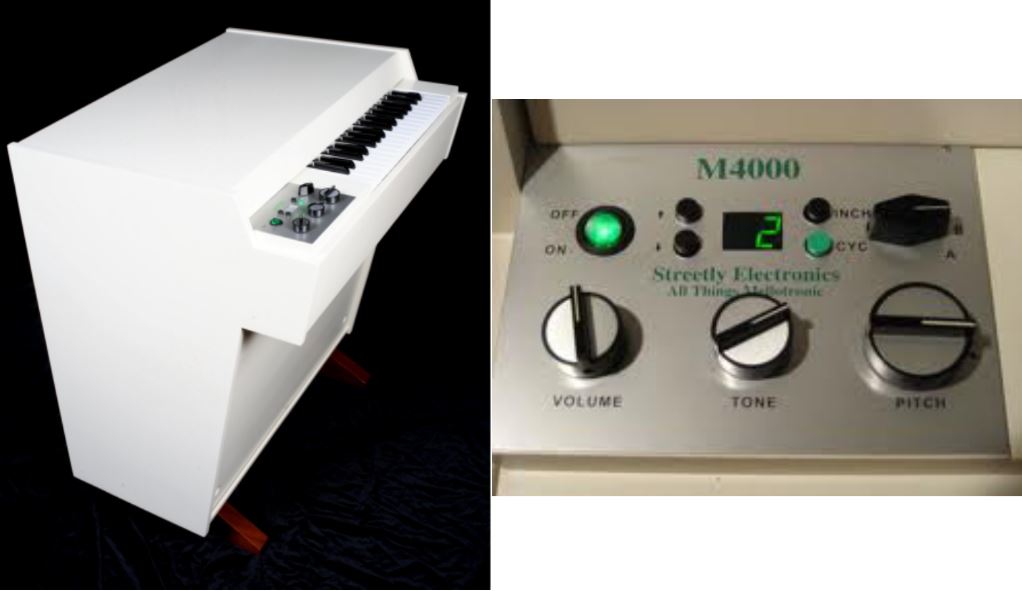
The Streetly Electronics M4000
Some paradigmatic uses of the Mellotron in Prog include the introduction to “Watcher of the Skies”, which opens Genesis’s “Foxtrot”; the string and choral arrangements on King Crimson’s “Epitaph” or “In the Court of the Crimson King”; or the flute part on Led Zeppelin’s “Stairway to Heaven”.
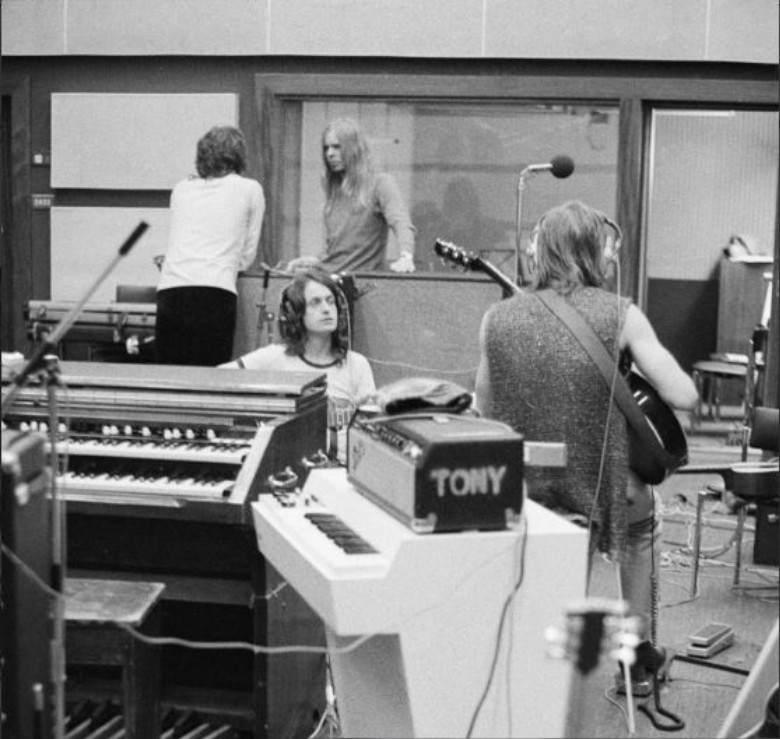
Yes during the recording sessions for the album “Fragile” in 1971. In the foreground we see the Mellotron M400, and on the left, Rick Wakeman’s Hammond C-3 organ
Until next time!
Gerard Bassols
If you enjoy this topic, remember you’ll find much more information in the book “Los Instrumentos Musicales del Rock Progresivo; Guía Ilustrada”, available at this link. If you’re already thinking about Christmas presents, keep in mind this book could be a great option!
https://www.amazon.es/instrumentos-musicales-Rock-Progresivo-ilustrada/dp/8413318645
And if you’d prefer, it’s also published in English:
https://www.amazon.com/Musical-Instruments-Progressive-Rock/dp/8413385997