
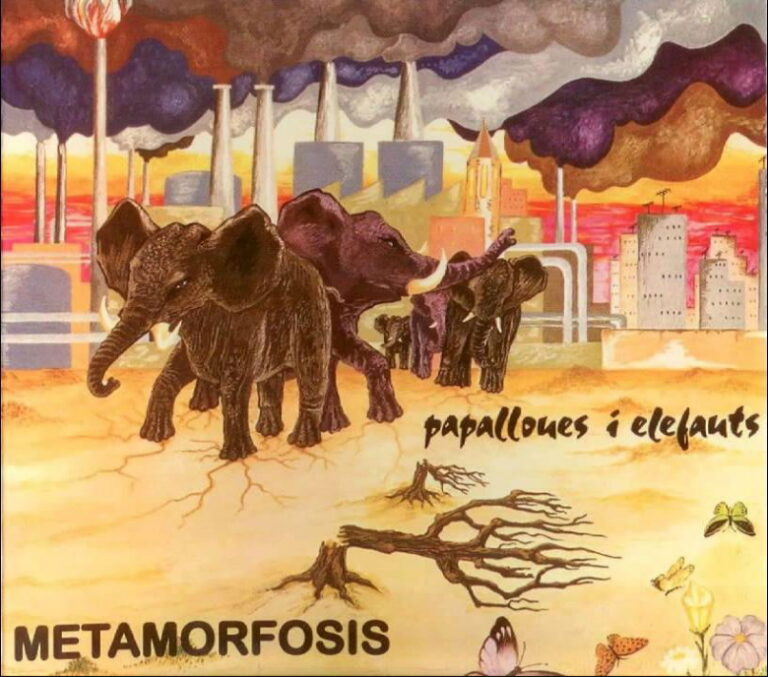
Here we have a gem of Catalan progressive rock, sometimes little known or forgotten outside the more musically well-versed circles around us, and one well worth rediscovering and sharing with anyone who doesn’t know it yet.
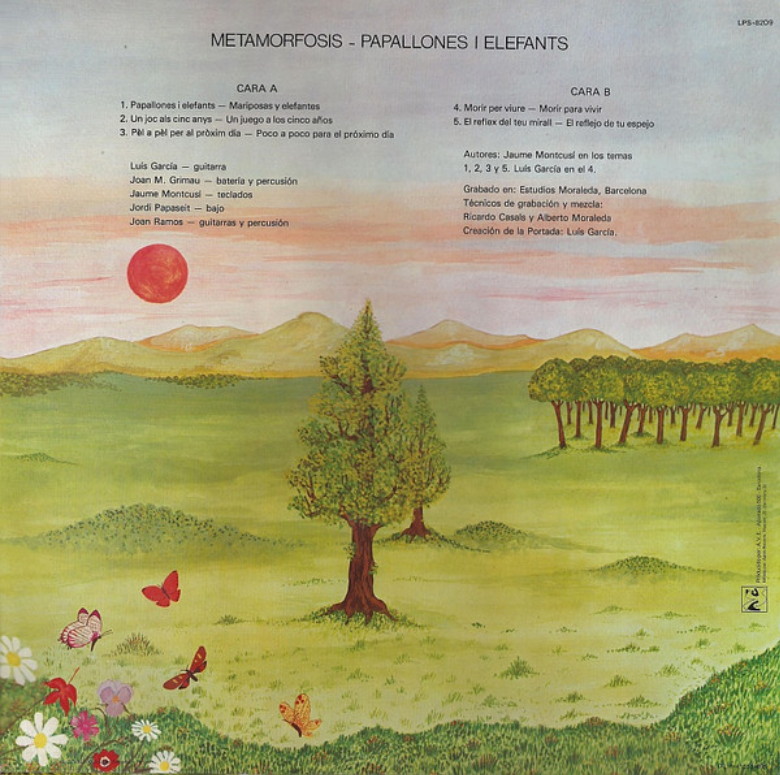
Metamorfosis were formed in 1979 by musicians from Tarragona and Reus, initially going by the name Companyia Oliva Negra before settling on the definitive Metamorfosis. The band was made up of Jaume Montcusi (keyboards and main composer), Luis García (guitar), Joan Ramos (guitar and percussion), Jordi Papaseit (bass) and Joan M. Grimau (drums and percussion). This Papallones i Elefants, released in 1982, is their only album, and it’s a delightful blend of symphonic and jazz-rock/fusion, with a small spoonful of eclecticism thrown in to finish it off. It’s entirely instrumental. The recording was made at Moraleda studios in Barcelona, with Ricard Casals and Alberto Moraleda as recording and mixing engineers.
On this record we find a wide range of influences, from the jazz-rock of classics like Chick Corea and Herbie Hancock, to the symphonic sound of early King Crimson, Camel or PFM, by way of the fusion of Weather Report or the Mediterranean touches of Iceberg’s instrumental period. What’s perhaps peculiar is that, rather than truly fusing all these styles together, Metamorfosis combine them by alternating passages that lean more towards one style or another, without throwing everything in the blender. The release year comes as a surprise — if it weren’t for the odd keyboard tone, you could easily believe you were listening to a record from 1976.
There are 5 tracks, all fairly long and fully developed, running between just over 6 and just over 13 minutes each (the album runs to nearly 54 minutes in total). Keyboardist Jaume Montcusi composed 4 of them. The other one is by guitarist Luis García, and it’s one of my favourites, which leaves me wondering whether the record might have been even better still if he’d written more of the material.
The opening title track, Papallones i Elefants, whets the appetite with five and a half minutes of pure symphonic rock, before shifting into a far more jazz-oriented landscape for the remaining five and a half minutes. As I mentioned, this alternation of styles, even within a single track, is something that characterises most of the album, and depending on the listener it can land better or worse. Some will find it conceptually and musically interesting and original, while others might find it a little disjointed and think it would have worked better as separate, shorter tracks.
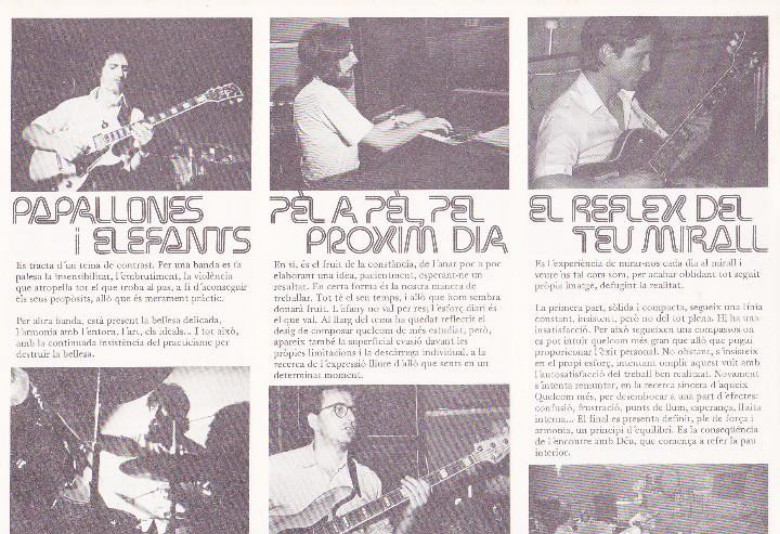
It’s clear the musicians are of a very high calibre, and the sound and production pleasantly surprise us with a genuinely respectable quality, especially considering this was a fairly humble project, undoubtedly made with limited resources at a time when this kind of music had no commercial backing whatsoever.
Un Joc Als Cinc Anys leans more jazzy, with a Mediterranean touch, and the piano and keyboard work really stand out.
Pel a Pel per el Pròxim Dia offers up an interesting, highly dynamic combination. The first 2 minutes are upbeat jazz-rock, leading into a more relaxed, symphonic section. That section keeps building in intensity through to the 6-minute mark, at which point the energetic jazz takes over again, and with a minute left, it cleverly combines everything with the central section’s theme, carrying us through to the song’s end. Great work from all the musicians, plus additional percussion from guitarist Joan Ramos.
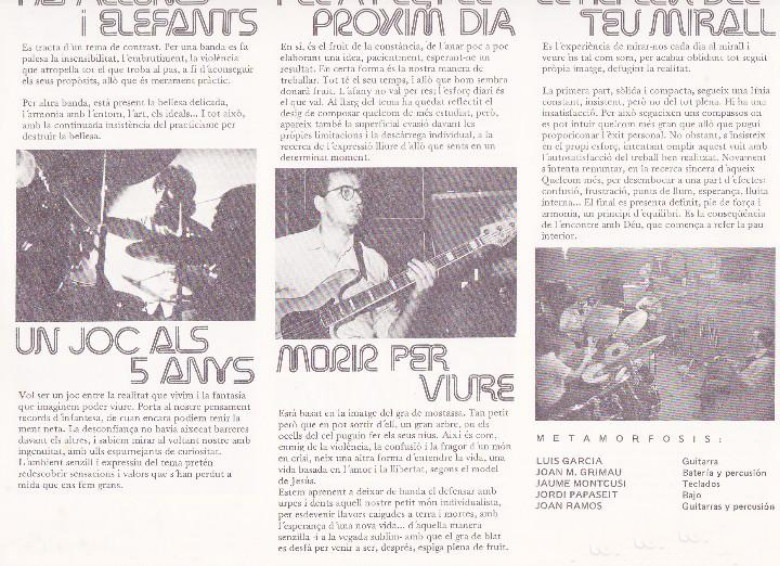
Morir per Viure is the track composed by guitarist Luis García (who also did the cover art), and it’s perhaps the most symphonic piece, and one of my favourites. The guitar plays a more prominent role here, though Jaume Montcusi’s keyboard work is also notable, and the drums and bass provide a rock-solid foundation.
The closing track, El Reflex del Teu Mirall, again combines jazz-rock/fusion with symphonic rock, adding a few eclectic touches without ever sounding odd or dissonant. The bass is very prominent and does a fantastic job.
One thing I really credit them for is that, unlike other bands with a strong instrumental jazz-rock/fusion component, Metamorfosis never overdo it with long solos or jams. The solo work, on both keyboards and guitar, is full of melodic phrasing and alternates frequently enough that it never feels tedious, dull or overstretched.
As a curious footnote, the album was originally released on the small religious label AVE (AudioVisuales Evangélicos). It seems the musicians were closely connected to the Christian world, and Luis García even took on pastoral duties at one point.
Metamorfosis broke up around 1985 without releasing any further work. Their rehearsal space went on to become Metamorfosis Estudios, where Montcusi worked as a sound engineer, helping local bands produce their music throughout the ’80s and ’90s (he also contributed keyboards to Doctor No’s album El Bufó de la Cort, among other credits). By the 2000s the studio had been renamed Entrepins. Joan Ramos, for his part, went on to form the jazz band UCCAT.
Writer: Gerard Bassols