
Rock Progressiu
Some bands build a career by accumulating albums; others, over the years, end up creating an entire world of their own. Big Big Train clearly belongs to the latter category.
Since the band was founded in 1990, Big Big Train have gone through a number of line-ups and creative phases, long periods spent working almost exclusively in the studio, a return to the live stage, growing international recognition and, inevitably, some of the most difficult moments any band can face.
Yet to describe Big Big Train simply as a progressive rock band would probably be to tell only part of the story. Their catalogue brings together landscape, memory, history, overlooked lives, engineering, the industrial world, travel, loss and an almost cinematic approach to composition.
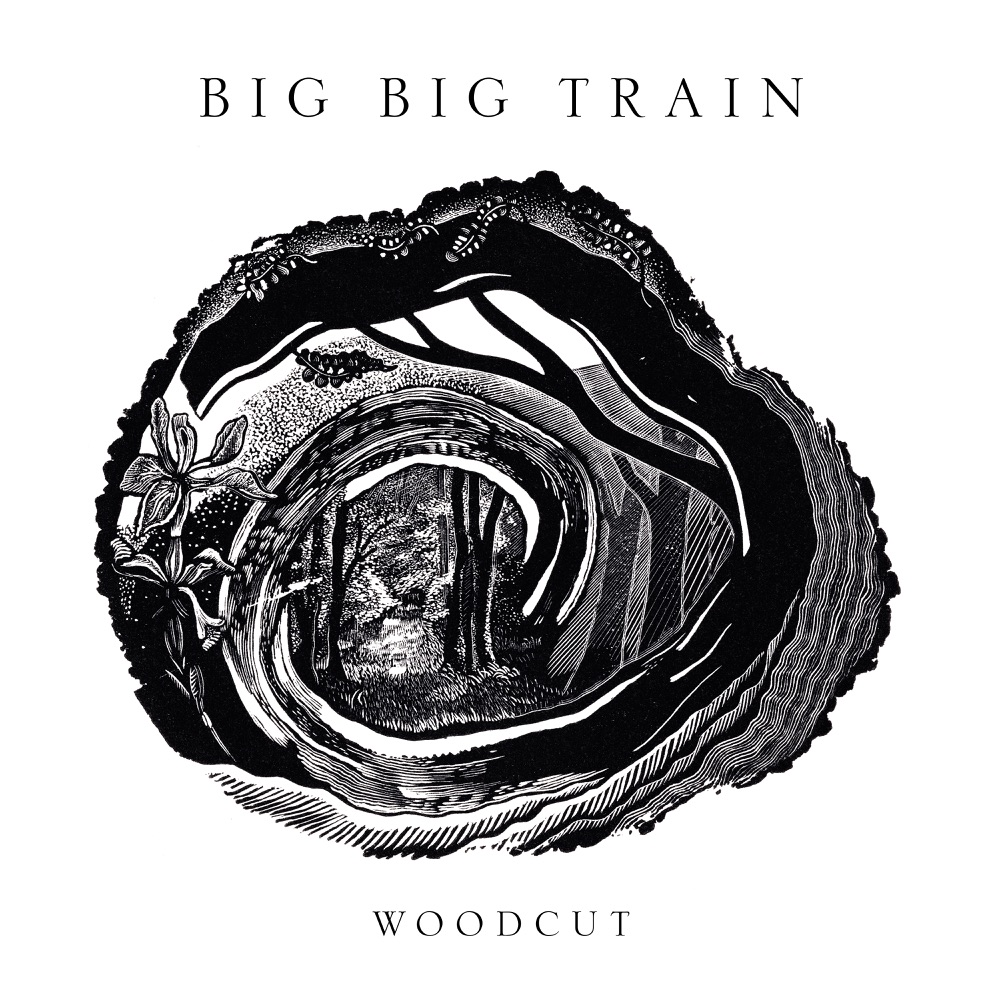
With Woodcut, released in February 2026, Big Big Train have entered yet another new chapter. But we do not want to speak only about the present. At Tótum Revolútum, we would rather look back in order to understand more fully how the band arrived here.
1. Big Big Train have existed since 1990, but the band we hear today is the result of many transformations. Looking back at that entire history from where you stand now, what is the one thing that must remain for an album legitimately to carry the name Big Big Train? Is it a particular approach to composition, a certain sensibility, a sound, a group of people — or something far more difficult to define?
That’s a very interesting question as, in parallel with preparing for the Woodcut tour, I’ve also recently been working with former band members from the very first lineup of BBT on a re-issue of two of our early demo albums. And whilst Woodcut is separated from those early recordings by 35 years and is the creation of a completely different line-up, I have been surprised at how much connective tissue there is between the eras. But it’s very hard for me, personally, to put my finger on why or what that is. However, when Alberto Bravin joined, he made it absolutely clear that he wanted to make music in the tradition of the band, so he immersed himself in our back catalogue. And all of our fellow musicians in BBT, whilst bringing their own sounds and influences, seem to have an instinct for what the band is.
2. Some bands, once they have been around for several decades, can become trapped by their own history. Big Big Train, by contrast, have changed enormously in terms of personnel, scale and even working methods. Have you ever worried that preserving the identity of the band might itself become a creative limitation?
My main interest is in creating music that moves people. I am entirely aware that our audience perceives BBT as making music in the tradition of the 70’s prog rock bands and I am entirely comfortable with that. My concern is whether the new music we make will continue to deliver spine-tingling moments rather than worrying about changing things up all the time. There is a continual debate in the prog rock world as to whether artists are truly ‘progressive’ if they aren’t making radical changes with each release. But the quality and qualities of the music and words are the important things, not the changing nature of the music.
3. One of the distinctive things about Big Big Train is that the music often begins with subjects that are not particularly “rock and roll”: an engineer, a locomotive, a landscape, a historical episode, an almost forgotten individual. What does a story need to contain before you think, “there is a Big Big Train song in this”?
We’re all continually reading about things and visiting places. We pay close attention to the world around us. The story behind Woodcut was triggered by a visit to a museum when were on tour. So, we’re always open to ideas which can be discussed and developed when we’re at the pub or on the tour bus. Whilst a story may be intriguing, though, it’s important to work out how to approach the story-telling. For example, East Coast Racer, on the face of it, is about a very fast locomotive called Mallard. But it was the human stories behind Mallard that I wanted to write about. And the precise moment when I knew that the story could be told in a BBT song was when I read a quote by Émile Zola:
‘Somewhere in the course of manufacture, a hammer blow or a deft mechanic’s hand imparts to a locomotive a soul of its own’.
So, in the end, the song became about the connection between mankind and machinery.
It is difficult to overlook 2009 when discussing the history of Big Big Train. The Underfall Yard marks a genuine transformation: David Longdon joins as vocalist, Nick D’Virgilio establishes himself on drums, and elements such as brass begin to form part of the band’s musical vocabulary.
4. In retrospect, The Underfall Yard can almost feel like the moment when Big Big Train finally discovered exactly what they wanted to be. Did it feel that way while you were making it, or is its status as a turning point something that only becomes apparent with hindsight?
Looking back, a number of elements converged when we made The Underfall Yard. Firstly, we came upon the idea to merge the sounds of a brass band into that of a rock band, and we found a brass arranger in Dave Desmond who could make that work. Secondly, Nick D’Virgilio joined the band giving us the grooves and swing of one of the best drummers in the world. Thirdly, Dave Gregory came on board, bringing his superb musicality to the guitar parts and solos. And, of course, David Longdon brought his beautiful, soulful singing and his presence and personality as frontman. Another factor involved my songwriting, which began to focus on the storytelling that we talked about earlier. Honestly, though, we didn’t know that the album would take off in the way it did. We’d made progress over the years but it was such slow going that we could never have imagined the sudden acceleration in terms of our profile.
5. Brass eventually became one of those elements capable of making Big Big Train instantly recognisable. In a genre so often associated with keyboards, guitars and the symphonic tradition of the 1970s, was the decision to introduce brass in that way a conscious attempt to find a different musical language, or did it simply work so well that you decided to pursue it?
It was pure serendipity. I happened to be walking past a bandstand in a town called Bath when a brass band started playing a very mournful piece of music. It stopped me in my tracks and I began to think: ‘can we incorporate that sound somehow?’ I spoke with Peter Gabriel about the role of brass bands in modern music as he used a brass band on a song of his called Father, Son. He felt, like me, that the colliery brass band sound has a sort of atavistic connection to the sense of England.
With English Electric, Big Big Train developed even further that particular fascination with work, industry, community, the English landscape and the lives of people who rarely find their way into conventional history books.
6. There is a sense of nostalgia in many Big Big Train songs, but it rarely feels reactionary or as though the past is being idealised. How do you write about the disappearance of a world without falling into the temptation of suggesting that everything used to be better?
I’m only too aware that in almost all material respects, life is far more comfortable now than it was for the working class people in the past. But, as Europe de-industrialised, something precious did get lost along the way and that is the sense of community that the industries such as ship-building and coal mining helped to foster. We try to celebrate those communities in our songs, but we don’t shy away from the hardship that they faced.
For many years, Big Big Train essentially operated as a studio band. In 2014, the sessions at Real World Studios provided an opportunity to discover whether music of such complexity could genuinely live on stage. The following year brought the band’s first concerts in seventeen years.
7. You had become accustomed to composing without having to think too much about the practical limitations of a stage. When you decided to return to live performance, did you suddenly realise that you had created music that was almost impossible to reproduce in concert?
When we decided to perform again we took the approach of trying to play the songs exactly as we had recorded them. That meant, initially, a live band of 13 musicians, including the brass players. This was successful but it was ruinously expensive and meant that we were restricted in how much touring we could undertake. So, over the years, in order to tour more widely, we have stripped back the brass presence and now go out as a seven piece band. We can still deliver the songs and include all of the crucial elements within the arrangements and we can actually afford financially to do it. If we had continued with the 13-piece band, we would have had to stop playing live as touring costs have risen to alarming levels.
8. And then something interesting happens: once Big Big Train become a live band again, that experience inevitably begins to feed back into the studio. Did the way you composed change after 2015 because you now knew that those songs would eventually have to breathe in front of an audience?
We are absolutely aware now that any song we write and record may feature in live sets and that must feed very slightly into the writing and arranging process. But the studio can be a mighty tool in its own right. Think of how The Beatles were freed up to let their imaginations run free when they stopped touring. So, we wouldn’t let live considerations completely overrule the creative process.
9. In a band with so many layers, instruments and musicians with strong individual personalities, there is always the danger of reproducing the record perfectly and losing spontaneity in the process. How much genuine freedom is there within a Big Big Train concert?
It depends on the song. We’re performing the whole of Woodcut to a film presentation on our forthcoming tour and that requires that NDV has a click track running in his in-ears to make sure we are tied into the timeline of the films. However, in the first part of the set we are playing some older songs and we have no problem at all in being much more free with how we perform them.
Inevitably, there is a before and an after November 2021.
David Longdon had joined Big Big Train in 2009 and, over the following twelve years, his voice, his songwriting and his musical personality became an essential part of the band’s identity.
His sudden death on 20 November 2021 left Big Big Train facing a question that no band would ever wish to confront: whether it was possible — or indeed meaningful — to continue.
10. I would like to approach this with the greatest possible respect. Beyond the human loss, there was also an extraordinarily difficult artistic reality: David had helped define the way audiences identified Big Big Train. At what point did you begin to feel that continuing did not mean attempting to replace him?
This is a very difficult thing to talk about and I greatly appreciate you approaching things with respect. It is hard to put into words the maelstrom of emotions and feelings we had (and still have) after losing David. First and foremost David was our friend, and losing a dear friend in the prime of their lives is, in itself, a terrible thing. But David was also our singer, frontman and one of our key songwriters. He also carried with him much of the public persona of the band. So, the combination of a devastating personal loss alongside a professional loss was almost unbearable. But loss is a part of the human condition, it’s something you cannot not deal with. So, we all in the band separately sought to process what had happened and then called a band meeting. My view was that if anybody else in the band at that stage did not wish to seek to continue then we would bring things to a close. But, we all wanted to at least try to carry on somehow.
11. There is an enormous difference between preserving somebody’s legacy and allowing that legacy to become something that prevents you from moving forward. How have you found the balance between keeping David present within the history of Big Big Train while allowing the band to build a new identity of its own?
That’s a very astute observation. We all feel very deeply that we should do all we can to honour and preserve David’s legacy. But we cannot live on that legacy alone. BBT has always been a creative songwriting band and we knew that we needed to find a way of retaining that focus. One thing that has helped in recent months is that David’s partner, Sarah, has set up a charity in David’s name to support young musicians. As well as being a great thing to do, this has given us a chance to do something practical to both support the charity and to commemorate David’s legacy.
In April 2022, Big Big Train announced Alberto Bravin as their new vocalist. He arrived following an important period with PFM and, at the same time, as somebody who already knew and admired Big Big Train’s music.
But the challenge could hardly have been as simple as finding “another singer”.
12. When searching for a voice after somebody as immediately identifiable as David, there would seem to be two opposite possibilities: finding someone capable of recreating that musical world, or deliberately choosing a very different personality. At that moment, what mattered more to you: the voice or the person?
We were aware of a few exceptional candidates whose voices were in a similar territory to David’s and, of course, they were part of our considerations. But the top name on my shortlist from the first day was Alberto. I had seen him sing with PFM on a couple of occasions and had been blown away by his vocals. And I liked the fact that Alberto had more of a rock voice than a soul voice. His vocals can deliver the ‘tingle’ moments but in a different way to how David’s voice was. My instinct was that it just wouldn’t be right for David’s successor to be a soundalike. As for the personality aspect, that is the second most important consideration after the vocals. The personality has to be right both in the musical sense but also in terms of getting along. Touring bands spend a huge amount of time together and if personalities clash it can be truly awful.
13. Alberto joined already knowing Big Big Train as an admirer of the band. That can be an advantage, but it could also become a burden. At what point does somebody stop being a musician joining a band they admire and simply become a member of Big Big Train — somebody prepared to argue, question things and change them?
Tracking Alberto down wasn’t easy. He had zero social media presence and the management at PFM understandably tend to focus on Franz and Patrick, the members of the band that were in the 70’s lineup. So there was no way of getting hold of him through the PFM website. Eventually I tracked an email address down and I sent him a very open message, along the lines of: ‘are you aware of a band called Big Big Train?’ He replied ‘are you kidding, I’m a huge fan of BBT’. With the introductions out of the way I then asked if he would be prepared to audition. Once he’d become our chosen candidate we met up with him in London and got to know him as a person. We all got on (and get on) enormously well and I think Alberto could see that we wanted and needed him to succeed which gave him the confidence to just be himself. And in being himself we found out that he is a perfectionist with considerable energy and drive. So questioning things came naturally to him (in a good way) because of those personality traits. What Alberto has had to navigate over the last few years, and how he’s done it, deserves enormous respect. David is a hard act to follow, in terms of his vocals, but also his songwriting and his stage presence. Alberto had the voice of course, but the role of frontman and a band leader was new to him. He’s had to learn quickly. After our first few shows together it became clear that the fanbase who had stuck with us were rooting for him.
14. The Likes of Us was the first studio album with Alberto. Listening to it now from the perspective provided by Woodcut, do you see it as the album on which Big Big Train rebuilt themselves, or as the first album by a fundamentally different version of the band?
The Likes of Us was an album where we were seeking to rebuild the band. We very deliberately sought to include a number of typical BBT sounds and songs. Releasing an album featuring a new voice and a whole new sound wouldn’t have been the right thing. The main change we made and which we will always continue with now is to avoid any remote recording. We recorded together in the studio and that helped us feel we were doing something new whilst ensuring the album had that ‘classic’ BBT sound.
February 2026 saw the release of Woodcut, Big Big Train’s sixteenth studio album and the first conceived as a single extended narrative work.
There was also another significant development in the process: Alberto Bravin assumed the principal production role.
15. After so many albums built around separate stories, it is striking that Big Big Train’s first full-scale concept album should arrive at this particular point in the band’s career. Why did this story need to be told as one complete work rather than as a collection of individual songs?
Having settled the new line-up, with Clare, Oskar and Paul becoming established band members, it felt right for us to be doing something that the band hadn’t tackled before. We discovered the album title and the fundamental ideas behind Woodcut on a visit to a museum and then we developed the story we wanted to explore on the tour bus. That time together as a band is so precious as everybody is involved and becomes energised.
16. Woodcut deals with creativity, sacrifice and that unsettling boundary between inspiration and obsession. For musicians who have spent decades creating, is there inevitably something autobiographical in “The Artist”, even though the character himself is fictional?
That’s absolutely right. Our character, The Artist, becomes drawn into a creative frenzy and we definitely drew from our own experiences. My family have told me many times that when I’m writing a song I become distant from family life as I work obsessively and I think that happens to all of us in the band. Being married to a musician isn’t always the easiest gig! On the later stages of the album, The Artist reaches a more positive place in his life and some of the lyrics in the final two songs are very much drawn from my own experience in trying (and often failing) to be an ok human being.
17. Alberto took on the production of an extraordinarily complex project. That is not simply a technical decision; it also means handing over a considerable degree of authority regarding how Big Big Train should sound. What had Alberto demonstrated that gave the band the confidence to place that responsibility in his hands?
We didn’t know it at the time as he was recruited on the basis of his vocals, but Alberto came with a wide set of skills. He had experience as a sound engineer, and was a songwriter and arranger. One of the most important but rarely remarked upon assets for a musician is having good taste. And by that I mean an innate sense of judgement on the qualities of music. We’d spent enough time getting to know Alberto to place absolute trust in his sense of what would be right and wrong for Woodcut.
18. Gregory has spoken about feeling a sense of relief when Alberto took over the production. “Relief” is an interesting word. Had Big Big Train reached a point where the creative weight needed to be distributed differently in order for the band to continue evolving?
It’s been a long shift for me and there have been so many challenges along the way. Delivering a successful album is a huge commitment and I was wondering: ‘how long can I keep pushing this ball uphill’? Alberto taking on the production role lifted some of that burden. And Clare wrote more than half of the lyrics on Woodcut, which again took a lot of pressure off me as I have generally been the lyricist as well as the main music writer. Alongside Alberto and Clare, Rikard, NDV and Oskar wrote some big chunks of the music too. And Paul, who arrived a little later as a full band member, was also able to put his stamp on the album.
19. Woodcut was assembled from an enormous amount of recorded material. In progressive rock there is always a temptation to preserve an idea simply because it is good. What was the most painful decision on the album — was there a section, arrangement or idea that you loved but had to sacrifice because the work as a whole was stronger without it?
There was a painful decision for Rikard early on in the album development. He had written a 15 minute piece of music for the album and had spent a lot of time on the composition. Alberto wanted to split it into two sections to bookmark the album which also meant losing some of the middle section of the song. That must have been hard for Rikard but, as I said earlier, we have that trust in each other to roll with it.
20. A band can use Mellotron, irregular time signatures and long-form compositions and still remain profoundly conservative. What does musical progress actually mean to Big Big Train in 2026?
In rehearsals we’ve been playing some older songs and then the whole of Woodcut. Whilst it’s difficult to be an observer as well as a participant, I think the evolution of the band is apparent when the different sets of material are played alongside each other. We have evolved and changed on many levels over the years. But none of us want to move away from the classic progressive rock sounds. Those are in the DNA of the band and we are very happy to be part of what we all consider to be a glorious tradition of music-making.
21. You have often been associated with a particular British progressive rock tradition. Yet the current line-up is far more international, and in recent years the band have increasingly performed outside the UK. Is Big Big Train still essentially an English band, or has that definition now become too restrictive?
We’re a very happy melting pot of a band. But our roots are primarily in the English and Italian progressive rock scenes. Aside from festivals, we definitely still draw more people to gigs in the UK so we are seeking to broaden our fanbase, which is why we have been doing much more international touring.
There is one further circumstance that makes this particularly significant for those of us reading from Catalonia. On 7 October, Big Big Train will perform at Razzmatazz 2 in Barcelona as part of The Woodcut and Other Stories Autumn Tour 2026.
And this will not simply be another date on the tour: these shows represent Big Big Train’s first appearances on Spanish stages.
For a band with more than three decades of history behind them, finally reaching Barcelona inevitably feels like the fulfilment of a long-overdue appointment.
22. Big Big Train have performed in many countries, and yet it has taken more than thirty years for the band finally to reach Barcelona. Does it surprise you that a place with such a strong tradition of progressive rock audiences has had to wait until 2026 to see Big Big Train live?
I love Barcelona. I’ve been there many times. And finally being able to bring the band there is a very special moment for me. But whilst BBT has been around a long time, there were long periods when we weren’t playing live at all so I’m not entirely surprised it’s taken so long for us to get there. Better late than never, as we say in Britain!
23. Sometimes musicians discover that there are places where their music has quietly developed an audience over many years without them necessarily being fully aware of it. Do you have any sense of the audience waiting for you in Barcelona? Are you aware of the extent to which Big Big Train have built a community of listeners here over the years?
It’s hard for us to know where we might have any sort of audience. We’re in a sort of bubble of unawareness at times. I do think we need to work hard to further build that audience in Barcelona and beyond which means playing to fairly small audiences at first and then, hopefully, putting on some good shows and playing to higher numbers each time we come back. That’s the old-school way of doing things and I still think it’s very relevant in the rock world.
The tour has been announced with performances running for more than two hours, with Woodcut occupying a central place in the set alongside songs loved by long-standing followers and material from the band’s earlier years.
24. Precisely because this will be the first opportunity for many people in Barcelona to see Big Big Train, do you feel any responsibility to represent the entire history of the band in a single evening, or would you rather the concert primarily reflect who Big Big Train are in 2026?
One of the things we decided to do when Alberto joined was to change the way we approached set lists. We became more open to performing songs from all eras of the band. I am proud of our back catalogue. There is some strong material there and I don’t want us to ignore it. So listeners in Barcelona should get a good overview of where we came from and where we are now.
25. Some songs work perfectly on record but are transformed completely once they reach the stage. Has any particular piece from Woodcut changed significantly since you began preparing it for this tour?
For Woodcut, no, because we recorded the album together in the studio which meant quite a lot of it was recorded completely live. We also made some extensive changes to the song arrangements in the studio as we were preparing to record, so the album was gig-ready almost straight away.
26. Razzmatazz 2 will allow audiences to experience Big Big Train at much closer quarters than at some of the larger venues you have played in recent years. Does the way you perform this music change when you can almost see every face in the audience?
There’s something special about being up close to an audience. It’s nice to play bigger concert halls but those times when the audience is right in front of you are really exciting. Back in the early 1980’s I used to attend gigs at The Marquee in London. I saw Solstice, Marillion and others there many times. The club shows we play remind me of those very happy times.
27. And allow us to end this section with an entirely self-interested question: for somebody in Barcelona who may have been listening to Big Big Train for twenty or thirty years and will finally see you walk onto the stage that evening, what would you tell them to expect from the concert on 7 October?
For me, gigs are special when audience members find themselves responding privately, personally and emotionally to some sections of our music and, at other times, find themselves becoming part of a collective, communal response. If the gig in Barcelona goes well then I hope that audience members will experience both of those things.
Big Big Train have spent a considerable part of their history writing about people, places and objects that are in danger of disappearing from memory.
Perhaps, at heart, this has always been a band concerned with the passage of time.
If one day Big Big Train could leave behind only a single song, so that somebody fifty years from now might understand what this band was, which song would you choose for them to hear?
That’s a tough question and it depends what mood I’m in. Sometimes I would choose Curator of Butterflies or Counting Stars. At other times I’d have to say East Coast Racer.
See you in Barcelona!