
Progressive Rock
Unicorn Digital · 15 October 2026
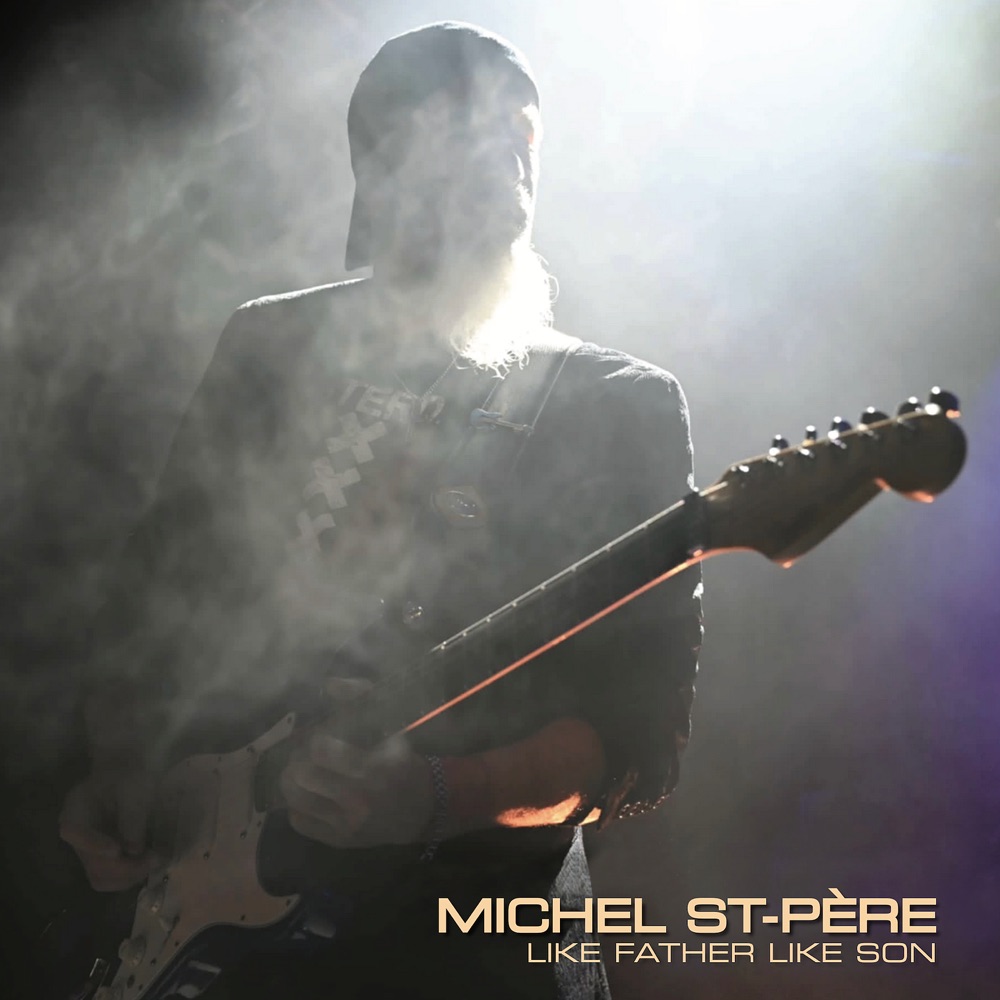
The longest of the fifteen pieces on “Like Father Like Son” is “Shadow of the Hierophant”, and the decision behind it is plain the moment you set it against the original: Steve Hackett released it on “Voyage of the Acolyte” in 1975 at 11:44 and with Sally Oldfield’s voice on it, and Michel St-Père leaves it at 9:16 and entirely instrumental. This is the first solo record by the guitarist who founded Mystery, and there is not one composition of his own on it: all fifteen are covers.
St-Père plays electric and acoustic guitars, banjo, ukulele and keyboards, and also takes the production and the mix; the bass, fretted and fretless, is Jonas Reingold’s (The Flower Kings, and in Steve Hackett’s band since 2018) and the drums are Jimmy Keegan’s (Spock’s Beard from 2011 to 2016, now in Pattern-Seeking Animals). None of the three recorded in the same room as the others: Reingold worked in Austria and Keegan in California. The tightest block on the record is tracks five, six and seven, “Man with a Harmonica”, “Farewell to Cheyenne” and “Once Upon a Time in the West”, all three from the same Ennio Morricone score of 1968. Around them sit the instrumental guitar repertoire of the late fifties and sixties (“Apache”, “Pipeline”, “Sleep Walk”) and four television themes, from “Star Trek”, at 1:23, to “Space: 1999”.
The title and the press material explain that St-Père’s father taught him his first chords at nine, and that these fifteen songs are the landmarks of the road that followed, but none of that is audible at any point: there is no narration, no piece of his own to bridge anything, no arrangement that puts “Grease” and Holst in any kind of relation. What is left is a well-played covers set and an explanation that lives outside the music.
Gustav Holst’s “Mars, the Bringer of War” closes the album at 7:30. The whole thing runs 55:06.
Rating: 7.2/10
Text by Guillem Cardós