
Jazz
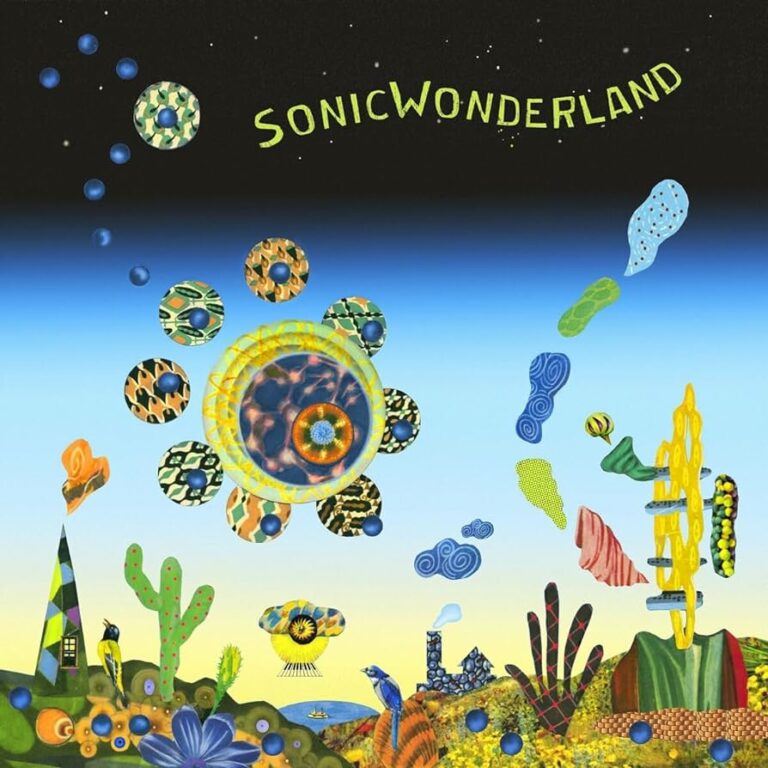
Fantastic pianist Hiromi Uehara presents her new quartet project with Hadrien Féraud (bass), Gene Coye (drums) and Adam O’Farrill (trumpet).
The album opens with a track that tries to fuse fairly classic jazz with a kind of relaxed funk, where you can appreciate the great quality of all four project members, and not much else. Being generous, we could imagine “Wanted” fitting into some elevator-music greatest-hits compilation. It’s understandable that when you’ve made as much music as Hiromi Uehara, sometimes you feel like writing something unpretentious, but the result is just another jazz song, plain and simple.
The title track, “Sonicwonderland”, plays like a sped-up version of Herbie Hancock’s Headhunters era. We get a danceable rhythm, a synth-driven motif carrying the main idea, seasoned with a trumpet solo and an electric-piano one linking into another synth solo. It would be completely dull if it weren’t for a curious mood shift toward more classic jazz, where the spotlight falls on a piano-and-trumpet dialogue. There’s also a closing moment where the drums get a decent spot to shine.
The album’s most classic moment is “Polaris”. A classicist, intimate ballad where the musicians can convey a high degree of sensitivity, and their musical polish really shows. A lovely track that uses delay on the trumpet solo, breaking up the precious atmosphere surrounding the composition — a matter of taste, that one. We get a transition from jazz with classical-music overtones, in the style of Dave Brubeck, leading us into passages of an almost fusion-style jazz, the kind that was in vogue in the seventies.

A bass solo introduces “Go Go”, with the drums joining in to build the rhythmic foundation over which an almost naive trumpet theme unfolds, contrasting with the unsettling atmosphere that follows. This interplay of contrasts works well, though personally I find it drags on too long, and by around the four-minute mark you end up thinking about other things.
“Up” is a completely clichéd track, about as standard and worn-out as jazz gets. The best thing about it is a fairly upbeat tempo, played with great skill — but with musicians of this style and calibre, that’s already a given, and honestly, we’re well past being impressed by great technical execution over canonical musical language.
To lighten up the record a little, we get “Reminiscence”, co-written with British singer-songwriter Oli Rockberger. A light little song that ends up exploring some rhythm-and-blues-flavoured rhythms, where, stylistically, the voice ends up feeling a bit out of step with the rest of the quartet.
“Trial and Error” gives us a playful Hiromi on keys, in a main theme where she experiments with emulating a melody that could’ve come from any game in Sega’s Sonic series, and pulls it off quite charmingly. Right after, she steers us toward a noisier section, a fancy way of saying the instruments make funny little noises. And just when you think it’s a dud of a track, it brings back the main idea on piano with lovely trumpet harmonies that win you back over. Despite the predictable ending, returning to the original motif with that video-game keyboard sound, it actually suits this idea well enough to round it off nicely.
We get another jazz-fusion track in “Utopia”, featuring a bass solo and a later piano one as its key arrangements. Boring as anything, despite once again attempting the trick of a livelier conclusion with a middling trumpet solo. Seven minutes of my life poorly spent.
To close out the record, we get a ragtime track, “Bonus Stage”, with excellent playing across every solo — and there’s one for everybody. But we’re back to the same problem: it’s all been done before, and it doesn’t stand out for beauty or for a melody that really grabs you.


Of course, this record, released as a double vinyl, isn’t bad. But it’s bland from being predictable, foreseeable and forecastable. In almost every track that makes it up, we find ideas already squeezed dry by countless jazz combos. And we don’t hear a single performance that makes us jump out of our seat. It’s like watching a western: the sheriff will save the girl from the evil landowner, but he’ll ride off into the distance while a pretty ballad plays on harmonica: I’m a Poor Lonesome Cowboy…
Writer: David Sàez