
Progressive Rock
Self-released · 14 July 2026
“Music for a While”, the second track, has a line in square brackets printed above its first verse on the lyric sheet: “Gratitude to Purcell”. That is where the title comes from, and also the turn the song keeps returning to, “lift me higher higher higher / and banish my night”, which recasts the English composer’s aria as a prayer for comfort. The sixth track does the same with another debt: it is called “The Best of All Possible Worlds” and opens with a note declaring it “inspired by Voltaire more than Leibniz”. Wars repeat themselves to calm applause, truth turns pliable and someone keeps insisting on a smile.
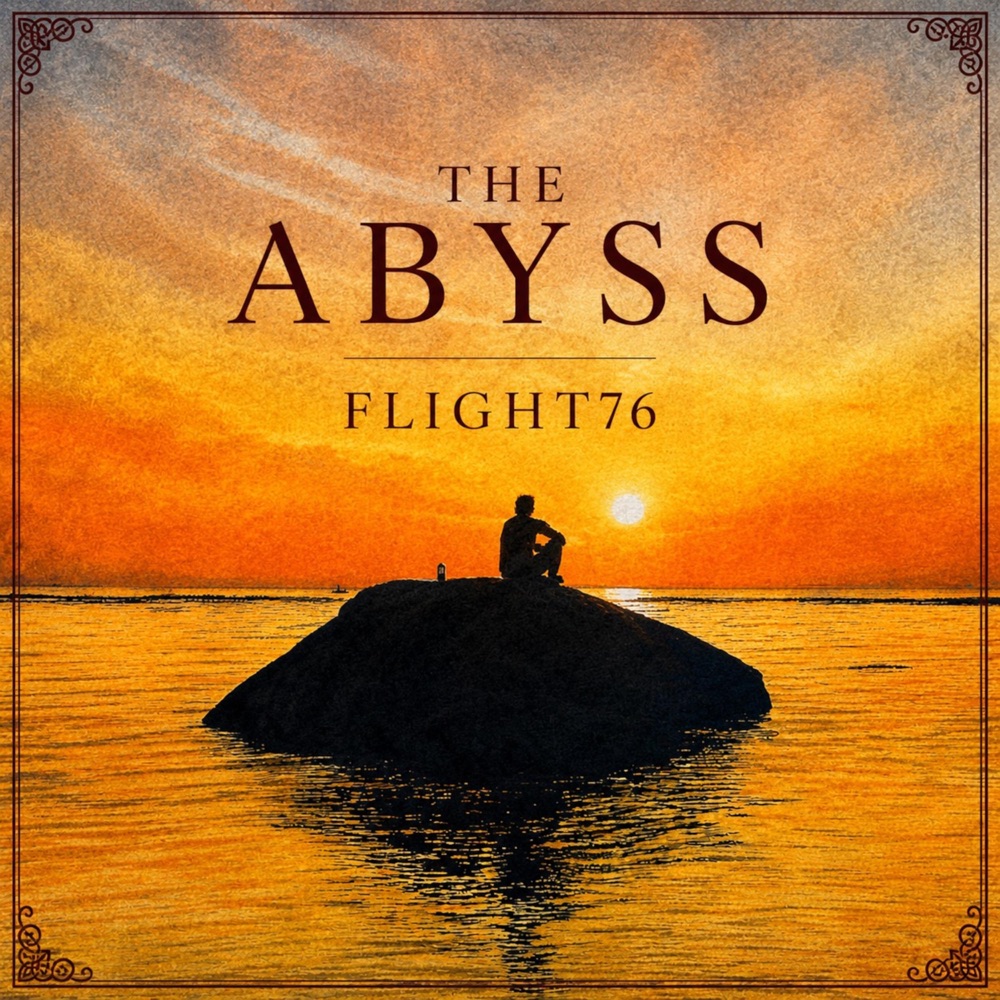
Behind the eleven tracks there is one person. Ian Wright writes the music for all of them and the lyrics for ten, produces the album and releases it without a label; of the band that gives the project its name only Nigel Wade remains, supplying all the artwork and the words of the closing song. The two played together in Hastings in 1975 in a group called Flight, which performed live once in front of five hundred people, left a single cassette behind and fell apart in the summer of 1976, as punk arrived. Flight76 is the alternative history of that: a world, as Wright himself puts it, where progressive rock still rules and the band never split.
The lyrics work best when they drop that band fiction. “Rock-a-Nore” takes its name from the road that runs between the cliffs and the fishing beach at Hastings, and it takes its material literally: the shingle breathing underfoot, the winches creaking in half-time sleep, the salt still ringing in the air and the Channel keeping whatever has been handed to it. “Sentience” changes era without changing tone — the pulse of a billion screens, thought traded for a digital haze — and “Schadenfreude” watches somebody else fall and calls it a quiet silver wink.
Two of them sound written for a different record. “Kings and Queens” and “As If… (Stars That Never Fade)” stay inside the self-help songbook: painting rainbows in the sky, dreams that never die, “as if we’re free, unafraid”. Both sit boxed in between the Purcell track and the Voltaire one, and the distance shows. The album’s frame comes out misaligned too: the first track and the last are both named for the abyss of the title and talk about different things, because “abyss” opens with a descent that has no way out and “Endless Abyss” — the only lyric Wade signs — is a break-up song in which the falling is a figure of speech.
The archive material from the 1975 cassette, the thing that would justify a reunion fifty years apart, is not on this record: it is on the previous one, “Continuum”, and only in one song, “Legend of a River”, which recovers guitars by Wright and vocals by Wade from those tapes. “The Abyss” came out on 14 July digitally, and the CDs are sold to order through Elasticstage.
Rating: 7.5/10
Text by Guillem Cardós