
Progressive Rock
CMM Music · 4 September 2026
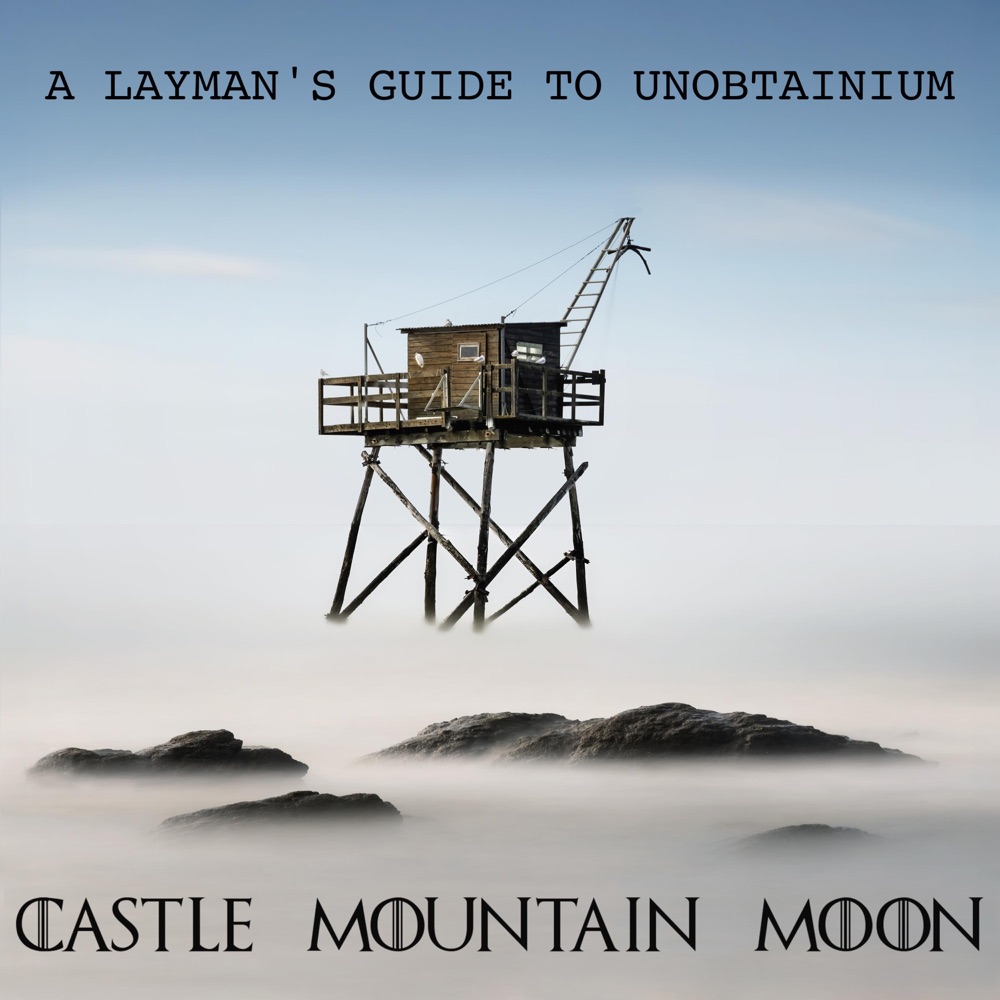
“Valley of the Deep” runs exactly ten minutes and is the centre of gravity of “A Layman’s Guide to Unobtainium”. The lyric walks through the desert counting what is done and what is left (eight miles behind, seven still to go) and the music does the same: long instrumental stretches in no hurry, a pulse that recalls Rush when Rush pushed, and symphonic openings that widen and come back. It is the track where Castle Mountain Moon allow themselves what a duo almost never allows itself, which is to let time pass.
The duo is from Cologne and consists of Dirk Krause (vocals, guitars and bass) and Ropp Köhler (keyboards and production), two software engineers who, in their own words, exchanged their notebooks for notes. Gerry Wazzong guests on drums. The album arrives on 4 September on their own label, CMM Music, a little over two years after the debut, “Six Tales Of Perception” (23 July 2024), and was preceded by a single of the title track released on 7 August. The thread that stitches it together is maps, the ones that work and the ones somebody drew false, and at the centre sits unobtainium, the element defined by its own absence. Krause puts it this way: they wrote about something that, by definition, only exists when you do not have it.
The sixty-four minutes are laid out with care. “Real?”, the second track, moves the record into more contemporary neo-prog and sings about urban routine (a woman arguing, a guy in a suit who gets on his nerves, the radio playing blues, a newsman saying it looks like rain) down to a single question, “is this really real?”. “Maps Pt.1” and “Maps Pt.2” are tracks three and five, with “Valley of the Deep” between them, so that the map motif frames the centre of the record. “Before My Eyes”, which arrives seventh at four minutes and twenty-eight seconds, is the ballad that hinges towards the second half: Köhler’s synthesisers and Krause’s guitars lead it, with the melodic sensibility of early seventies prog. “Exit Right” is the sharpest of them: a king for a day who chooses to abdicate, with a spilled coffee, a missed train, a necktie that tightens too soon, a bug in the logic of the code and a map of creation that is no use because the stars rearrange without warning. And “Scene of a Crime”, eight minutes and twenty-three seconds, is the darkest of all and the one that does not let up.
The trouble with a record explained this well is that it leaves nothing to find. The last track is called “Reprise”, runs one minute and forty-three seconds, and its only job is to restate the opening material and close the circle: a record that has already announced it is a manual, that has numbered its maps and that re-reads itself at the end has little room to surprise anyone along the way. On “Six Tales Of Perception” that architecture was the subject; here, with a concept that works better, the structure has stayed just as visible. Even so, the balance between complexity and listenability is surer than on the first record, and with two people and a guest drummer that counts for more than it might seem.
Rating: 7.8/10
Text by Guillem Cardós