
Jazz
TIDEL · 7 August 2026
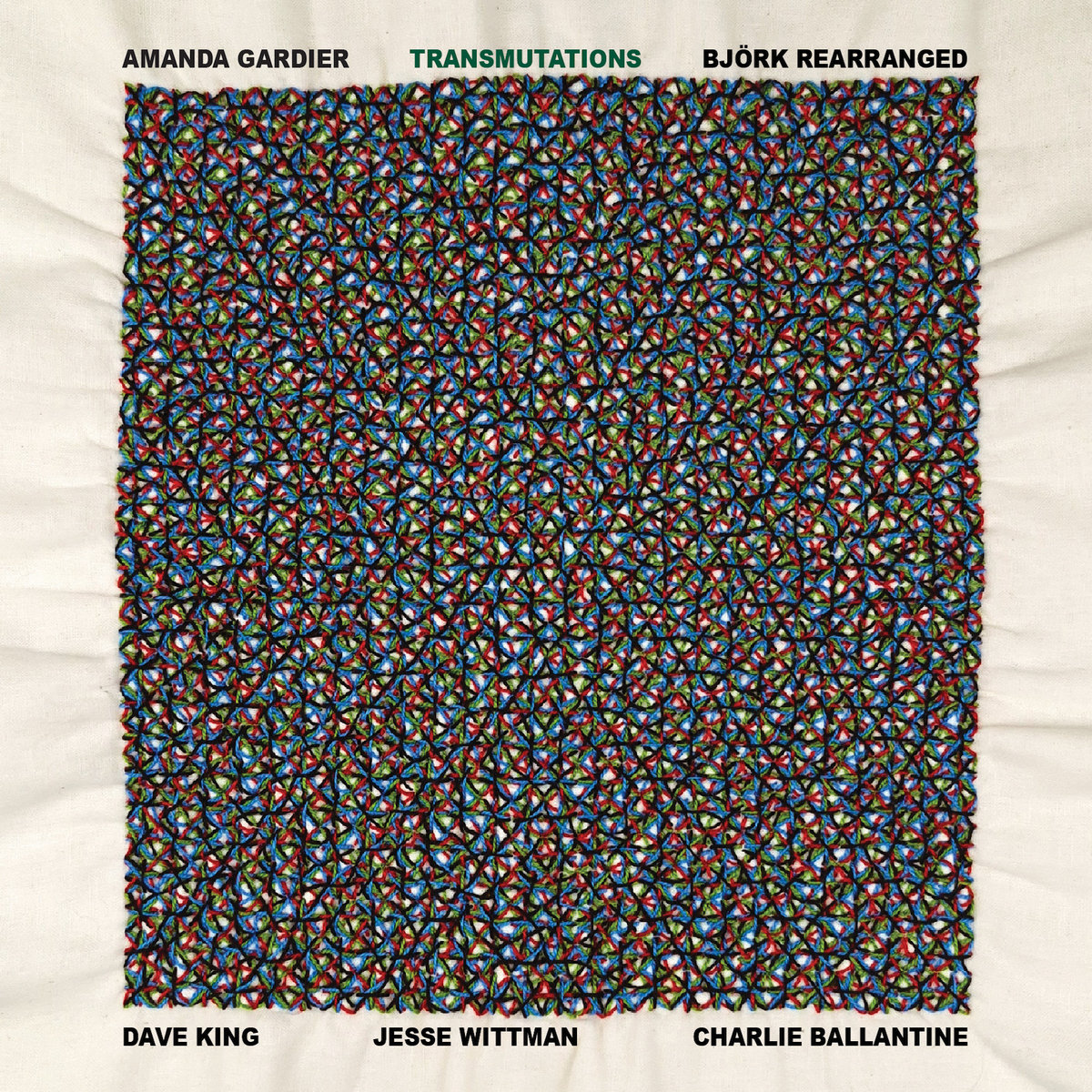
Eight Björk songs and not a single voice. Amanda Gardier opens with “Pagan Poetry” and closes with “Virus”, and in between come “Bachelorette”, “Hyperballad”, “Pluto”, “Unravel”, “Blissing Me” and “Who Is It?”: the run goes from Post (1995) to Utopia (2017), and the melodic line the Icelander used to sing is carried by alto saxophone and, for the first time on a record of hers, flute. After three albums made on alto alone, Gardier picks up two horns.
The quartet is the one from Auteur: Music Inspired by the Films of Wes Anderson (2024): Charlie Ballantine on guitar, Jesse Wittman on bass and Dave King, the drummer in The Bad Plus. The names need getting right, because they are circulating wrong: the All About Jazz personnel box lists a “Peter King” and files him as a saxophonist, while the credits on the artist’s own Bandcamp page and the distribution metadata agree on Dave King, and on Wittman with two t’s. King’s presence is what tips the project: he comes out of a trio that has spent a quarter of a century taking other people’s songs apart without condescension, and this repertoire asks for exactly that.
The choice of songs says a lot. There is “Hyperballad” and “Unravel”, pieces with melody to spare and generous harmony that let themselves be played; there is “Who Is It?”, from Medúlla (2004), which in its original form is almost all voices and where the quartet has to invent the entire fabric; and there is “Virus”, from Biophilia (2011), which Björk wrote for a gameleste, the gamelan-celesta hybrid built to order for that album. Left out are Debut (1993) and the two grief records, Vulnicura (2015) and Fossora (2022). Which is to say: the format gets tested against the most harmonically hospitable decade in the catalogue and spared the one that would genuinely have tested it.
And the record doesn’t explain who did what. It was cut in January 2024, didn’t appear until August 2026, and arrives with a single line of text (“an instrumental reimagining of Björk’s beloved hit songs through a jazz lense”) and four names. Eight arrangements of a repertoire this worked-over need a credit saying whose they are, whether Gardier’s or the band’s, and what was decided on each song; without it, what gets documented is the track list. The running order doesn’t help either: the first three are the three best-known songs, and the material that put the format at risk, the Medúlla track, sits seventh, by which point everything has been settled. Gardier never jokes at Björk’s expense and never talks down to her. Three albums on alto alone and the first flute of her career: the horn she picked up for this is the one carrying the lines Björk used to sing.
Rating: 7.4/10
Text by Aina Torrents