
Metal
Vesperian · 11 September 2026
“Tiamat’s Gate” runs nine minutes and thirteen seconds and uses them to show Dreadnought’s two faces in order. It begins with synthesisers and clean guitars at mid-tempo, with Kelly Schilling’s voice in a register that borders on opera, and the shift into blast beats and Ryan Sims’s roar arrives all at once but without a jolt. In the middle there is a stretch with a medieval air, then death metal takes the whole thing over, and the track ends quietly with the piano in front. That a quartet can make that journey inside a single track and not sound like a collection of offcuts is the record’s main achievement.
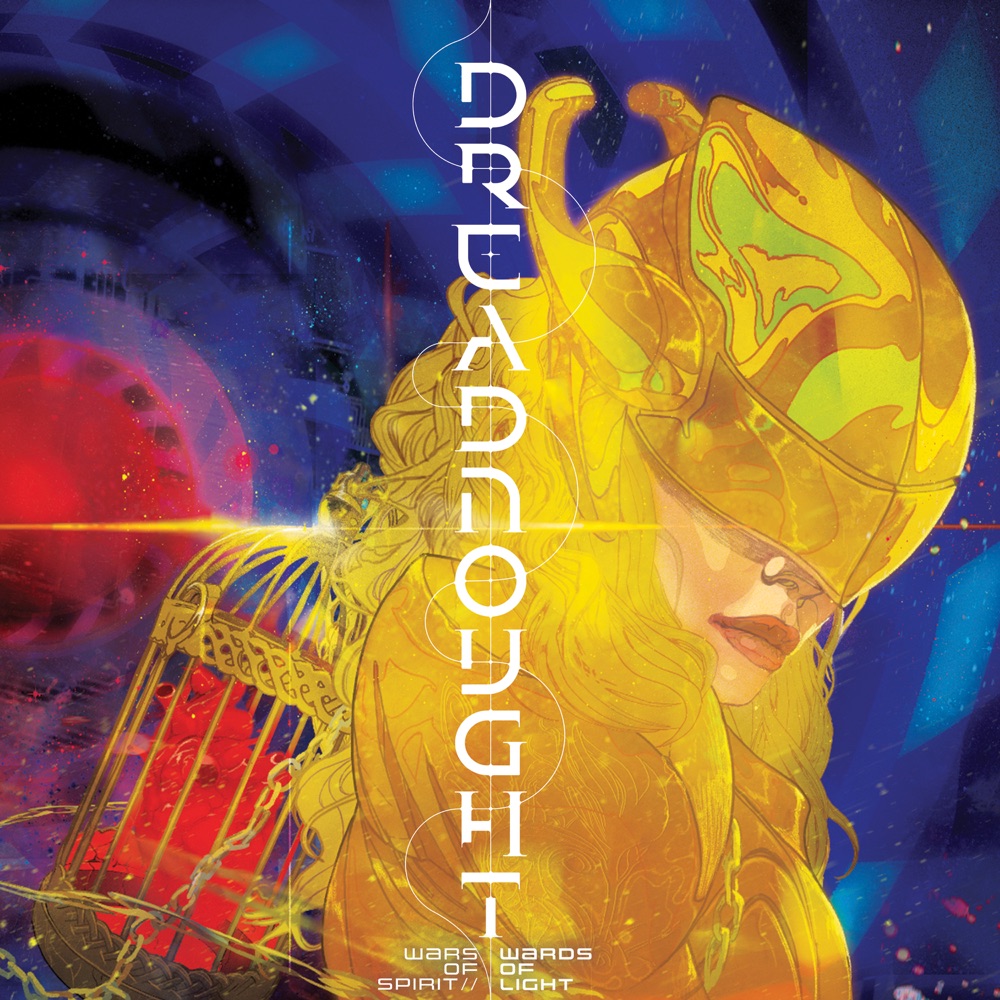
It is their sixth full-length and Vesperian released it on 11 September. The group is Schilling (vocals, guitars, keys and synth), Sims (vocals and guitars), Kevin Handlon on bass and Jordan Clancy on drums and percussion, and it is mixed by Julius Mauranen, who comes from Oranssi Pazuzu. The cover is by Christian Ward, an Eisner Award-winning artist. Dreadnought are from Denver and go back to 2013 and “Lifewoven”, and the most audible difference from that era is in the drums: they slam now instead of pinging.
The other five tracks divide the work up. “The Archive”, four and a half minutes, starts on double kick and Sims’s low growl, and it is where Clancy stands out most, turning the changing time signatures over with footwork that escapes into fills towards the end. “Colors Of Our Broken Hearts” is in 6/8 and finishes with tremolo guitar and double-time drums, strings laid out underneath. “Serpents Of The Moon” opens on clean guitars with a jazz tone and small percussion, climbs slowly towards a black metal finale and drops some jungle beats along the way that nobody sees coming. “Aeonwar” throbs like a machine (the band had recorded a Nine Inch Nails cover for a tribute album and it shows here) and ends with Schilling speaking. “The Twilight Protectorate” closes on eighties-sounding keyboards and a final guitar run that is already melodic death metal.
Mauranen pours on so much reverb that the Everything Is Noise critic, who likes the record, describes it as an overwhelming maelstrom, and that bath has a specific victim: the instrumentation that tells Dreadnought apart from anyone else in their lane. Piano, flute and mandolin are what made their name, and neither of the two independent reviews of this album mentions the flute until the closing seconds of the final track. A record defended as more direct than anything in the back catalogue has ended up turning its unusual instruments into atmosphere. And through all that reverb Schilling never once falls behind: forty minutes in which she has to move from the register that borders on opera to spoken word and from open singing to silence, often inside a single track, and every one of those turns lands with the voice exactly where it needs to be.
Rating: 8.0/10
Text by Roger Estivill