
Jazz
MunckMix · 25 September 2026
Of the album’s thirteen tracks, five aren’t music. There’s an “Introduction” of thirty-nine seconds and four numbered “Stage Banter” tracks running between twenty-seven and thirty-eight seconds each, which is what David Bode was saying to the crowd between numbers. They add up to two minutes and fifty seconds of the fifty-five twenty-four the record runs, and they are indexed separately: that leaves eight arrangements and fifty-two and a half minutes of music.
All eight are his. It opens with Kenny Garrett’s “Happy People” (six forty-four) and goes straight into Jeff Buckley’s “Lover, You Should’ve Come Over”, which at eight twenty is the longest thing here. There’s James Black’s “Monkey Puzzle” in an arrangement that, according to Jazz Journal, departs from Sammy Nestico’s “Basie Straight Ahead”; Billy Strayhorn’s “Lush Life” with Jenna Winston singing and a synthesiser solo; John Coltrane’s “Syeeda’s Song Flute”; one Bode composition, “Cold Train Funk” (seven forty); Radiohead’s “Airbag”; and a Lennon and McCartney pairing, “Dear Prudence” and “Don’t Let Me Down”, to close.
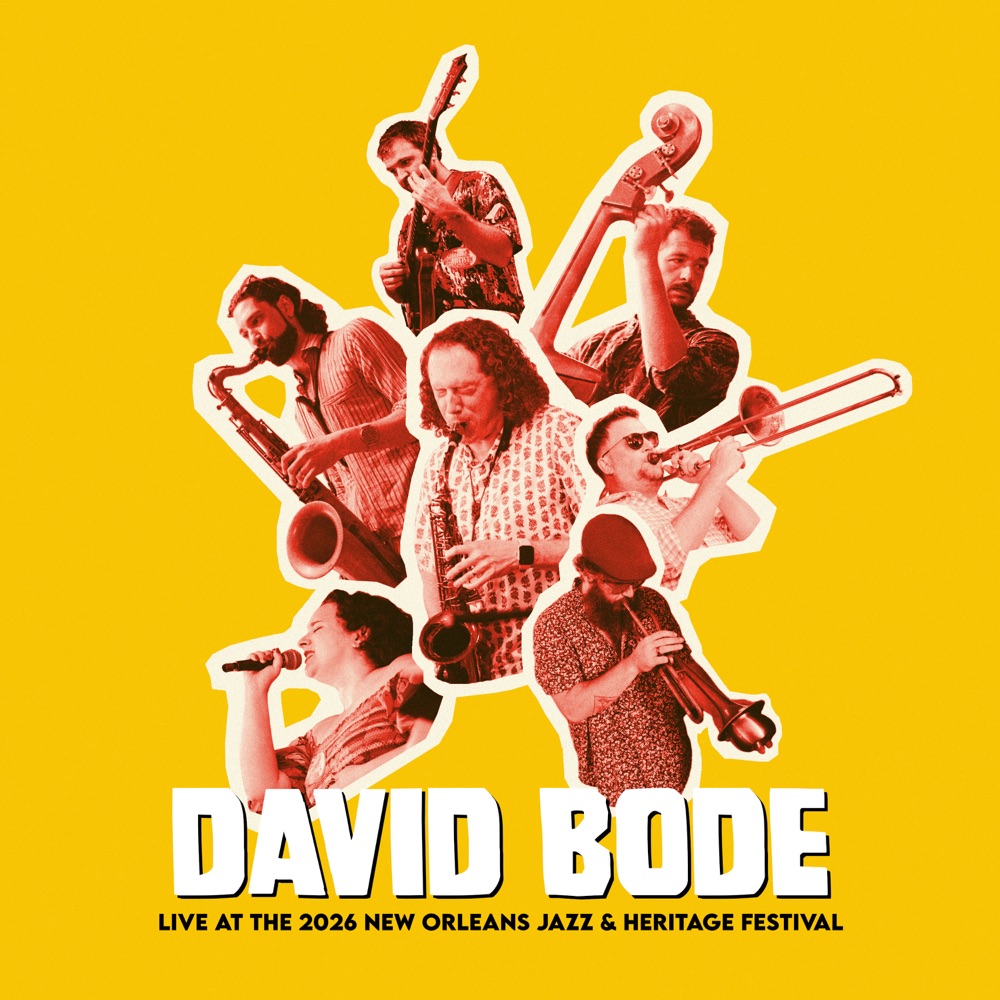
Bode is a saxophonist and arranger born in New Orleans, and this is his second album. The first, “Good Hang”, came out last year and was made in the studio with nineteen musicians; here he brings twenty-two, and the concert is the one he gave on 25 April in the WWOZ Jazz Tent at the Jazz & Heritage Festival. “After many years of playing at the festival as a sideman or band member, it was very meaningful to see my name in ‘The Cubes’ and on the billboard on the stage for the first time,” he said when he announced it. MunckMix, which has been issuing recordings from American festivals since 2003, put it out on 25 September; the digital shops have had it since 28 August.
Indexing the banter separately is honest and it is also the problem. A festival set gains from the talk in between; broken into four tracks, the record asks you to skip five times or to hear the crowd asked to make some noise four times over. And there is the other question: of the eight arrangements, seven are other people’s material and four come from outside jazz. From a twenty-two-piece band assembled by an arranger you would expect to hear more of what he writes.
Rating: 6.5/10
Text by Aina Torrents