
At Tótum Revolútum, we like to tackle those debates that so often come up over coffee or after a meal, and the world of music is no exception. With the explosion of musical formats over the decades, one question has always lingered: which one sounds best? We break down the advantages, the drawbacks and, above all, the emotions that vinyl, CD and digital formats stir up in us.
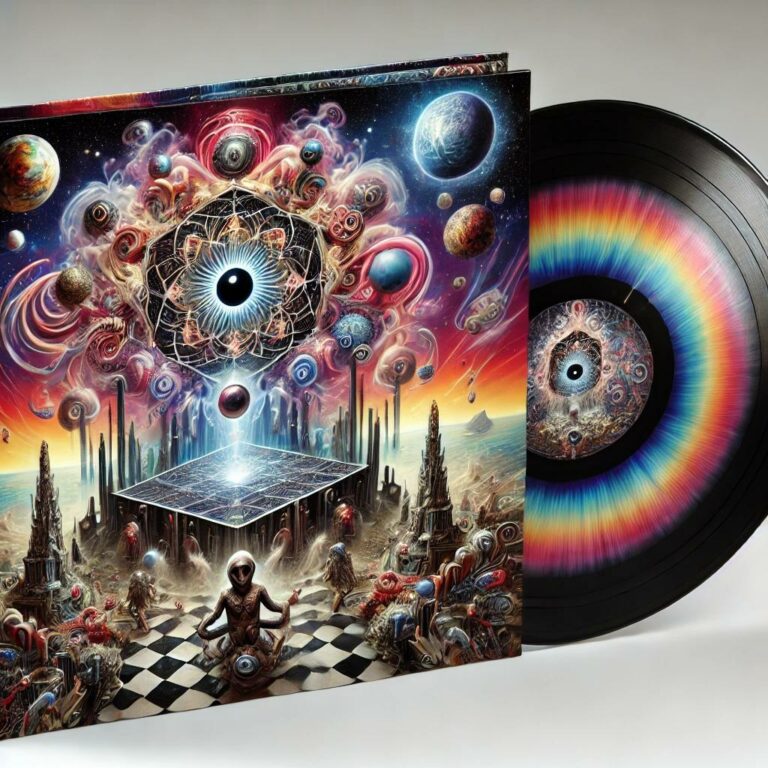
Vinyl: the magic of a timeless ritual
Listening to music on vinyl is much more than pressing a button: it’s an act steeped in romance. From sliding the record out of its sleeve to carefully setting down the needle, the whole process becomes a ritual that connects us to the music in an almost physical way. It’s a unique moment, given over entirely to enjoying it.
Technically, vinyl offers an analogue sound with nuances and a warmth that’s hard to match. But it’s also an imperfect format, prone to wear, background noise, and dependent on the quality of the equipment. Even so, for many people, these small “imperfections” are exactly what makes vinyl such an authentic, one-of-a-kind experience.
The vinyl recording and playback process
- Analogue recording: Vinyl records are made through an analogue recording process, in which the original sound is transferred directly onto a master. Sound oscillations are converted into physical grooves cut into the disc.
- Frequency response: Vinyl records have a frequency response ranging roughly from 20 Hz to 20 kHz, similar to the range of human hearing. However, factors such as recording quality, pressing, and the condition of the disc can all affect that response.
- Signal-to-noise ratio: Vinyl has a signal-to-noise ratio of around 55–70 dB, lower than a CD’s, which can reach 96 dB. This means vinyl can have a higher level of background noise, like the characteristic crackle-and-pop.
Playback
- Stylus and cartridge: The stylus (usually diamond-tipped) reads the grooves on the record, and the vibrations are converted into electrical signals by a phono cartridge.
- RIAA pre-amplification: The turntable’s signal needs to be corrected and amplified to meet the RIAA standard, which compensates for the low and high frequencies altered during the recording process.
- Dynamic range: Vinyl has a limited dynamic range of around 60–70 dB, compared to CD (which can exceed 90 dB). This means very quiet or very loud sounds can lose some detail.
Technical limitations
- Wear: Every time a vinyl record is played, the grooves undergo slight wear, which can degrade sound quality over time.
- Surface noise: Physical imperfections such as dust or scratches can introduce additional noise that affects the listening experience.
CD: the precision of digital fidelity
With the arrival of the CD in the ’80s, music entered a new era. With a sampling rate of 44.1 kHz and a bit depth of 16 bits, the CD offers a sonic precision that guarantees we hear songs exactly as the artists recorded them, free of distortion or external noise.
Despite its cleanliness and clarity, some music purists find the CD too “cold” or “clinical” compared to vinyl’s warm character. That said, it remains a reliable choice for anyone after consistent sound quality.

CD technical specs
- Digital format: The CD (Compact Disc) uses digital audio encoded via PCM (Pulse Code Modulation), with a sampling rate of 44.1 kHz and a bit depth of 16 bits. This means every second of music is split into 44,100 samples, each with 16-bit precision, capable of capturing a wide range of frequencies and dynamics.
- Frequency response: Thanks to its encoding, the CD can reproduce frequencies from 20 Hz to 20 kHz, covering the entire range audible to humans.
- Dynamic range: The CD has a dynamic range of around 96 dB, far higher than vinyl’s (60–70 dB), allowing a more precise representation of both the loudest and quietest sounds without distortion.
- Signal-to-noise ratio: The CD has a signal-to-noise ratio of between 90 and 96 dB, virtually eliminating the background noise perceptible in other analogue formats.
Reading and playback process
- Optical disc: The CD is an optical disc that uses a laser to read the data encoded on its surface. The laser’s readings are translated into digital information, which is then decoded into audio signals.
- Error correction: CDs include error-correction mechanisms (such as CIRC, Cross-Interleaved Reed-Solomon Code) that can recover data damaged by scratches or dust, ensuring consistent, accurate playback.
Technical advantages
- High fidelity: CD playback is free of surface noise and physical degradation, as long as the disc is in good condition.
- Playback length: It can store up to 74–80 minutes of uncompressed audio, compared to vinyl records, which usually have a limit per side.
- Durability: If stored properly, a CD can retain its sound quality for decades, since it isn’t subject to the physical wear from playback that vinyl is.
Technical limitations
- Limited resolution: Despite its high quality, 16 bits and 44.1 kHz may not be enough for audiophiles chasing even greater resolution, of the kind offered by high-resolution formats (such as FLAC or DSD).
- Physical fragility: CDs are sensitive to scratches, heat and ultraviolet light, which can damage the surface and render them unreadable.

Bluetooth and MP3: convenience versus quality
Digital formats, like MP3 or Bluetooth audio, have revolutionised access to music. We carry thousands of songs on our phones and share them without cables, but this often comes with compression that strips away detail from the original sound.
Despite advances in technologies like aptX or LDAC, which improve transmission quality, Bluetooth still can’t compete with the fidelity of a CD or a vinyl record. That said, the convenience it offers is undeniable, and it has democratised access to music around the world.
Bluetooth technical characteristics
- Data compression: To transmit audio over Bluetooth, compression codecs are often used, reducing audio quality to ensure efficient transmission. The most common codecs are:
- SBC (Sub-Band Codec): The standard for most devices. While reliable, it has sound-quality limitations, with a maximum sampling rate of 48 kHz and a bitrate ranging between 192 and 320 kbps.
- aptX and aptX HD: Offer better quality, with aptX HD allowing up to 24 bits/48 kHz and a maximum bitrate of 576 kbps.
- LDAC: A high-resolution codec developed by Sony, capable of transmitting audio at 990 kbps with 96 kHz/24-bit quality.
- Latency: A notable drawback of Bluetooth is latency, which can range between 100 and 200 ms depending on the codec, affecting the listening experience in applications like games or videos.
- Dynamic range: Depends on the codec used, but is often lower than physical formats like CD, due to compression limitations.
Advantages and limitations
- Advantages:
- Portability and no cables.
- Compatible with most mobile devices and wireless speakers.
- Limitations:
- Lower audio quality compared to physical or lossless digital formats.
- Dependent on the quality of the codec and the devices’ amplifiers.
Listening to music in MP3 format
MP3 (MPEG-1 Audio Layer III) is a lossy compressed digital audio format. It was designed to reduce audio file size without sacrificing the sound quality perceived by the human ear.
MP3 technical characteristics
- Bitrate: MP3 quality is measured in kbps. The most common settings are:
- 128 kbps: Standard quality, but with a noticeable loss of sonic detail.
- 192–256 kbps: Higher quality, with better reproduction of mid and high frequencies.
- 320 kbps: The highest bitrate for MP3, with quality nearly indistinguishable from the original audio for most listeners.
- Sampling rate: Can reach up to 48 kHz, though high frequencies are often trimmed to minimise file size.
- Compression: MP3 removes inaudible or less perceptible frequencies to reduce file size, sacrificing some of the original audio’s information.
Advantages and limitations
- Advantages:
- Small files that allow large music collections to be stored.
- Widely compatible with devices and players.
- Limitations:
- Compression introduces quality losses, particularly in dynamic range and subtle details.
- Not suitable for high-fidelity audio or demanding listening experiences.
Tótum’s tips
- Bluetooth: Ideal for convenience and everyday use, though with technical limitations depending on the codec used. Advanced codecs like LDAC or aptX HD are recommended for better quality.
- MP3: Excellent for portability and everyday use, but insufficient for audiophiles or playback on high-end equipment.
Some say vinyl sounds better because it forces us to stop, to give it time and attention. It’s true that, technically speaking, neither vinyl, nor CD, nor any other digital format can exactly replicate what happens in a recording studio. But music isn’t just about technical perfection — it’s a matter of emotion.
Listening to a vinyl record is like reading a paper book, while the CD or digital formats would be the equivalent of a Kindle. Everything has its moment: a quiet evening in with a vinyl can be just as satisfying as a journey soundtracked by a streaming playlist.
Choose whatever makes you feel most alive
In the end, the best format isn’t the one that sounds best, but the one that connects you most closely to the music and the emotions it stirs up. Whether you’re a vinyl romantic, chasing the precision of CD, or after the convenience of digital formats, what matters most is enjoying it.
At Tótum Revolútum, we celebrate music in all its forms, because beyond the technical debate, music is the one thing capable of soundtracking the most important moments of our lives.
Writer: Jordi Amela